Steven Lerner, by my count one of the first journalists to acknowledge the court reporter shortage debate, appeared on the Pro Say podcast Episode 248. The beginning talks about the Major League Baseball wage lawsuit and recent settlement. About 20 minutes in, we get to the DR segment and the Glitchy Rollout article.
Mr. Lerner notes that there’s a disagreement between stenographers and the court reporting companies pushing digital court reporting. He notes the 2020 Racial Disparities in Automatic Speech Recognition study, and how automated solutions can have error rates higher than 40%. “Now, imagine unleashing this faulty tech in the US legal system, which has historically been unjust for people of color, in particular, black people. This speaks to the problem of having diversified data sources.” This is certainly a problem for any digital reporting method implementing automated speech recognition.
Asked why this is a problem for everyone, Lerner summarizes, “so even if a person is operating the new tech, there could still be glitches, so that’s why it matters, because it’s just going to disrupt the entire legal system.”
The only major missing piece is that the digital reporting method is not new. The ability to record and transcribe testimony has existed for decades and yet digital court reporting has not supplanted American stenographers. If it were truly cheaper or an innovation worth implementing, implementation would have started sooner and not the better part of a decade after the release of the Ducker Report.
I continue to believe it is quite suspicious that Jim Cudahy utilized his position of Executive Director of the National Court Reporters Association to get the shortage forecasted. Jim later surfaced under Speech-to-Text Institute, an entity claiming the stenographer shortage is irreversible.
Irreversible? Are they omniscient? No. This is a narrative.
Ultimately, neither Jim nor STTI have explained why the shortage is not as bad as forecasted or faced the reality that things didn’t play out exactly as forecasted. They continue to utilize numbers that are almost a decade old in an obvious attempt to create a market. I know that’s not Lerner’s fight, but it gets glossed over that this is not a matter of “stenographers say this, other side says that.” It’s a matter of stenographers showing mathematically that the data being relied on by digital proponents is wrong and digital proponents never ever being asked about that.
The question remains: Will we be able to expand stenography? Will we be able to convince investors that the stable return is on stenographic court reporting? If I get my way, it’ll be irreversible.
In recent years, associations for court reporters have been victims of attempted phishing. I’ve personally read accounts of phishing attempts conducted against New York, Florida, Texas, and Kentucky.
Phishing is a social engineering attack. The usual purpose of a phishing attack is to steal money or information. Some phishing uses very sophisticated measures, like fake websites or phone calls. In court reporting, scammers so far use very low-level techniques to try to trick court reporters. For example, a scammer can pull the name and title of a respectable person from one of our websites, like Jenna Parsons, President of the Kentucky Court Reporters Association.
Then scammers can use reporter directories to get court reporter emails, such as PRO Link, Kentucky’s Find A Reporter, or even New York’s Find A Reporter. Once the scammer has these pieces of information, name, title, and a potential audience, they cast a kind of “virtual net” and try to get something out of the audience, often gift cards, since gift cards are an easy method of stealing money.
There are a few things we can do to thwart scammers.
1. Education. Associations have been doing a great job of educating members whenever phishing attempts are made. For example, KYCRA raised the alarm today on fraudulent emails. FCRA made members aware of phishing just yesterday. These kinds of notices keep members safe. Talking to each other about phishing goes a long way to stopping phishing. Social engineering means it relies on the victim falling for it. Don’t be a victim — if someone in your association is asking for money or gifts, chances are high it’s not a legitimate request. Ask management.
FCRA Email from May 2022.
2. Creative website alterations. Scammers often take the easiest road, and sometimes that means using computer programs to scrape info off sites and send emails automatically. In 2020, NYSCRA board members were receiving constant fake emails from someone impersonating then-President Joshua Edwards, asking for gift cards. These emails seemed to be going mostly to board members. We quickly figured out that the scammers were likely using a website crawler to grab the president’s name off of the contact page, and then email the board members, whose emails are listed. This spam was reduced by altering the emails to have an “at” instead of an “@.” To this day, NYSCRA uses the “at.” Since most computer programs scraping email addresses will be searching for an “@,” it becomes harder for a computer program to automatically lift the information and send emails by using the “at.” Another potential solution for us is to lay out board member information in image form instead of text, since most scammers will be using programs seeking the word “president” and not an image of the word president. The largest drawback to using images is that it takes up more space, can make websites slower, and is time consuming, so I don’t expect this to be adopted by most associations. But the “@ to at” fix can be worthwhile and simple.
3. Don’t panic. The largest threat we face from phishing is our collective reaction to it. Ultimately we need associations to have a web presence and be accessible. Some of us have a “circle the wagons” mentality to technology. Scammers targeting the website? Delete the website. This is a type of panic response we have to avoid. By continuing to educate each other, we can widen the shield and ensure none of us are taken advantage of.
Any other states or reporters that have been the victim of attempted phishing lately? Feel free to drop your tips for avoiding scams below.
*Addendum:
Cassandra Caldarella from CoverCrow, Inc. passed me an example of a scam email she received in California. As you can see it lifts and fraudulently uses Tamara Houston’s name and information, but it is not a genuine request from CCRA. If you get a similar email from an association you love, it’s probably fake!
For a long time on Stenonymous I’ve covered digital recording and its encroachment on stenographic reporting business. From an economic perspective, I see digital reporting as a way for companies to drag more people into the industry, use them to increase labor supply in the industry under the falsehood that the technology is equivalent, and then use the increased labor supply to force reporters to accept less money or fewer pay increases without passing savings, if any, to the consumer. I’ve pointed to the fact that the stenographer shortage being used to justify the expansion of digital court reporting is exaggerated and the entities that pull from the Ducker Report conveniently ignore the age of the report and routinely fail to adjust for real-world events after the report. A lot of the news around the shortage has been based around convincing people that the stenographer shortage cannot be solved through recruitment, leading me to the conclusion that the shortage is being pushed in order to push the digital service against consumer choice.
From a social perspective, I’ve extrapolated from the Justice Served (2009), Testifying While Black (2019) and Racial Disparities in Automatic Speech Recognition (2020) studies that on average digital is going to be less accurate than stenographers and not cheaper. While no methodology is perfect, recording and transcribing creates more room for errors because audio monitors are listening for problems — questions of spelling and audio overlap — that they anticipate the transcriber will have. Stenographers, on the other hand, are listening for problems the stenographer will personally have. It really puts us in a league of our own and is a good anecdotal reason for why stenographers and voice writers are not easily replaced by a Mechanical Turk transcription army.
I’m not alone. For months, stenographers have been attempting to educate attorneys on the differences. From Protect Your Record Project to NCRA Strong, there are lots of players helping to define and share what steno brings to the table. I am at a point where I occasionally get messages from people who are exploring the potential of a digital court reporting career. They want to know what they’re signing up for. In some cases they’re being asked to shell out a few thousand dollars in equipment and they want to know if it’s worth it. I generally explain why I believe stenography has more career options or opportunities.
I also explain to digital court reporters or prospective students that we are fighting against a world of inaccuracy. National Court Reporters Association President Debbie Dibble’s recent message about the article “Make sure your court reporter is really a court reporter” really drives this home. 55 missing pages of testimony in a single proceeding. The importance of having a live stenographic court reporter for proceedings is on full display, and NCRA is up to the challenge of letting the bench and bar know the truth.
Ultimately, stenographic reporting has the larger market share and the stronger lobby, something that digital proponents don’t seem honest about when it comes to introducing this work to jobseekers. As I see it, jobseekers left in the dark make excellent candidates for enlightenment. We may well be heading into a period where tons of resources are put down on attracting digital court reporters —
— and digital court reporters turn things around and pick up the stenotype.
Collectively, we have made sure there are numerous resources out there. NCRA A to Z, Project Steno, and Open Steno to name a few. The last frontier seems to be taking people who are being sold a career in digital and pointing them to the words of people like NCRA President Dibble and the ongoing shortage debate. Digitals will work out pretty quickly that they’re being sold on something less rewarding than promised, and stenographic market share will keep growing.
There are two prevailing schools of thought when it comes to the gold standard of machine shorthand stenography in United States legal proceedings. There are those that truly believe in the standard. There are those that give it lip service, only ever talking about stenography when pressed or pressured. Of course, there’s a third school of thought in the people that can’t or won’t spend much time thinking about why we still use our chorded stenotype keyboard design over a century after its development. For the third schoolers, we use QWERTY layouts despite that design being over a hundred years old too. It’s easy to imagine why: 1. There’s a market for it. 2. No technology has come along that is more intuitive and better.
I recently had an experience where I had to pick something off of an audio recording painstakingly in transcription mode. It gave me a lot of insight into where stenography’s superiority comes from. It’s in the room control. Some people are always going to be able to speak faster than we can “write” or type. You throw a stenographer into a situation where they have no room control and the participants are speaking above the stenographer’s skill level, and what do you get? You basically get digital court reporting / recording. The stenographic notes are a useless game of fill in the blank.
For the last twelve years that I’ve been in the industry, companies have been pushing reporters to interrupt less. I get it. Just like anybody else, lawyers don’t like to be interrupted. The loudest complaints were probably from the ones that are most self-important. The companies likely sought to end complaints by telling stenographers to let the audio catch it. But every time we do that, we risk record degradation “Didn’t understand that when they said it, don’t understand it no matter how many times I replay it.” It also increases the amount of time we have to spend on the matter due to re-listening to testimony rather than having it clearly in our notes. Since many depositions go unread until there’s a motion to be filed or trial’s coming up, the number of complaints related to poor transcript quality will likely always be lower than the number of “your reporter interrupted me” complaints. This skews the world the non-reporter owned agency lives in. Make the customer happy and things will work out. Just hope they don’t need whatever was inaudible or unintelligible to make their case.
That’s a major problem for digital, and I am not the first one to write something like this thanks to Jean Whalen. You have audio monitors that may or may not know anything about legal transcription listening for issues that they anticipate the transcriber will have. By removing the ability of the person responsible for the transcript to interrupt, you increase the chance of serious errors. Throw away all my prior calculations. The answer is really that simple.
From a productivity standpoint, room control makes a big difference. I’ve timed myself no audio versus heavy audio use, and I personally can be an astounding 12x slower putting together a transcript when heavy audio use is involved. This is why collectives like Ana Fatima Costa’s Speak Up For The Record group are so vital. In some jurisdictions, there is no mandatory license. There is no legal standard. Our newbies and veterans alike are connected to best practices through the stories and experiences we share amongst ourselves and the encouragement we give each other to be better. Let that be my share: We will not be attracting anyone to this field if they’re peeling things off audio in the name of “our client doesn’t like to be interrupted.”
The Lip Service School
More mainstream legal news has been picking up on the fact that there’s an ongoing debate. I’d like to share some highlights from the article “Glitches Still Persist In Digital Court Reporting Tech” by Steven Lerner, Law360 Pulse.
“…90 hours of testimony digitally recorded in a trial in the Northern Mariana Islands in 2008 resulted in poor audio quality and transcripts that were deemed unreliable and inaccurate.” It’s worth mentioning, but since it was so many years ago, it’s a minor point.
Planet Depos told Law360 Pulse that the problem with a 285-page transcript in Maryland was not the technology, but rather the setting of a public hearing where they were unable to control audio quality, overlapping speakers, and random unidentified speakers scattered across a large room. This goes directly to my points about room control. If we are not serious about speaking up when the record is in danger, we are not serious about record accuracy. Customer education is going to be this decade’s biggest challenge.
Brian Jasper, an attorney at Thomas Law Offices PLLC told Law360 Pulse “the technology was a problem, and it interrupted the deposition. I don’t scrutinize the depositions for perfection, but as an attorney, I have much more confidence in a stenographer because they are taking it down in real time.” This speaks to my point on room control. We generally know when we’re not getting it.
The article talks about the Stanford study where voice recognition by Apple, Google, Microsoft, IBM, and Amazon was tested. Error rates for black men were over 40%. I’m happy that this is getting more attention, because the adoption of automatic speech recognition (ASR) into legal transcription can really hurt equality and quality in general.
Stenograph, through Anir Dutta, claimed the average wait times for customers is seven minutes. This conflicts with reports at the end of last year that wait times for some were over a half an hour. Anir Dutta is quoted as saying “if that means that that customer is going to go on Facebook and make it so that everybody thinks that our average hold times are tremendously high, I think it’s unfair and frankly malicious.”
Lisa Migliore Black is quoted. “After 25 or more years of always keeping my Stenograph support contract up to date so that I would have the most current software advances, I let my support contract expire in January of 2022 due to long hold times with technical support and their failure to resolve the problems I was experiencing over the course of several months.” “My perception as a customer is that Stenograph is pulling too many available resources to develop the ASR side of their business.” I have to say I’m with Lisa. after over a decade of using CaseCAT, I’m very slowly teaching myself Eclipse, because being married to Stenograph just comes off as risky to me. The company seems obsessed with being at the helm of an evolution in court reporting that may never actually happen.
Dutta stated 80% of the company’s investment is still in stenography and that it is a “false narrative” that going into digital court reporting is shifting its focus. He’s quoted saying “If Apple started making iPhones, does it mean that they make substandard laptops?” Again, this goes against what has been documented prior, a drop in customer service.
Asked about the Stanford study, Dutta stated “People can quote studies from three years ago….” “…technology moves a million miles every three months.” This is demonstrably false. There’s a patent from 2000 showing 90% automatic speech recognition (ASR) accuracy was thought to be possible. The 2020 Stanford study showed accuracy lower than 80%. Is there anyone on Earth that believes 90% to 80% over the course of two decades is technology moving a million miles every thee months? ASR has improved. But it largely depends on who’s speaking and how good the audio is. I also find it humorous that Dutta takes exception to a 2020 study being cited when the entire basis for digital court reporting infiltration is Jim Cudahy, Speech-to-Text Institute, and a 2013-2014 Court Reporting Industry Outlook. Odd that an entire industry should shift focus for something that was done almost a decade ago and never adjusted for but should pay no mind to current events because “tEcHnOloGy.”
It’s a very interesting time to be in court reporting because nobody knows what happens next. Do the shot callers realize they’re wasting a lot of money trying to create a market for digital court reporting and start investing in the training of stenographers that will make them consistent profits? Will there be a breakthrough technology that renders stenography obsolete? Will our shortage get worse? Will our adoption of remote technologies compensate for the uneven distribution of court reporters across the country?
The data we’ve got doesn’t point to replacement. Until there’s a magic box that does everything, humans will be required to control the room, and it never gets more efficient than someone turning the speech into text right then and there with 95% or more accuracy. I’ll speculate that technology like CoverCrow will become more polished, mainstream, and accepted in helping with stenographer shortage woes. Agencies say they’re having coverage issues, and from what I understand, CoverCrow aims to work collaboratively with companies rather than cutting them from the equation.
As it stands, stenographers have a huge say in what happens next. Why?
There’s a market for it. 2. No technology has come along that’s more intuitive and better.
Last week word spread that a ruling had been made that the Judicial Branch Certification Commission (JBCC) in Texas should investigate StoryCloud. From my outsider point of view StoryCloud was or is one of those companies obsessed with cutting corners and/or cutting the stenographer/court reporter out of the deal. That business model is flawed not only because stenography is the most technologically advanced method of taking and transcribing the spoken word, but also from a legal standpoint. In some states, pretending to be a court reporter is simply illegal.
A great big thank you to Jo Ann Byles Holmgren, who initiated the lawsuit that led to this moment. She tells it better than I ever could. In short, the JBCC refused to investigate alleged violations of law. A writ of mandamus was filed to make the government do its job. A judge ruled the JBCC should investigate. StoryCloud more or less deleted its website. Perhaps this will be a roadmap for California, where the California licensing board refuses to protect court reporting consumers and regulate digital court reporting.
I’ll be adding a transcript of the hearing as soon as it’s available.
Following the ruling, most of the StoryCloud site was trashed in favor of a little blurb.
StoryCloud’s demise is not the only good news out of Texas. Mark Kislingbury claimed the new world record at Shaunise Day’s Fearless Stenographers Conference with 370 words per minute (WPM) for one minute at 95.4% accuracy.
I am always saying that if stenographers fight, they will win. Look no further than Jo Ann Byles Holmgren telling the government they’re wrong and winning. Look no further than Shaunise Day’s masterfully done and widely-acclaimed conference — a feat rarely pulled off by an individual unless it’s an industry veteran like Marc Greenberg (StenoFest) or MaryAnn Payonk (Empowerment). Look no further than Mark Kislingbury’s own personal triumph, defeating his former world record of 360 WPM. True failure is making no attempt to meet your goals. Until one is a true failure, one has a real shot at success.
I’ve been through lots of market research in the last year. Just to connect a few dots, we know two of the largest companies in our industry, Veritext and US Legal, are merely investments in the portfolios of larger holding companies, Leonard Green and Abry Partners. Those larger companies are invested in the private equity game, a game of buying, holding, and flipping (BHF) companies for profit in the same way someone might BHF houses, stocks, or bonds.
Approximately one out of every four court reporting companies are unprofitable. Combine that with the knowledge that in order to BHF companies, holding companies often load up the investment company with debt in what’s called a leveraged buyout. Veritext and US Legal may be servicing huge debts that the smaller shops don’t have. Their seemingly endless cash flow and price warfare over the last decade may have been at a loss. They wouldn’t be the first. VIQ Solutions has a bunch of transcription subsidiaries and operates with losses in the millions.
Anecdotally, multiple sources have reported lawyers are unhappy with both Veritext and US Legal, and it appears both corporations are increasing their rates faster than smaller court reporting companies, something they wouldn’t be doing if they were not feeling some financial strain.
This is probably the decade and the next golden age for court reporting. The behemoths are likely weighed down by debt and a management structure that cannot be supported without ridiculous prices. Smaller, more efficient firms will be able to rise up and take back all of the business that was gobbled up. I don’t need an anecdote for that one. The latest from MAGNA, Veritext, and the Big Bully Brigade was “waaah we’re bigger and can provide things little people can’t. Just believe us! Because bigness!” A lie so unconvincing that I think a six year old could’ve figured it out as long as that six year old was not Victoria Hudgins.
Stenographers need a pat on the back. The increased competition over the last few months alone has the larger corporations showing signs of strain. US Legal, still terrified to mention court reporting’s biggest commercial blog, has appointed Sara Giammanco as the Director of Reporter Engagement.
I wonder why they needed one of those. Could it be because Peter Giammanco supports digital court reporting? Does anyone really believe they’ll stop acting passive aggressively toward court reporters until court reporters put the company down a la some increased competition and bankruptcy? It’s very simple. People say what they’re paid to say. We’ve seen it with Stenograph. We’ll see it here too.
Maybe I can help the big boxes. Here’s some free consulting for them: Cudahy lied. The stenographer shortage can be solved by recruitment. The science and data available today, namely the Testifying While Black 2019 and Racial Disparities in Automatic Speech Recognition 2020 studies, show that alternatives to stenography aren’t as accurate. They aren’t cheaper. The market preference is stenographers. So basically you morons threw out the fundamentals of business by ignoring consumer preference, service quality, and cost of revenue, a blunder from which I doubt you’ll be able to recover, given the only thing you’ve ever been good at is wrongfully convincing stenographers they’re overpaid. People are prone to confirmation bias, and the business types have allowed their belief in technology™️ to rob them of all common sense. It would’ve been a lot smarter to turn stenographers into salespeople and train them to sell upcharges like expedites, roughs, and realtime instead of beating us down on price and constantly putting us in a state of feeling unworthy. You know, maybe I’ll start a company here in New York City and do just that.
Knowing that the big boxes are probably servicing big debts and seeing how they’re now scrambling to appease the profession that months ago they were claiming was dying no matter what™️, I think it is incumbent on every reporter to realize a single truth: If you fight, you will win.
To the lawyers and support staff reading, all you really need to know is that your consumer choice is under attack. Available data says consumer preference is solidly for stenographers and/or voice writers.
Court Reporting Industry Outlook 2013-2014 by Ducker Worldwide
In spite of this, a small number of court reporting firms and the nonprofit Speech-to-Text Institute have published bad data to get you to believe stenographers are not available despite there being a free national directory of stenographers. This bad data is then pushed by “reporters” like Victoria Hudgins and the Legaltech News outfit, whose primary purpose is to convince you to buy into their BS. You all have the power to fight against this attack on your consumer choice by sharing this blog with your colleagues. I have been a stenographic court reporter for the last twelve years. All I know is how to make an accurate record. With that, let’s set the record straight:
Victoria Hudgins has come up in my blog before. I wrote to her about some inaccuracies or issues with her past articles back when I believed she was an honest analyst or journalist. I let her know that Stenograph used a stock photo to represent its offices in one of the articles, and to this day the article still says “Stenograph offices” under the picture. In short, she does not seem to care about the accuracy of what is published with her name on it.
Missing the Point Consistently by Victoria Hudgins.Wow. Those computers look familiar.
Now she’s come out with this article in Legaltech News. “There’s Fewer Small Court Reporting Agencies — But Don’t Blame Technology for That.” It’s very easy to see what’s happened. The shortage claims are falling apart, and the next move is for the private equity brigade (MAGNA, Veritext, and US Legal) to pivot to “we can provide investment in technology that small shops cannot.” As told by stenographer social media, that’s not even true, with small firm owners writing things like they have been proudly providing for all of their clients’ needs since the 90s.
Growing together is a euphemism for “we couldn’t eradicate stenographers because they fight back, so we need to lull them back into complacency.”
This pivot is an admission that Veritext knows we can’t be beat. The big companies are having a hard time convincing stenographers and consumers the shortage cannot be solved, so it’s onto the next spin. They’re having that hard time because the propaganda they’re using is mathematically unsound. For example, in the linked JD Supra article, U.S. Legal Support uses an equation where we would have negative stenographers in about 30 years. That can’t happen if we’re getting new stenographers every year. How did the company fail to adjust for that? It’s not information being given, it’s an agenda being pushed.
U.S. Legal Support was giving off the same vibes just last week as far as not being able to defeat the stenographic legion. It’s actually kind of comical. The lack of serious and sustained antitrust enforcement for the last 40 years has caused the corporate types to realize we are a nation of unenforced laws. So we’re in a weird game of incongruence where the corporate types have been blatantly violating the law, and the workforce, namely stenographers, have been conditioning themselves to believe that even the tiniest appearance of antitrust infraction must be avoided at all costs, even to the point that our trade associations do not or did not collect and publish rate data despite being entitled to.
As for Hudgins herself, I would be shocked to learn she’s not taking money under the table. She ignored my comments in the past. She doesn’t seem to do any digging beyond getting a story to sound tech friendly. It’s all a media game of getting lawyers to buy into the hot new thing. It’s a hearts and minds game of getting people to repeat the same useless drivel so that everyone starts to believe it, because once people believe something, they hold onto that belief thanks to confirmation bias and/or post-purchase rationalization. Maybe that’s all Legaltech News itself actually is, a marketing piece to convince lawyers to buy, buy, buy into the next “it.” But if I were a lawyer, I’d be mad as hell when I figured that out that something labeled as news was being heavily skewed to influence me and my business. I’d be mad that the data and news showing “technology” would hurt my clients was being swept under the rug and routinely ignored. After all, Hudgins writes about the stenographer shortage woes.
“The dwindling pool of stenographers” is being systematically exaggerated to make it sound worse than it is by Speech-to-Text Institute, Veritext, and US Legal.
But Hudgins doesn’t bother to mention the undeniable fact that there’s a debate about the shortage where, as I am quoted saying, 16% of all depositions in this country would be going uncovered if the shortage was as bad as claimed. That’s not something we are seeing anywhere in the country, not even in California, where the shortage was forecasted years ago to be far worse than anywhere else in the country. Hudgins doesn’t bother to mention that the shortage numbers have never been adjusted to account for increased recruitment over the last decade. Hudgins doesn’t bother to give facts, so I have no problem putting it out there: Victoria Hudgins is a liar by omission and Legaltech News seems all too happy to host the incomplete reporting. So says the largest commercial blog in the court reporting industry, Christopher Day, Stenonymous, which again, somehow flies under Hudgins’ radar.
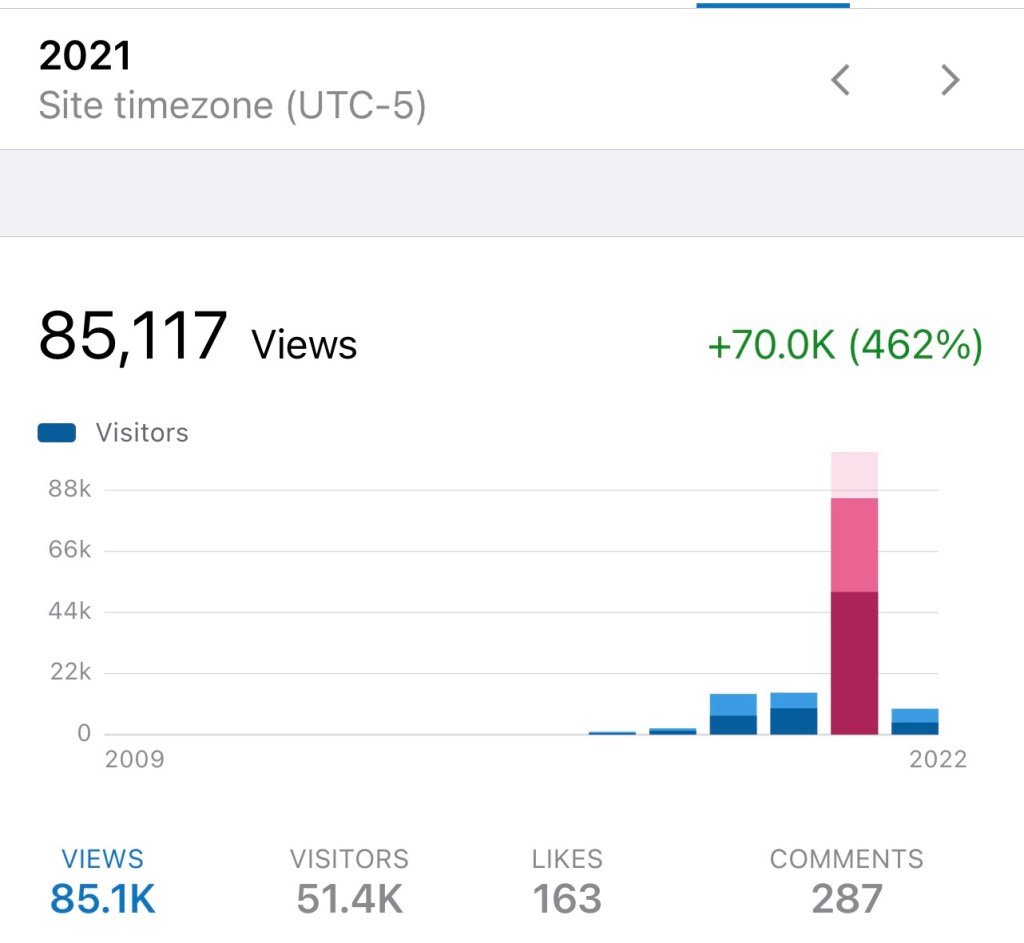
That’s 51,000 visitors last year in a field of about 30,000 stenographers.
The explosion in popularity came after I came forward about the dishonesty and pricing games permeating my field. I have risked my entire professional career to tell the truth. Lawyers, paralegals, and court reporters simply respect that.
Just for the record, stenographers utilize a lot of technology. Just about every single one of us invests a ballpark of $5,000 on a stenotype and a ballpark of $4,000 in software. The software has the capability to take our notes and stream them just about anywhere in the world with an internet connection. This idea that stenographers are still running old school with the paper tape manual machines is a fiction promulgated by propagandists. That’s in the ballpark of a $252 million investment in technology that the current workforce has made and not counting a single stenographer that is no longer working. How much money are the bigger companies saying they’ve invested directly on hardware and software?
Since it’s a media game, I’m ready to play. I’m going to advertise this on Facebook to the tune of $100 today. If you’d like to join me in an amount of your choosing, please head over to the home page at Stenonymous.com and use the donation box. All of my campaigns are public on the Stenonymous page and/or my Twitter, so you can see the kinds of comments we’ve gotten on past campaigns.
Addendum:
Apparently even Victoria agrees because she liked my retweet on this.
There are a slew of New York State Court Reporters Association webinars coming up that you can register for here. I’d like to point out two of them in particular:
How to Stay Relevant in an Industry at Risk of Disruption by Dr. Erika Jacobi. I want to hone in on one line from the flyer, “empower reporters, captioners, and individual business owners to thrive despite adversity.” The more of us that learn to do this, the more of us that can then turn around and share that knowledge or even sell the knowledge through educational events. By attending, you’re basically becoming a part of the first wave of stenographers that will teach the next waves ways to think which will culminate in an ocean of us all armed with the knowledge not just to survive, but to prosper.
Speech Perception, from Spoken Word to Written Text by Culture Point. The data available today says that stenographers are the best there is, but that there is room for improvement. This is part of that improvement. Through academic understanding of linguistics, we can improve how we hear. I’ve spoken to a stenographer with linguistics training about this, and her thoughts were that these types of classes are very important. Again, the first wave of us that learns these concepts can teach the next waves and increase our own personal value and our skills. I know this because I was a ripple sharing what I learned and it landed me on TV. I was on NYSCRA’s board when the first discussions about this workshop were had, and I have a firm belief that the education will help stenographers, both newbies and masters.
NYSCRA has put a lot into this. A press release was drafted and republished to various sites across the web like Daily Ledger, American Tech Today, and The Business Gazette Online. We all have an individual choice to make. Do we take that effort and toss it away, and allow these opportunities to pass unnoticed, or do we take charge of our profession and turn the first wave of stenographers to learn these concepts into a mile-high tsunami?
Recent events have made it very clear that you, reader, are in charge of what happens next in our profession. I hope that you will join me on those webinars and that we will march into the future ready to help others thrive and close the narrow gap in our stenographic linguistics training. I know that together we can make our gold standard shine brighter.