BlueLedge Connected with Veritext and Stenograph

BlueLedge is the digital reporting training company that apparently dissolved two years ago in Florida that I suspect is behind CourtReporterEDU. BlueLedge, as far as I can tell, continued to operate after its voluntary dissolution in 2019, because in August 2020, it entered a strategic partnership with Ed 2 Go.

Many reporters reached out to let me know that Veritext used or uses BlueLedge, but I didn’t have time to look into it. Finally, someone sent me the Google search. Step A, if you want to complete Veritext’s digital court reporter partner program, is to register with and complete the BlueLedge program.

This, by itself, isn’t much of a problem. But it strengthens the argument that the court reporting shortage is being exaggerated and exacerbated by Veritext. If the company was genuinely interested in recruiting stenographers, it might have constructed such a detailed pipeline for the education of stenographers. Instead, the company routinely tells stenographers what they want to hear and pours its resources into expanding its digital business despite the potential harm to minority speakers. One reporter brought up to me that Veritext has some involvement with a school in Maryland. I have even reported on its scholarship activities. I’m happy about those pro-steno activities. But at a time when 50% of our field, according to Ducker, is in California, Texas, Illinois, and New York, and while Veritext is working with BlueLedge, a company that has hooked its claws into national recruitment using Ed 2 Go, it remains clear where Veritext’s priorities are — expanding digital recruitment not as a supplement to our shortage, but at the direct expense of stenographic court reporters.

Telling consumers/attorneys that no stenographer is available while taking steps to alienate practicing reporters and undermining our industry’s intense recruitment efforts is just wrong. It’s like Burger King lighting cattle fields on fire and yelling about a beef patty shortage. The only difference is we would all immediately identify the arson as criminal, whereas here, if you hide the dishonest, anticompetitive, and potentially criminal behavior behind layers of dissolved companies and corporate paperwork, you get people defending the bad behavior. What would we do without Veritext? Probably be a lot better off!

Less importantly, Stenograph was getting cozy with BlueLedge as early as August 2021.

So let me add that to Stenograph’s PR problem. We need to boycott the company until it sells for stenography and voice writing only. We want no more expansion of digital court reporting. Keep hard on that line and it will happen. Consider Stenograph an arms dealer. It thinks it will sit there and sell to both sides. Except, in this very particular case, our field of stenographers has far more customers and most of our money is earned as opposed to being “borrowed” from investors. We are in a much stronger position financially even if we believe digital reporting has more actual dollars down on it. A lot of people in our field became CaseCAT trainers. They’re killing your industry and income to build digital. I want to grow stenography so you have more business. So even the CaseCAT trainers have a reason to stand up in defiance here, let alone the rest of us.

Succinctly, the money being sunk into digital reporting is money that investors will be expecting back. When it does not make the returns promised, and we have good reason to suspect it won’t because of companies like VIQ Solutions giving us a window into digital reporting financials ($10 million in losses June 2021), the faucet will turn off. All the companies relying on investor cash flow instead of company profit will start to decline. It is in our best interest as a profession to take the power of our good money away from it. The digital money will dry up on its own. If Stenograph is smart, it will cave to our demands. If it is not smart, we can crowdfund, buy it when it goes bankrupt, and put its employees back to work for us like I’m sure many of them want to be. We can even divvy up what Dutta’s salary would’ve been and give them a raise.

Stenograph, at this point, is relying on our nostalgia of it being “our company” and assuming we will not turn our backs on it. I’ve got some nostalgia of my own. There’s a scene in the original StarCraft that sums up my feelings well. Acting predictably is our enemy. We predictably divide and conquer ourselves time and again. Stand together on this one and watch things roll our way. It’s really that simple.

“An illusion? Are you afraid to face me, Templar?”
“So long as you continue to be so predictable, O Queen, I need not face you at all. You are your own worst enemy.”

This continues to be a profound moment in our field where we must choose between loyalty to each other and loyalty to companies whispering “trust us, trust us” while they systematically work to reduce our numbers and undermine our judicial system for profit. Not the hardest decision in history.

Court Reporter EDU is FoS

So I stumbled across the CourtReporterEdu.org website. A pleasant website that is facially neutral. You look at it, and it doesn’t seem to be anything “bad.” It talks about stenographers and shorthand. It has a picture of a stenotype. Looks like the kind of marketing stenographers should be doing.

Then you, reader, head on over to a magical place, court reporting info by state.

And when the reader goes to look at their state, they’ll infallibly get a long list of schools that have “court reporter programs.”

From my review of the New York schools listed, none have a digital court reporter degree. The few that mention digital court reporting sell the digital court reporting as a “continuing education” program. In short, they’re selling continuing education for a degree track that does not exist. Some of these schools have zero mention of digital court reporting on their website. Some schools, like BMCC, you reach out to admissions, and they know nothing about the program.

So, of course, I ask Ed 2 Go what the deal is, because Mark Pugal from Ed 2 Go has been trying to sell me on Digital Court Reporting for like a month now.

And of course, I trust, but verify.

BMCC asked for my concerns, so I put them out there.

Now, just to explain, in part, why I think CourtReporterEDU and possibly Ed 2 Go is being dishonest: (1) In many of the schools listed, when one goes to independently verify the existence of the program, it doesn’t seem to exist. Attempting to verify the program with the schools that actually do seem to offer it leads to this roundabout “we don’t have that program, but actually we do” response. Maybe at the point colleges are selling programs with no future and are so insignificant the admissions department doesn’t know they exist, or they don’t exist, we’ve gone too far. (2) Even where the program exists, it is selling students a course in something that is not the industry standard and does not have as many opportunities. (3) Putting a stenotype on your homepage and then diverting people to digital court reporting via esyoh.com and Ed 2 Go is just dishonest. Even if we forgive everything else, the way this page is set up is to confuse people and lend legitimacy to digital court reporting that it does not deserve.

At the bottom of this page is a video walking people through that part. Now for a bit of speculation. We know from the WHOIS lookup that the registrant’s address was in Florida. The server the site is hosted on appears to be in California, but that’s likely irrelevant.

Luckily, one of the schools actually advertising the program gives us a peek into who might be promoting it. Wagner College lists Merritt Gilbert and Natalie Hartsfield.

Merritt Gilbert is apparently in Florida and connected to BlueLedge. BlueLedge, as some may remember from a prior post, are aggressively marketing digital as the answer to the stenographer shortage exaggerated and exacerbated by STTI, Veritext, and US Legal. The author of that article stating digital reporting is the answer to shortage? Benjamin Jaffe. Who is Benjamin Jaffe? BlueLedge.

Who is Merritt Gilbert? BlueLedge.

Who is Natalie Hartsfield? Digital, BlueLedge, Florida.

Now here’s where it gets really interesting. Remember when I wrote yesterday that US Legal has been on inactive status in New York since 2001? BlueLedge, according to Florida Department of State, has been dissolved since 2019.

And just for anyone who thinks “maybe there are two BlueLedge companies in Florida,” take a look at that mailing address, 101 E Kennedy Blvd. Guess what the address for BlueLedge is.

If you guessed 101 E Kennedy Blvd, congratulations.

How is it legal for a dissolved company to misdirect the public, searching for stenographic reporter training, to Ed 2 Go and digital court reporting? It might not be, but it’s going to depend on us asking our various government agencies to look into this as a matter of false advertising and possibly operating illegally in the state. I reached out to my New York State Education Department as it pertained to this course being sold to New York consumers. Maybe this is something the members of each state association can tackle.

This situation blew my mind. We cannot stand for this. We have to fight and understand that we are playing against people that do not play by the rules or within the bounds of our self-imposed moral code. I have collected these images and ideas in a central place. Please use them to do good. I should note that at least one consumer was extremely confused and came onto our message boards asking about how to buy a stenotype for digital court reporting. We must act with compassion. Consumers are being lied to and we are the only people with the knowledge to explain it to them. They WILL stumble onto our message boards confused because they ARE being bombarded by lies.

Addendum:

After reaching out to ESYOH well after this article, they took action! The scheme is now less potent because of their valiant actions.

Where the schools used to lure students to a splash page, they now lead to box about degrees.

Verbit Published Kentuckiana Proceeding Audio Online Without Anyone’s Permission

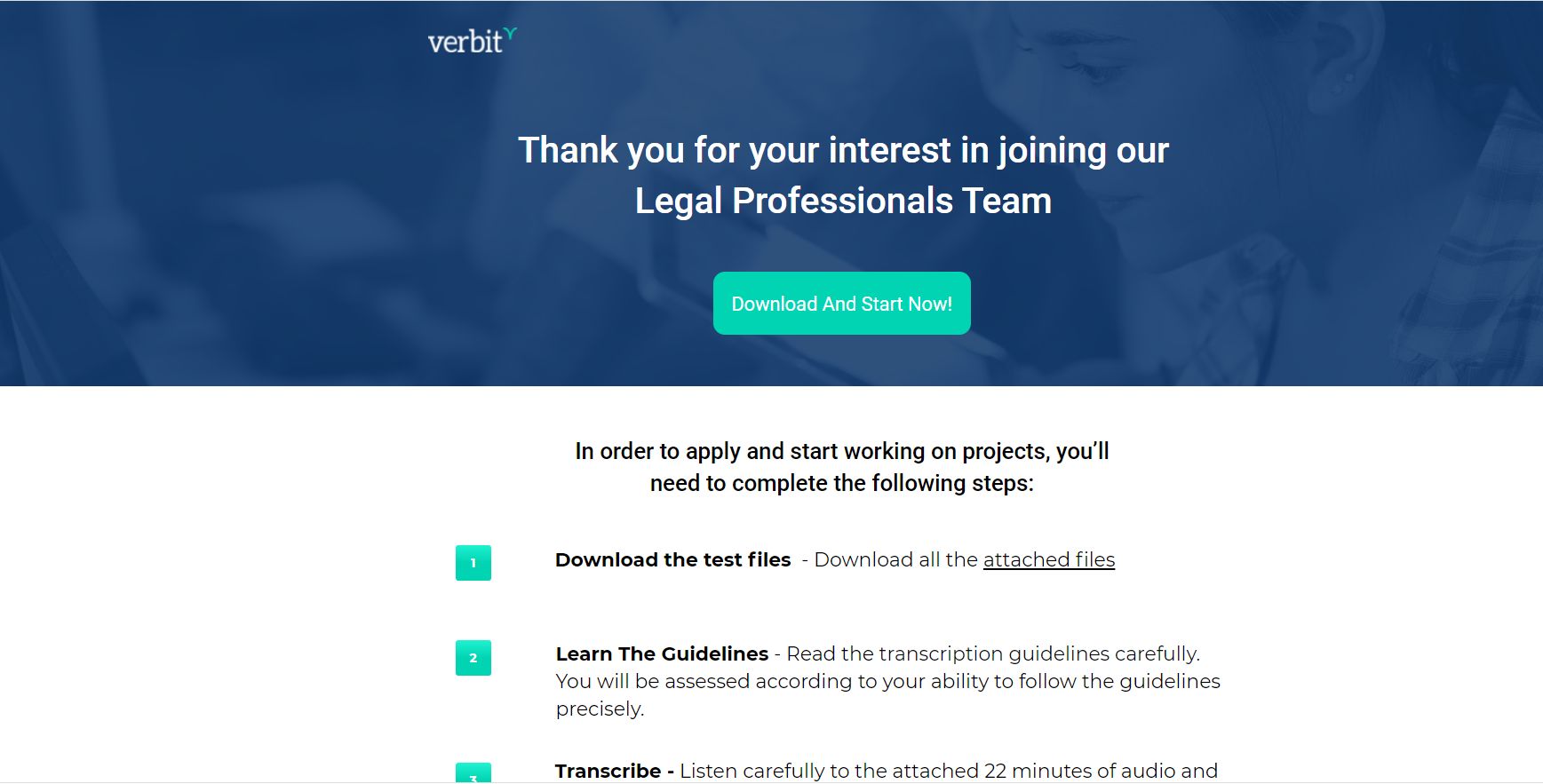
It came to my attention some time ago that Verbit was using a real proceeding’s audio to test its potential transcribers. After entering one’s information, one will get to a screen that encourages him or her to download all the files and put together a transcript from the information and audio given.

Legal professionals = transcribers.

I’ve already made it pretty clear I don’t like digital reporting as a modality. It can threaten access to justice and is the corner-cutting modality of my industry. I don’t like Verbit either. As I see it, consumers and investors are being misled constantly by the company. I do love digital reporters, but mostly because I see them as being taken advantage of. As I see it, we can bring them into the mainstream stenographic court reporting industry and train them to stenotype just like us. I’m very pro-people, and that’s why one of my biggest criticisms of US Legal Support was that it was using all of its power to mislead people into believing the stenographer shortage was impossible to solve while doing nothing to recruit stenographers.

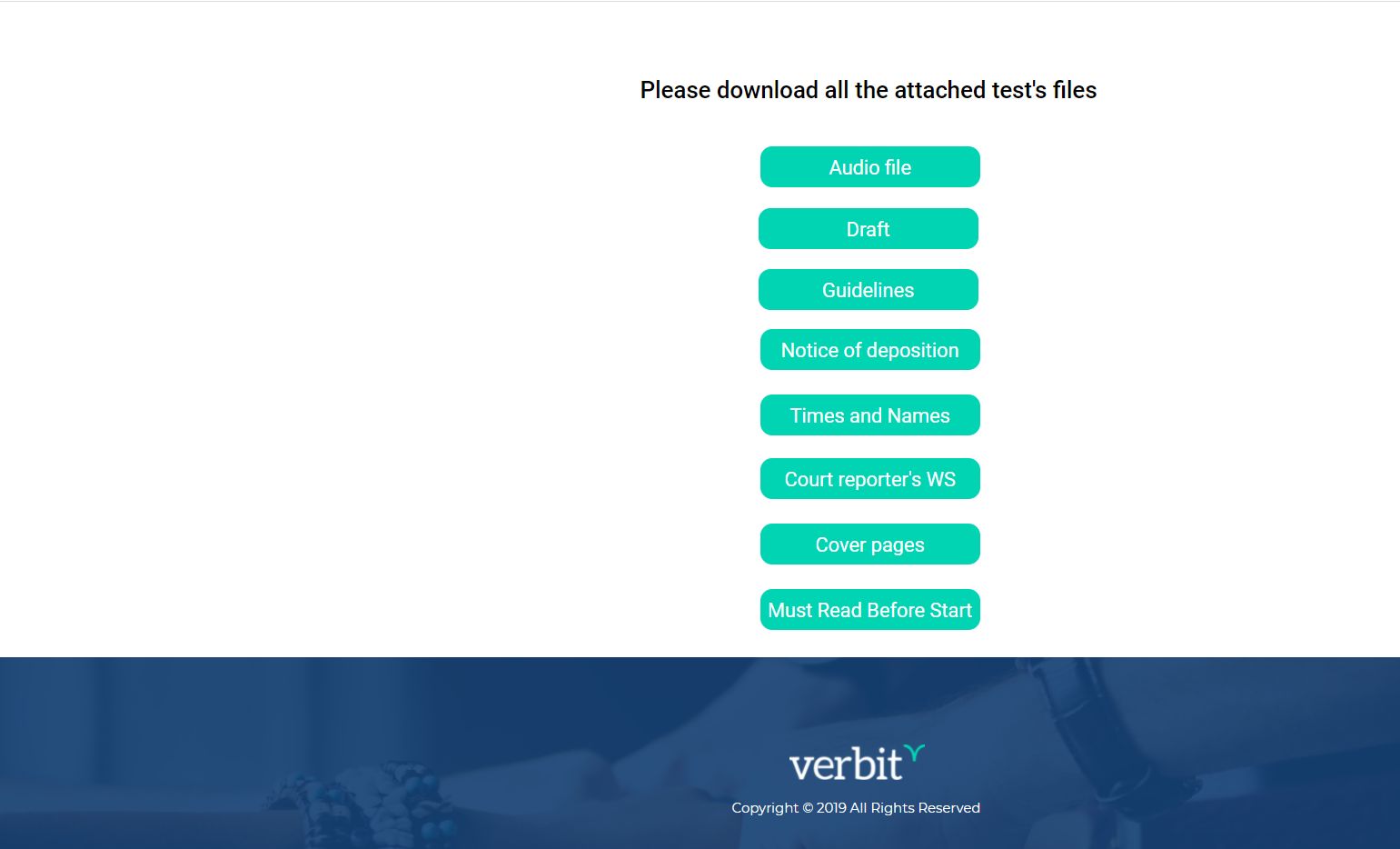
But this just takes my criticism of digital reporting and Verbit to a whole new level. Anyone with access to the link from anywhere in the world can just pop on and download a bunch of files from somebody’s case. These files have been accessible since July 2021 that I personally know of, and these files were still accessible as of September 15, 2021.

Each of the green buttons is a file that you can click and download.

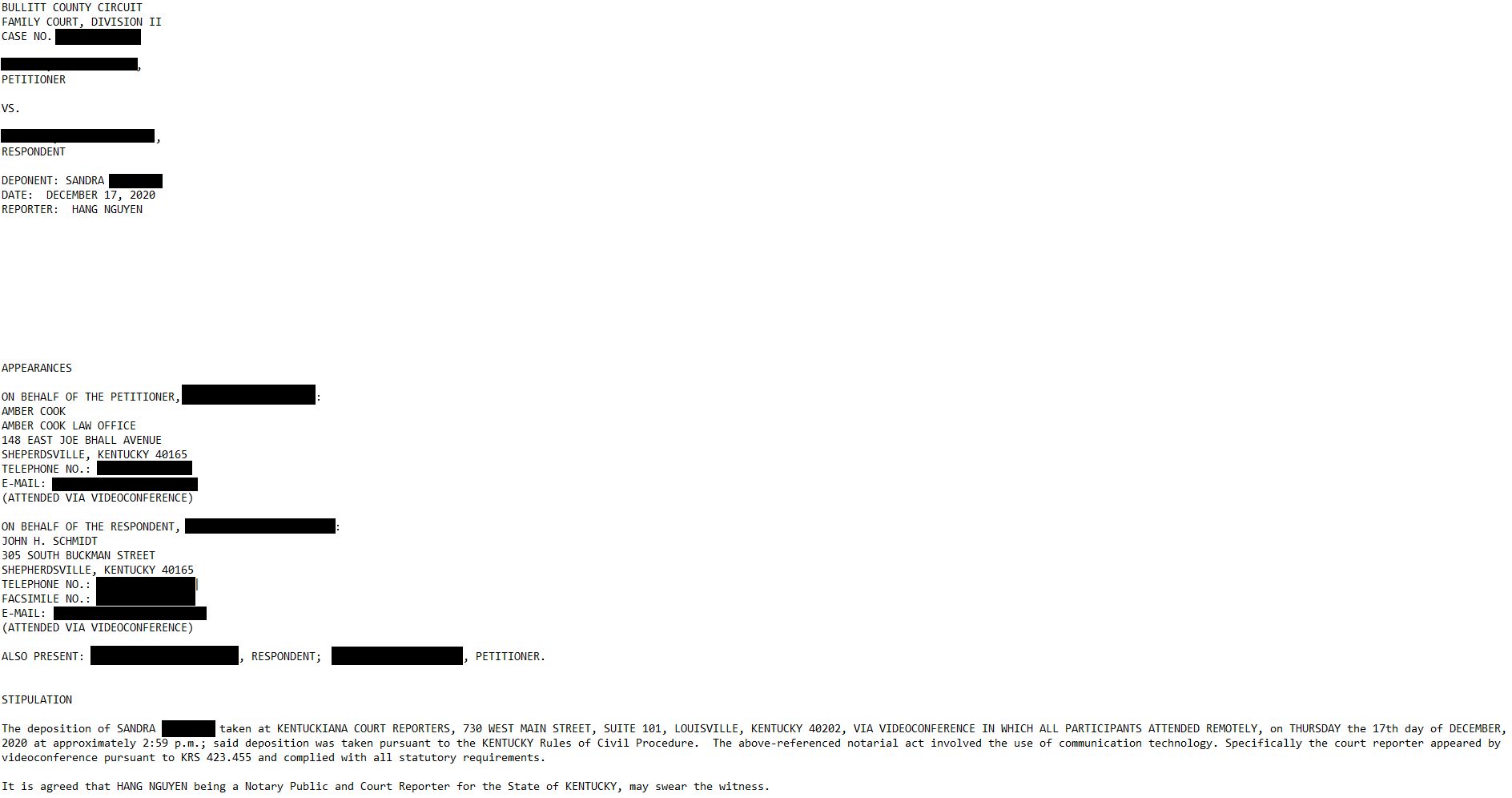
The whole thing leaves me in a pretty tough position. I want to prove this is happening so that court reporters can warn the legal community. But just dumping the evidence onto the internet a second time will violate the parties’ privacy more than it has already been violated. With heavy redaction, though, we can go through the various files and get a good idea of it. Let’s start with the cover page. Just remember, the redactions were put there by me. In the actual files there are no redactions.

This was surprising to me, because usually family court stuff is usually private in my jurisdiction of New York. It’s not something the entire world is able to get its hands on.

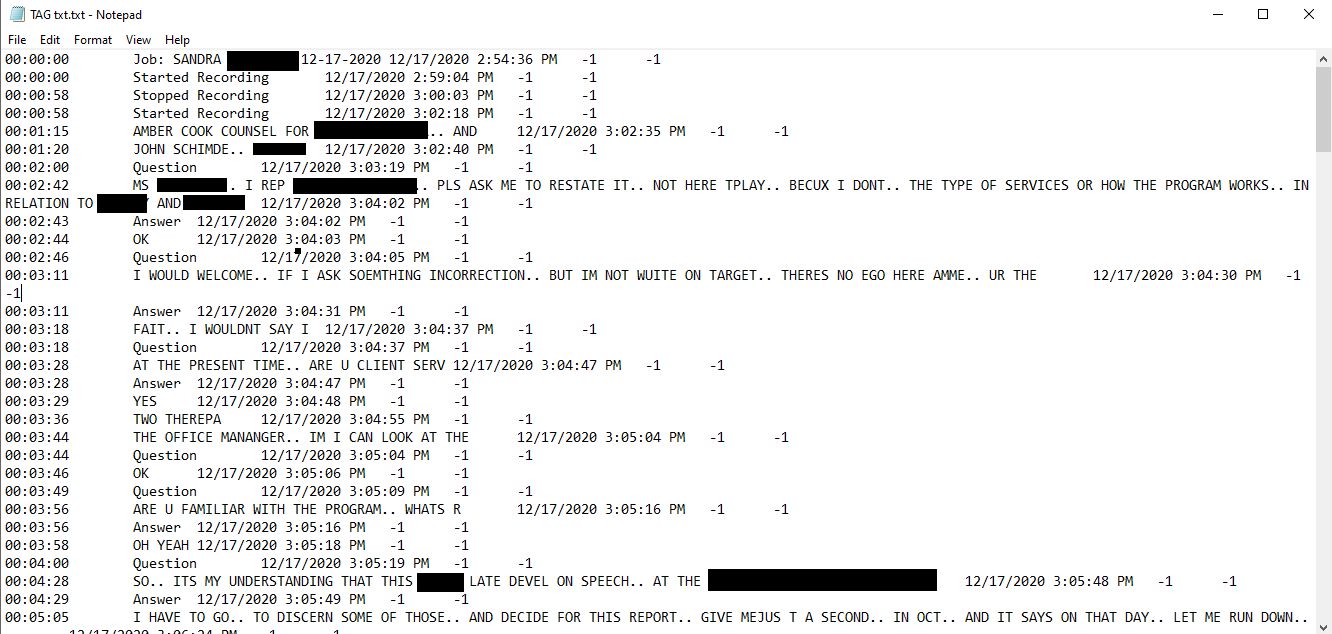
There’s a file labeled TAG, which appears to be the digital reporter or video operator’s annotations. If I am correct about that, this is a window into just how useless the annotations are for a transcriber.

Redactions are mine. The full file has names and information I just don’t think should be published on this blog.

There’s a file containing a notice of deposition. To limit the time spent redacting, I’ll offer up the first page only.

Remember, I was only able to get my hands on this because of Verbit’s recklessness with it.

The “must read” file comes next. Since that’s created entirely by Verbit, it’s downloadable here.

Then there’s a Verbit guidelines page, which seems harmless enough. But it hilariously refers to a “USLS” manual. The file is literally named “redone for USLS,” which to me seems to be fairly good circumstantial evidence that Verbit has a connection to US Legal Support. Not only is US Legal potentially defrauding consumers by making bad claims about the stenographer shortage, they might be working with a company so ignorant of good court reporting practice that it posted a proceeding online.

For the sake of completeness, I went looking for a USLS Manual and I found a 2017 version. Interestingly enough, it reads very much like an employee manual and has very specific formats for jobs. Remember, common law employees are all about who has direction and control of the work. I would say that if US Legal is or was using a 150-something page manual to “train” its “freelancers,” those people are actually common law employees and US Legal probably should have been paying employment taxes for them. What a shame it would be if I uploaded that manual and someone let the IRS know there was potentially a failure to withhold those taxes.

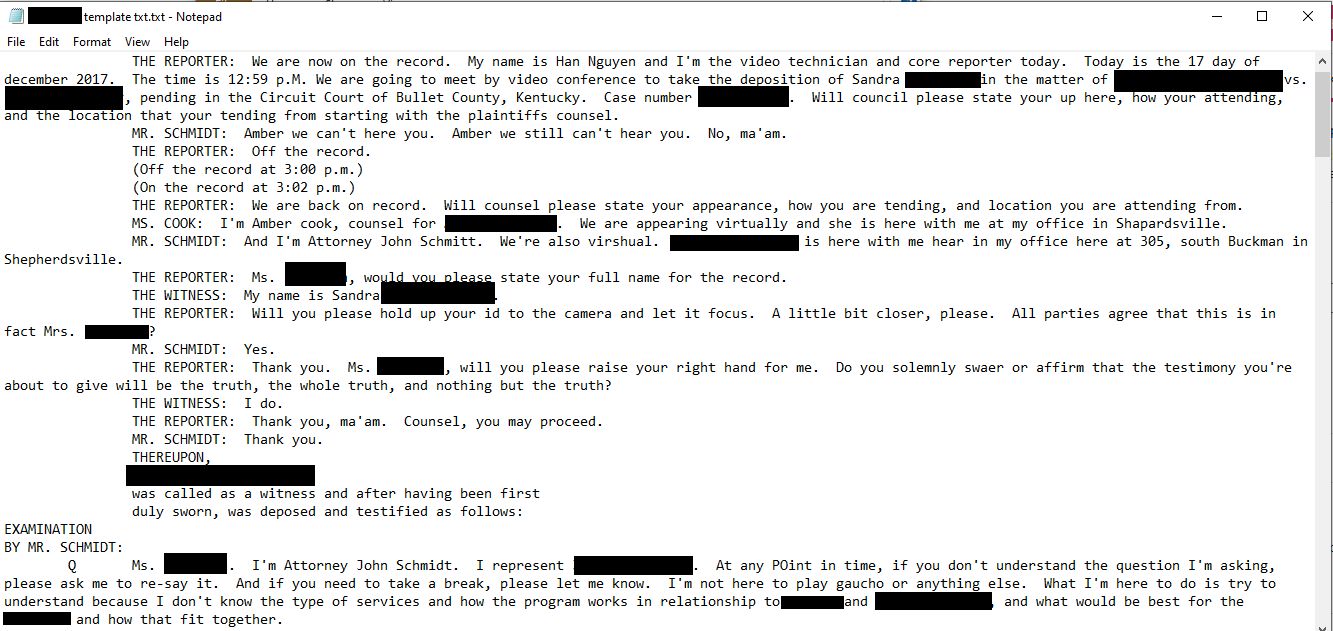
Back to Verbit’s files, they offer a template, which is more or less a transcription of the audio file they’re asking transcribers to transcribe. It is the single greatest indictment against digital reporting I have ever seen. The reporter’s name, Hang Nguyen, is misspelled as Han. The term “court reporter” is spelled “core reporter.” There’s a missing apostrophe. There’s a zero in the word “point.” She asks them to state their appearance and how they’re attending, but somehow it’s transcribed as “state your up here.” There are so many errors that quite frankly I hope my reporting colleagues do not let this go and that they take the time to send this to their bar associations. I am quite sure there are stenographic reporters that make mistakes. I personally make mistakes. But this falls well within the territory of “way too many mistakes to be normalized and accepted by our justice system.”

I bet you Hang Nguyen could be trained to be a damn good stenographer and would do far better than whoever transcribed this.
Remember, companies don’t typically tell their digital reporters we’re an option, let alone that we are the market preference.

There’s a Kentuckiana reporter worksheet that’s published by Verbit. It’s a pretty standard worksheet, so I will not bother to publish it here.

We get to the audio file, and it’s a 22-minute file. Given that this proceeding is a family court matter between two individuals, it’s not appropriate for me to republish, but again, it was available on the internet for months and being used to screen or train Verbit transcribers. It’s real testimony about a family court matter.

This image shows the file time on the right.

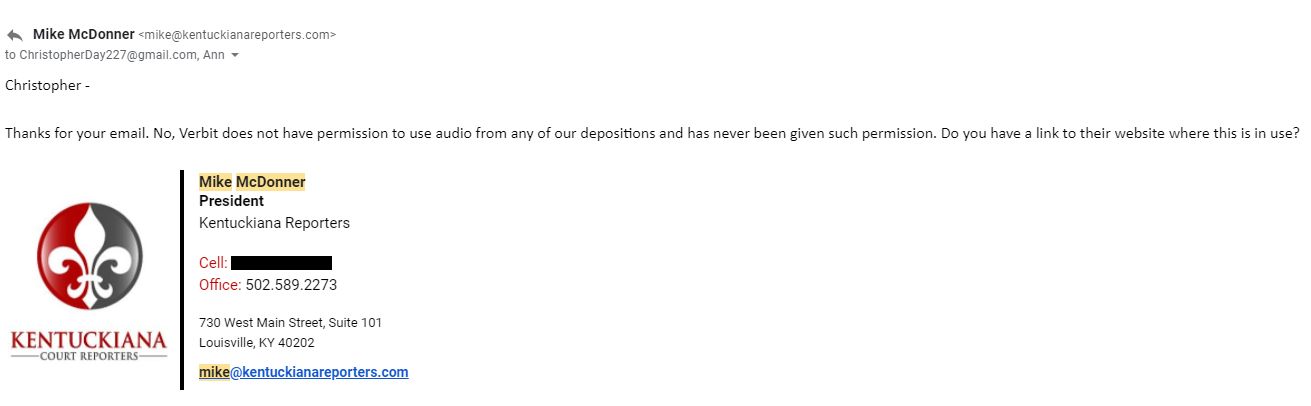
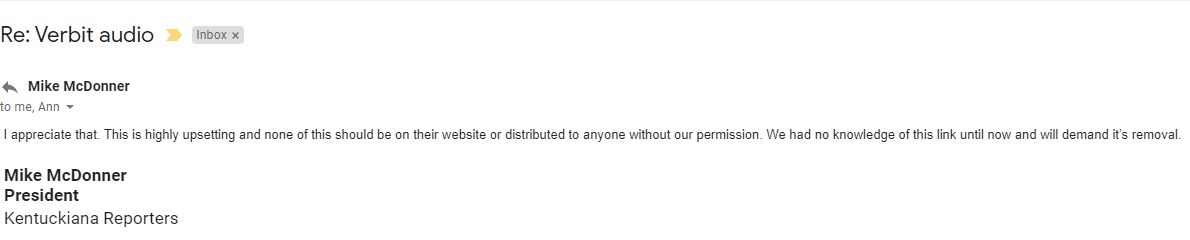
I set out to investigate whether permission had been granted to Verbit to publish these proceedings on the internet. In full disclosure, court reporters have shared audio in our field, but it’s usually a snippet of a word or sentence for clarification purposes and not large chunks of testimony with information that can identify parties. Now, I don’t really like Kentuckiana because of their pro-digital stance, but when I reached out, Michael McDonner seemed very reasonable and made it very clear, permission was not given to distribute this audio.

I had the link and I gave it to him in the hopes he could do something about this.

But what about the attorneys? Maybe John Schmidt said it was okay.

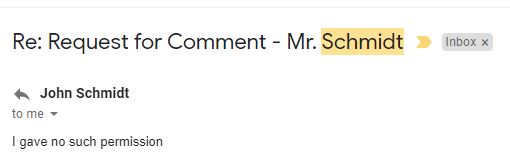
John Schmidt did not say it was okay. And I gave him the files and link from my investigation.

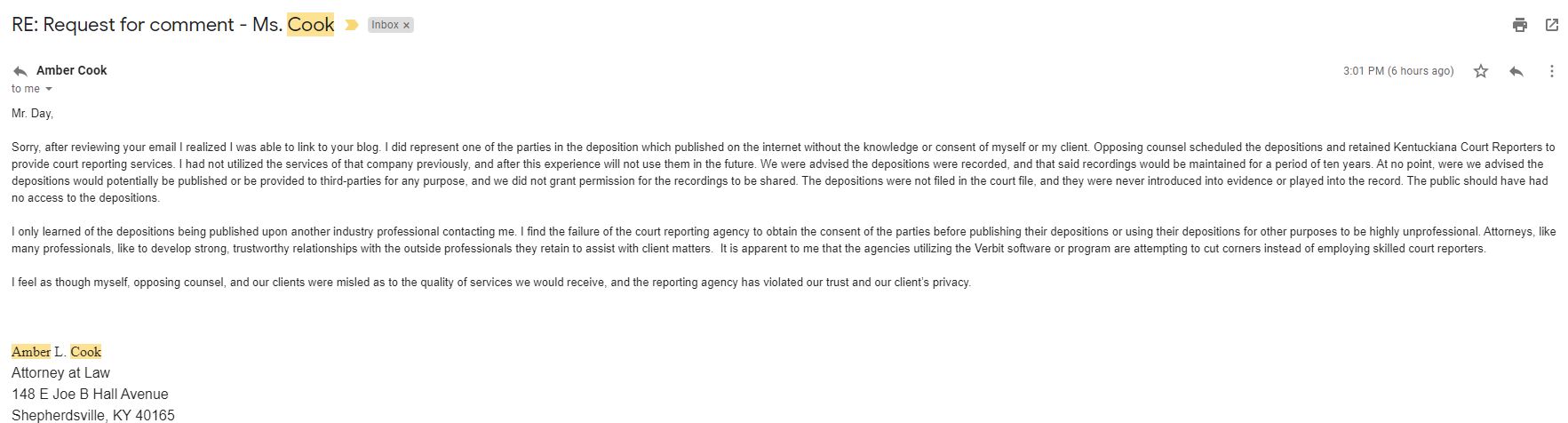
But perhaps Amber Cook had given permission?

“the public should have had no access to the depositions.”

I reached out to Hang Nguyen on LinkedIn but I got no response as of writing. I also reached out to Leor Eliashiv from Verbit. Predictably, there was no response. But at the very least, Kentuckiana made a commitment to demand the audio be taken off the internet after I told them where to find it.

I asked Kentuckiana to consider using stenographic transcribers. I pointed out that we spend a lot of time training our newbies not to make the kinds of mistakes that have been made here.

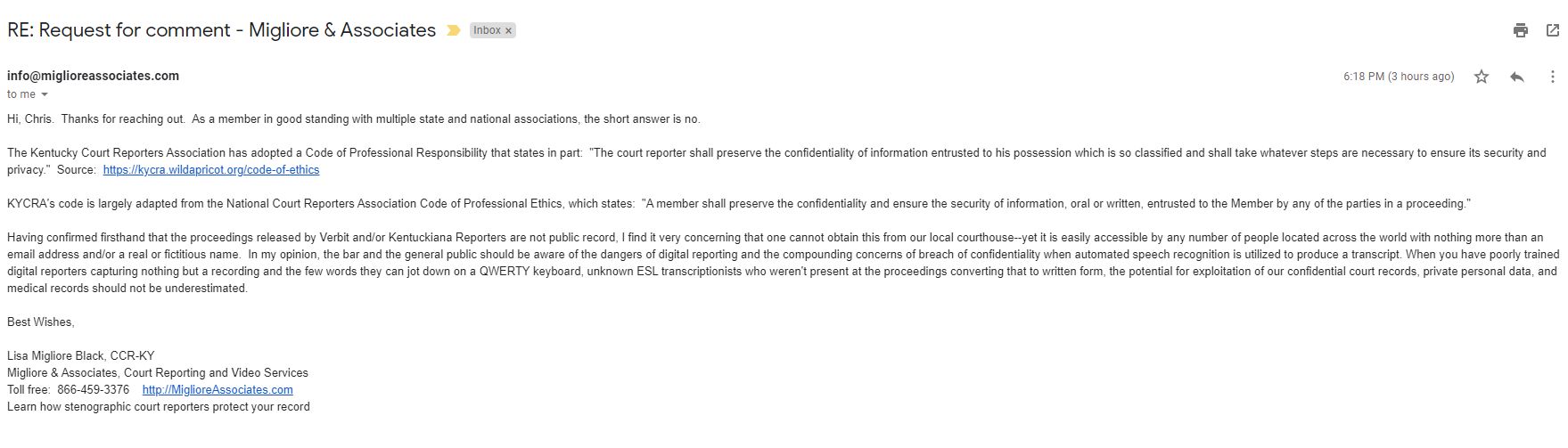
Unfortunately, when it comes to Kentucky, I’m clueless. I have a pretty good relationship with Lisa Migliore from Migliore & Associates. Just to be sure, I asked whether what Verbit was doing was good court reporting practice in that state, and she answered that it was not, citing the Kentucky Court Reporters Association Code of Professional Responsibility.

“…I find it very concerning that one cannot obtain this from our local courthouse–yet it is easily accessible by any number of people located across the world with nothing more than an email address and/or a real or fictitious name.”

For so long our institutions and businesses have been trying to find a way to say we are the superior product. Maybe the answer is to just show consumers what they’re really signing up for if they entrust the future of the legal record to companies like Verbit, tons of errors and potential breaches of privacy. We have to direct people to the many resources to learn stenographic court reporting, such as NCRA A to Z, Project Steno, and Open Steno. We have to get serious about educating consumers. Please consider a donation to Protect Your Record Project today. They have been pioneers and powerhouses in consumer awareness, and it is largely thanks to them that this article will reach thousands.

Addendum:

Within 24 hours after the posting of this blog the files were taken off of the internet.

This is where it used to be.

The Layperson’s Guide To Why Stenographic Reporting Is More Efficient Than Digital Reporting & ASR

Simply put, stenographers have integrated digital recording into their own technology. The option to record and transcribe has been around for 30 to 50 years depending on whether you want to start the clock at digital or analog. We stenographers have not been supplanted, which is an easy argument for our superiority as a modality.

Our detractors scoff and say that has to do with our political power. That’s a lie. We have very little political power. Most of our money seems to flow to our continuing education requirements and not lobbying. Our associations only recently sprang into action when we realized consumers were in danger. Even then, the associations routinely hamstring things that might make associations “too strong,” like abolishing term limits for effective association presidents.

Available data also shows that automatic speech recognition is 25 to 80% accurate and not the 99.999% sold to some people by dishonest companies.

Digital’s not cheaper. It allows the offshoring of very valuable private data to poor people who will have an incentive to sell it. It’s more taxing on the transcribers’ hands. How? It takes over 20 keystrokes to type “beyond a reasonable doubt” on a QWERTY. Steno does that in one.

Digital court reporting companies, groups, and associations talk a good game. This is because investors are burning money on them in the misguided belief that they’ll be first in on a new market. The reality is the modality has been around decades and fails to deliver. Just look at VIQ Solutions and its 2021 loss of over $13 million. Personally, I can’t wait until investors realize that these companies know this and took their money anyway.

For all the people who wonder how positive cash flow with negative income happens, check this out.

In brief, digital reporting and its derivatives such as “active reporting” or “AI-assisted reporting” are not cheaper. They aren’t a good investment. All available data says progress on automation has been mostly stalled for 20 years except where the automated program is configured to a speaker and their microphone. Unless we are going to force every litigant and defendant to train ASR for how they personally speak, we are going to need people to do this job. Since a stenographer is anywhere from 2 to 8 times faster than a transcriber, it makes good sense to invest in the expansion of stenotype services.

Also, generally, stenographers don’t support worker exploitation.

Of course, what do I know? I’m “just” a stenographer.