

A Stenonymous reader came through for me and shared that Fitch Ratings assigned Veritext a B rating with eyes on about a billion dollars in debt / credit.
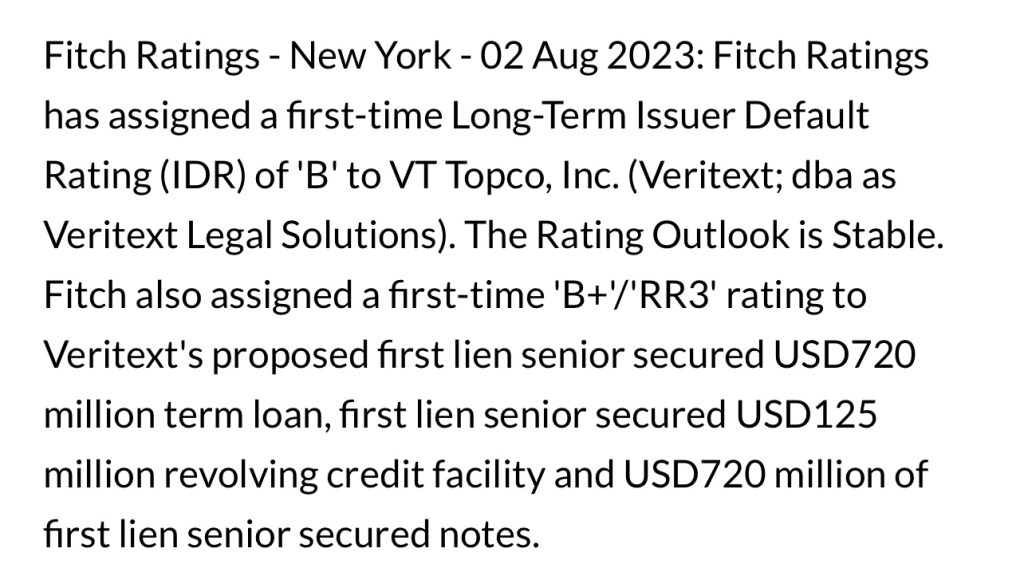
First thing, what is a B?

This B IDR (issuer default rating) means the company’s meeting its financial obligations, but if bad things happen, like attorney customers leaving the business because it’s been accused of fraud and has nothing to say about that, it might not be able to repay its debts.
Luckily for us, the news talks a bit more about why that IDR was assigned and what the big money types think about the company.

First, hold that comment about growing its revenue organically as opposed to “through acquisitions.” Organic would be running a marketing or sales campaign that brings in customers. Acquisitions is buying companies, which we can expect Veritext to continue to do with its “leading position.” We’re also told that they’re probably going to focus on return on equity rather than paying down the company’s debts. They anticipate leverage (debt) to be maintained close to current levels. In other words, Veritext will be in comparatively large amounts of debt, and paying that interest, for the foreseeable future.
The next paragraph abandons talking about Veritext’s organic growth and admits the company’s plan is to grow through acquisitions.
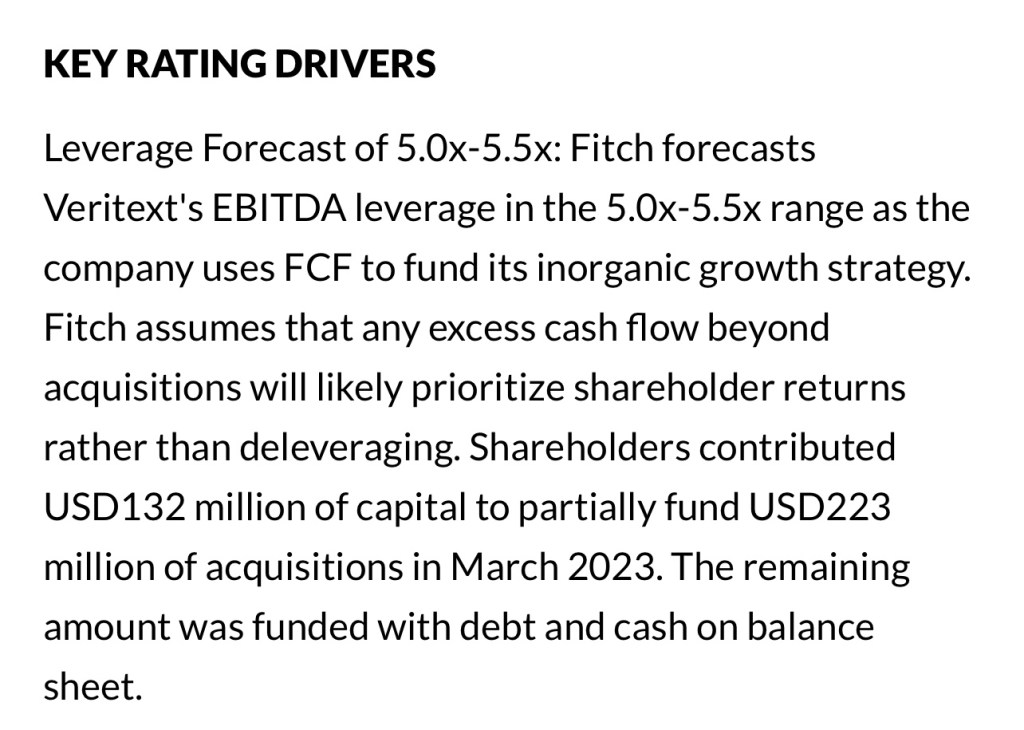
So in March 2023, shareholders, presumably the holding company, threw in $132 million to fund acquisitions. The rest was funded through debt and cash.

Now, I take this with a bit of a grain of salt because nobody has great data on our industry. But the claim here is that Veritext controls about 16% of revenue in the field — a field which is in the wide ballpark of $3 billion. That’d place Veritext at a wide ballpark of $480 million per year in revenue.

This part tells me why they’re pretty confident in Veritext being able to repay its debts. It would require a bunch of customers walking out at once to damage its revenue because it’s not heavily reliant on any one customer.
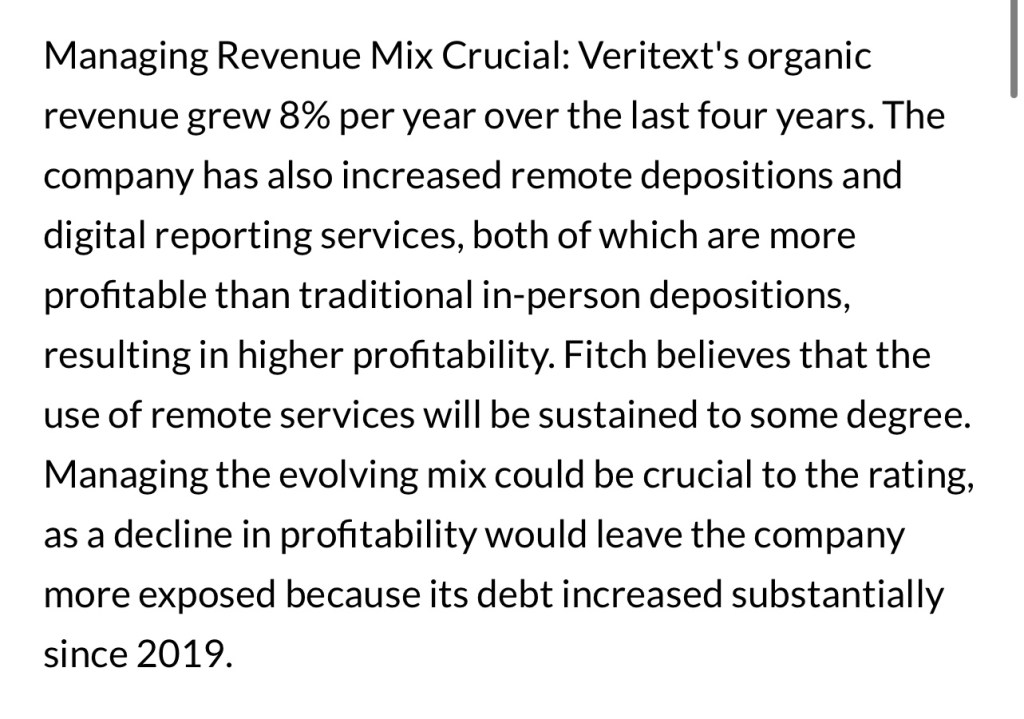
I question the accuracy of the statement that digital is more profitable. Digitals are rapidly sharing my work and beginning to ask for more money. The long con is losing ground by the day. But this gives us an important look into the minds of the people holding the money. They think it’s more profitable, so Veritext has gotta keep pushing that to keep that sweet, sweet financing.
Don’t really understand the part about capex intensity enough to comment or share a belief. But then we get to the assumptions made.


To me, this all boils down to “yeah, this looks like it’ll work out, but they could go bankrupt and we could be left with only 51% recovery of the debt.” Not to be too forward, but if you let me take out hundreds of millions of dollars in debt, you could say the same about me. “Yeah, this might go well, if he doesn’t die holding the bag.”
So we know that Veritext is loaded up with debt and there’s no plan for that debt to be taken care of any time soon. We know that the creditors aren’t brimming with confidence. We know that a significant exodus of customers could cause a drop in revenue that further tanks the IDR, making it more expensive to refinance or take on new debt. We also know that same exodus could fling the thing into bankruptcy, where only about two thirds of the debt will be recovered.
As I see it, we press the advantage through PYRP-style discussions that make the Veritext fraud more widely known or we press the advantage through Stenonymous fundraising and advertising that makes us unignorable. When these folks were in a position of power, they used that power to illegally mislead students, consumers, and small businesses. They used it to lie to you. Now it’s quite public that that power is, in part, an illusion fed by debt and circumstance. And the people that have spent their lives serving those students, consumers, and small businesses are in a position to be advocates for truth.
What happens next?