Voice Writing: A Game Changer For Court Reporting

NOTE: This blog is, in part, a platform for its readers who send essays and materials in to be republished. I have had some comments made about previous posts with regard to voice writing. I’ve made several calls for content from the community. If it’s voice writers and voice writing proponents that answer those calls, guess who gets published?

Without further delay, please join me in enjoying this piece by Marilissa Cram and Ana Fatima Costa!


Voice Writing:  A Game Changer for Court Reporting

Shorthand was invented by Sumerian scribes, who captured speech by writing logo-syllabic cuneiform on clay tablets with a reed stylus. Since then, shorthand methods have evolved into writing with pen on paper; steno machine; and speaking into a steno mask.

On September 27, 2022, California Governor Gavin Newsom signed Assembly Bill No. 156 (AB-156)(*1) into law, allowing voice writers to take the rigorous Certified Shorthand Reporter (CSR) exam and to work in this state.

What is “Voice” Writing?

In the early 1940s, Horace Webb, a shorthand pen writer(*2), invented a method of capturing the record where stenographers repeat verbatim every word into a stenomask in a way that their voices are inaudible to participants and do not disrupt court or deposition proceedings.

AB-156 defines voice writing “… as a verbatim record of a proceeding using a closed microphone voice dictation silencer, steno mask, or similar device using oral shorthand and voice notes made by a Certified Shorthand Reporter.

How does Voice Writing Differ from Steno Machine Writing?

There are more similarities than differences between these two methods.

Similarities

  • Complete rigorous education, training, and certification requirements
  • Use brief forms of complex words and phrases to shorten their writing (i.e., shorthand)
  • Identify every speaker and format and punctuate transcripts on the fly
  • Utilize Computer-Aided Transcription (CAT) systems to produce verbatim transcripts
  • Provide realtime(*3) text of proceedings instantaneously 
  • Adhere to the same high standards of professionalism, impartiality, confidentiality, ethics, accountability, and local, state, and federal rules, statutes, and laws.

Differences

Steno machine writersVoice writers
Write what they hear by precise finger placement of thousands of memorized shorthand word / phrase combinations and steno briefs, using technologically advanced, specialized, chorded steno machines which are connected to their CAT softwareDictate in English what they hear into specialized masks connected to two software programs. Their word / phrase combinations and voice briefs are simultaneously translated into text using advanced speech recognition such as Dragon and their CAT software
Learn the stenographic alphabet (theory)(*4) and how to write on a steno machine keyboard beginning at zero words per minute (wpm). May spend years building speed before taking the CSR certification exam at 200 wpm.Begin learning voice theory in English at 120-140 wpm and build speed. May reach 200 wpm and take the CSR certification exam in as little as a year because they do not need to learn a foreign language.
(*4) Infographic of complex stenographic alphabet / keyboard by steno machine student Stefanie Bugosh

Impact on Court Reporting

Since the adoption of voice writing in 2022, court reporting schools throughout California have experienced an upsurge of enrollment. Voice writing students (many of whom switched from steno machine writing) have been passing the state’s difficult Certified Shorthand Reporter (CSR) exam(*5) at a high rate. As a result, voice writers have been helping to meet the demand for court reporters by filling empty seats in courtrooms throughout the state(*6).  

Challenges and Considerations

Although voice writers(*7) have worked for over 80 years in the military, abroad, and now in 46 states(*8), most California judges, lawyers, their staff, and consumers are unfamiliar with this method of capturing the legal record. Integrating voice writing into traditional court systems, deposition conference rooms, and in remote proceedings will require some adjustments to educate the legal community and public. 

(*7) Photo of Jennifer Franklin, CVR, at SFTLA’s 2023 annual mock trial competition at San Francisco Superior Court, with Hon. Terence Bruiniers (Ret.) presiding. After passing the CSR, Jennifer became the court’s first voice writing official court reporter.
(*8) Map of states allowing voice writing, National Verbatim Reporters Association (NVRA)

The National Verbatim Reporters Association (NVRA)(*9) offers entry-level and advanced certification exams to both steno machine and voice writers. To earn the Certified Verbatim Reporter (CVR) certificate, examinees must pass a written knowledge exam at 70% and three 5-minute dictations with one to two speakers at a 95% accuracy transcription rate.

California’s CSR exam requires a higher standard. To earn their license, steno machine and voice writing candidates must pass two written exams (English and Professional Practices) graded on the Angoff criterion-referenced method and a 13-minute dictation exam with four speakers at a 97.5% degree of accuracy. 

Conclusion

California legal professionals are assured that licensed voice writers entering the field are well equipped to provide equally high standards of performance and verbatim transcripts as traditional steno machine writers. Voice writers are poised to join their steno colleagues as cornerstones of judicial proceedings who capture and protect the record to meet the needs of consumers and help eradicate the shortage.

SAVE THE DATE:  Learn more about voice writing at BASF’s Paralegal Conference on October 18, 2024!

~Author bios~

Marilissa Cram, CVR, is a West Valley College of Court Reporting and Captioning (WVC) student and plans to take the California CSR exam in July 2024.

Ana Fatima Costa, retired California CSR, is a WVC instructor and a founding member of BASF Paralegal Section’s Executive Committee.

This article was originally published by the Bar Association of San Francisco


(*1) 2022-09-28 Cal. Leg., Legislative Counsel’s Digest. Part of this law provides title protection to ensure only licensed Certified Shorthand Reporters (CSRs) are legally entitled to identify themselves as “stenographer,” “reporter,” “court reporter,” or “deposition reporter.

(*2) History: The Horace Webb Story National Verbatim Reporters Association

(*3) Realtime is the instant transcription of reporters’ stenographic or voice notes into English, visible online or in person on viewers’ computers, tablets, or smartphones.

(*5) California Certified Shorthand Reporter (CSR) examination requirements (steno and voice)

(*6) Fact Sheet: Shortage of Certified Shorthand Reporters in California, Judicial Council of California, June 2024

(*9) National Verbatim Reporters Association (NVRA) exam certification requirements (voice and steno)


Special thanks to our authors for submitting this for publication on Stenonymous, the industry’s largest alternative publication for court reporting news & opinion.

Words Per Minute Podcast Launch!

Writing is a dying medium in modern times. My stuff’s good at getting into search engines and warning consumers about Veritext et al., but it doesn’t capture all of the investment that it could.

So I’ve teamed up with a digital court reporter to produce the inaugural episode of our Words Per Minute podcast!

We go deep! He says upfront that for him making less pay is worth it for remote work. I hold a different view, but it was refreshing to hear a new opinion.

“If this deposition is $800, I’m making 75, [where’s the rest going?]”

Tell us what you want to hear about in the comments! Be nice!

Transcript pending.

Stenonymous reveals the Words Per Minute podcast

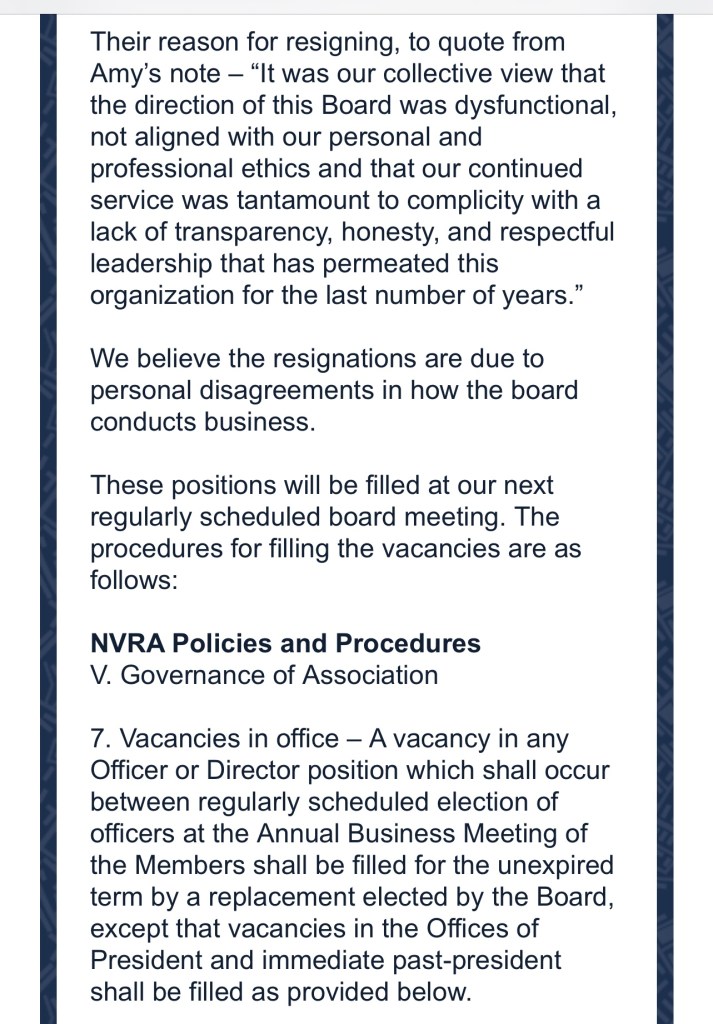
NVRA Board Members Resign: “This President Seems to Prefer to Work in the Shadows…”

MEETING BEING HELD TONIGHT. SEE LINK BELOW.

National Verbatim Reporters Association members were recently alerted to three board resignations.

Notice to NVRA members about resignation

Members from the voice writing community came onto social media to discuss the occurrence.

Message posted on Facebook regarding recent resignations

A letter from Amy Armstrong was made public.

Letter related to National Verbatim Reporters Association board resignation by Amy Armstrong CVR-RVR

Donald Scott, formerly a board member and president of NCRA, offered his perspective on the event.

Donald Scott’s reply to the post made about NVRA board resignations and Amy Armstrong’s letter. NOTE: These are Mr. Scott’s personal thoughts and not a statement by NVRA.

This culminated in a meeting being called by members of the community.

Meeting called by members of the voice writing community after resignations from the board of NVRA occurred.

The link to the meeting is here.

I don’t know that I can say much. I’m a relatively new member of the National Verbatim Reporters Association and am fairly distant from its politics and leadership. But I can honestly say that as a blogger I’ve now had quite a few people come to me about obfuscatory or suspicious things in various court reporting associations, so it doesn’t surprise me too much that NVRA is also having issues. On the best of days, leadership is tough. Being a leader at a time when some of the biggest names in the business can get together under a shell nonprofit and pump the market with lies, and with impunity, is probably worlds tougher.

For what it’s worth, when I read the bit about digital entry, my mind wandered to that piece I did about the cost of corruption. Again, no direct evidence that NVRA or any association is “corrupted,” but they wouldn’t be particularly hard to corrupt.

Maybe associations need these squabbles to stay competitive. If you don’t run the risk of some of your members breaking off and starting a competing association, what motivation do you have to improve?

Addendum:

11/9/23:

MockWoman: Apprentice Required for Mock Depo Experience

Ana Fatima Costa, AKA MockWoman, is a coach and mentor in our field that has been providing internships for court reporters for over 13 years free of charge. To continue this program, there is now a cost of $197 for the experience, which may be covered by the apprentice, a mentor, or a sponsoring agency/business. I sponsored a student in the past and it was a good experience for them, so I have real faith in Ana’s ability to provide an excellent internship experience.

Do you know anyone that might benefit from this real-world experience of simulated testimony and learning under Ana’s guidance? Please consider letting them know about this opportunity or sponsoring them today. See the social media page or check out the informational PDF below.

The event is June 23 and June 24 at 3 Embarcadero Center, 20th floor, San Francisco, CA 94111.

For more information, e-mail afccoaching@gmail.com.

What Is Realtime Voice Writing and Why Is It Better Than Digital Reporting?

In our field there are three main modalities for taking the record or captioning. There is stenography, voice writing, and digital recording. Stenography is using a chorded stenotype and computer dictionary to instantaneously take down and transcribe the spoken word. Digital recording is all about letting a microphone pick up the audio and having somebody transcribe it after the fact. Sometimes digital recording proponents insist that they can run the audio through automatic speech recognition (ASR) systems to “assist the transcriber.” I’ve been pretty open about my feelings there.

Transcribers and digital reporters can do better switching to steno.

There are also nonprofits representing each modality. NCRA is all-in for steno. NVRA admits stenographers, but in my mind is really more for voice writers, and rightfully so. AAERT is pro-recording. ATSP is pro-transcriber to the extent it has any court reporting industry presence. There are others like Global Alliance or STTI that claim to be for all three modalities, but I’ve always gotten a “jack of all trades, master of none” vibe from those types of associations.

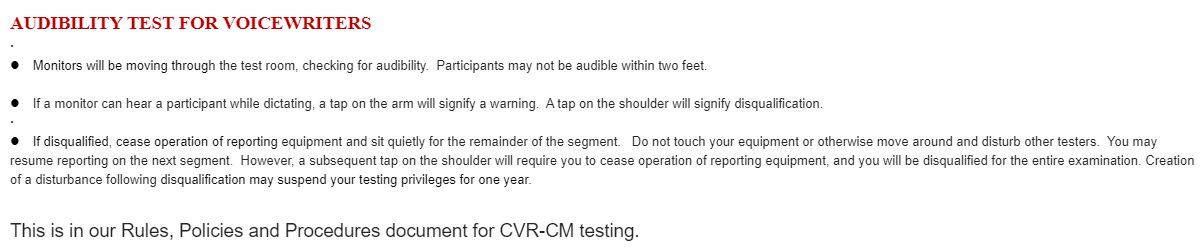
From information available to me, I believe that NCRA is by far the largest organization and in the best position to handle the court reporter shortage, but NVRA does provide an incredibly important role in certifying voice writers. One common problem in the early years of voice writing, which some New York attorneys still hold against them, was that occasionally they could be heard through the mask. Even now, when there is a lot of sibilance, one can infrequently hear a voice writer through the mask. Modern certification requires that the voice writer is able to perform without being heard, and a two-strike policy is employed in which the first time a writer is heard during a test they are tapped on the shoulder. The second time they are heard, they are disqualified. Voice writing tests, like ours, give the voice writer one shot at getting their “voice notes” correct. They are not allowed to repeat or review the test audio. This kind of testing is important and represents the quality standards this industry needs. NVRA confirmed its testing policy in an 8/11/21 e-mail to me.

No audibility within two feet.

Most reporters know that voice writing is, at its core, speaking into a Stenomask or other voice mask and allowing automatic speech recognition to assist in the transcription of what’s said. In some settings, a voice writer may use an open mic. Some stenographic reporters may be surprised to learn that realtime voice writing is superior to digital reporting and general ASR use. In general ASR use, the microphone takes input from everyone and the computer system gives its best guess based on the training data it has. In a study from last year, it was shown that that technology’s accuracy could drop as low as 25% dependent on who is speaking. Realtime voice writing, by comparison, is a trained operator, the voice writer, often speaking into a closed microphone, and utilizing ASR that has been trained to that writer’s voice. In the best of circumstances, that ASR can reliably put out highly accurate transcriptions of the voice writer’s voice — as high as 98%. Many realtime voice writers utilize Dragon by Nuance connected to their preferred CAT software. I guesstimate that Nuance has the best ASR tech, and there’s no coincidence that despite all the other ASR vendors out there, Nuance is the one Microsoft wanted to buy. This lead in technology comes from the system being trained to understand the specific user or voice writer.

One important distinction is the difference between realtime voice writers and voice writers that speak into the mask and have someone else transcribe and do the work. This is very similar to the divide in stenographic reporting where some scopists report having to fill in huge chunks of information missed by the court reporter. A realtime voice writer, like a realtime stenographer, does not have to provide realtime services, but they do maintain the equipment and capability to do so.

The knowledge and preparedness of the voice writer is integral to the integrity of the record produced. Think of all the glitches and anomalies in stenographic CAT software. Think about how reporters create macros and dictionary workarounds every day to deal with them. As an easy example, my software does not like certain punctuation marks to be together. Early in my career, I worked out that placing a backslash between the two marks and then deleting it would override the software’s programming to delete punctuation. Similarly, voice writers have to deal with the complexities of the ASR system, the CAT software, and how they interact in order to overcome word boundary and formatting issues.

The understanding and maintenance of a voice writer’s equipment is also paramount. How the computer “hears” a writer’s voice in one microphone can be vastly different than another microphone. Different masks can be given different training configurations to enhance the ASR transcription. Voice writers are speaking into a mask, and where saliva or liquid gets into the mask it can alter what the computer hears. The competent voice writer monitors their realtime and keeps redundant equipment in case of an equipment failure, including extra masks and multiple audio backups of their “voice notes.” As someone who keeps two stenotypes in case one decides to die mid-trial, I admire the voice writers that take the time to ensure the show goes on in the event of computer problems.

Like us, there are many briefs or triggers voice writers use. The key difference is that they must speak the “steno.” The same way we must come up with a stroke for designating a speaker, they must come up with a voice command. The same way that stenographers must differentiate the word “period” from the punctuation symbol of a period, voice writers historically had to create differentiations. For example, in years gone by, they might have had to say “peerk” for the symbol and “period” for the word. Modern ASR systems are sometimes able to differentiate the word versus the mark without any special command or input from the voice writer! Again, the experience and ability to predict how the software will interpret what is said is an important skill for the realtime voice writer.

The obvious question arises as to why this blog tends to be silent on voice writing. There’s no overt hostility there and deep admiration for the people at the top of the voice writing modality of record taking. Simply put, I truly believe that stenographic reporting is better and will open more doors for students. That’s colored by my own experiences. As of today, voice writers are not allowed to work in my court and be in my civil service title. We can argue about whether they should be allowed, but the simple fact is that New York courts today tend to utilize stenographic reporting or digital recording. It’s easy to see that the qualified voice writer is a far better choice than the digital recording, but I couldn’t say to a student “get into voice writing! You’ll have the same opportunities as I do!”

I also have to present a warning to voice writers and stenographers. I have seen many of us fall into the mindset of “the enemy of my enemy is my friend.” We are much closer to each other than either modality is to digital reporting for the simple reason that we like our jobs. Digital reporting proponents have made little effort to hide that their ultimate goal is to offshore the jobs to Manila, Kenya, India, or wherever they can. Digital reporting proponents want to pay stenographers and voice writers less than half of what they’re worth. Digital reporting proponents don’t even respect their own digital reporters, which is why I’ve suggested those people join the stenographic legion.

There is a tumultuous history between stenographic court reporters and voice writers. I’ve been told by multiple NCRA members that when an effort was made to include voice writers about two decades ago, there was heavy backlash and even some harassment that occurred against those that were pro-integration. That was the climate of yesterday. While it seems unlikely that there will be formal alliance, inclusion, or cooperation, the separation we see today is not the same violent rejection of voice writers from the early 2000s. The civility of NCRA’s 2021 business meeting showed that court reporters are ready to disagree without belligerence and keep our industry moving forward. This is more akin to why the North American Olive Oil Association probably doesn’t partner much with the Global Organization for EPA and DHA Omega-3s. Olive oil and fish oil are both fine oils, but every second and cent spent advocating for one could be spent advocating for the other. It doesn’t make much sense to divide the time and resources. That’s where we are today. What the future holds for tomorrow, I can only imagine.

A big thank you to everyone that made this article possible, up to and including the NVRA. One source of my information was the esteemed Tori Pittman. Trained in both stenography and voice writing, Tori gave me a full demonstration of voice writing and agreed to speak at length about voice writing. See the full interview below!