Court Reporting is Now a Side Hustle

How court reporting companies are getting away with charging top-shelf prices for undervalued work…

The overpriced court reporter page is something that comes up occasionally in legal circles. All through my early career, law firm owners I worked with mentioned how their firms were stuck with expensive court reporter bills. As a young stenographic court reporter, I was paid very little, and later learned that court reporters in my city were about 30 years behind inflation. This set me down a path of skepticism when it came to what court reporters are told about themselves, their industry, and the public’s perception of them. How could lawyers be paying so much when I was making so little and such a large part of the transcript creation was on me?

Years later, as it turned out, some of the largest court reporting companies would get together using a nonprofit called the Speech-to-Text Institute (STTI). That nonprofit would go on to mislead consumers about the stenographer shortage to artificially increase demand for digital court reporting. Tellingly, while a U.S. Legal Support representative had no problem using the word “libel” on one of the female members of my profession, USL and the other multimillion dollar corporations never dared utter a word about my eventual fraud allegations. The companies wanted to trick consumers into believing stenographers were unavailable due to shortage and force digital court reporting on them, where matters are recorded and transcribed.

This set off alarm bells in the world of court reporting. Stenotype manufacturing giant, Stenograph, also represented in STTI’s leadership, shifted from supporting realtime stenographic reporters to shoddy service, and began to call its MAXScribe technology realtime. Realtime, as many attorneys know, is a highly trained subset of court reporting that often comes with a premium. These bait-and-switch tactics on the digital court reporter side of the industry caused a nonprofit called Protect Your Record Project to spring up and begin educating attorneys on what was happening in our field. But as of today, the nonprofit has not reached a level of funding that would allow it to advertise these issues on a national scale — this blog’s in the same boat.

So as more of the workforce is switched to digital reporters / recorders and transcribers, we’re seeing companies use influencers and other media to lure transcribers in for low pay. In short, digital court reporting is now synonymous with side hustle. These companies are going to take the field of skilled reporters that law firms and courts know and love, replace them with transcribers, and go on charging the same money. For the stenographer shortage, these folks were dead silent for the better part of a decade. Now that they need transcribers to replace us, they’re going all out to recruit.

Shopify talks about transcribing as a side hustle.

TranscribeMe, by the way, just entered a partnership with Stenograph.

“What do I care?” That’s what a lot of lawyers and paralegals might be asking at this point. Well, I may not write as well as Alex Su, but I’ll do my best here. First, there are egalitarian concerns. In the Testifying While Black study, stenographers only scored 80% accuracy on the African American Vernacular English dialect. This was widely reported in the media, but what was lost by the media was the reveal of pilot study 1, which showed everyday people only transcribe with an accuracy of about 40% (e226). When we’re talking about replacing court reporters with “side hustle technology,” we’re talking about a potential 50% drop in accuracy and a reduction in court record quality for minority speakers, something courts are largely unaware of. According to the Racial Disparities in Automatic Speech Recognition study, automation isn’t coming to save us either. Voice writing is the best bet for the futurists, and it’s being completely ignored by these big companies.

There are also security concerns. When we’re talking about utilizing transcribers, we’re talking about people that have an economic incentive to sell any private data they might gain from the audio or transcript. If transcription is outsourced, a bribe as low as $600 might be enough to get people acting unethically. Digital court reporting companies have already shown they’re not protective of people’s data — in fact, companies represented in the Speech-to-Text Institute. This also leads to questions about remedies for suspected omissions or tampering. Would you rather subpoena one local stenographer or teams of transcribers, some possibly outside of the jurisdiction?

Finally, there’s an efficiency issue with digital court reporting. Turnaround times can be much slower. Self-reported, it can take up to 6 hours to transcribe 1 hour of audio. By comparison, 1 hour of proceedings can take a qualified stenographer 1 to 2 hours to transcribe. That’s 3 to 6 times faster. Everyone here knows stenographers aren’t perfect and that backlogs happen. Now imagine a world where the backlog is 3 to 6 times what it is today. In one case, a transcript took about two months to deliver. If we’re going to hire teams of transcribers to do the work of one stenographic court reporter, aren’t we going backwards?

This is eerily similar to what went on in medical transcription. Competing interests played games to nobody’s benefit.

Consumers are the ones with the power here. They can demand stenographers, utilize companies that aren’t economically incentivized to lie to them, and spread awareness to other consumers. Consumers, lawyers and court administrators, decide the future. Knowing what you do now, do you want a court reporter or a side hustler at your next deposition or criminal case?

—————————-

Written by Christopher Day, a stenographic court reporter in New York City that has been serving the legal community since 2010. He is also a former board member of the New York State Court Reporters Association and a former volunteer for the National Court Reporters Association STRONG Committee. Day also authors the Stenonymous blog, the industry’s leading independent publication on court reporting media, information, data, analyses, satire, and archiving of current events. He also appeared on VICE with regard to the Testifying While Black study and fiercely advocated for more linguistics training for court reporters in and around New York State.

Donations for the blog will help run advertising for this article and others like it, as well as pay for more journalists and investigators. If you would like to donate, you may use the donation box on the front page of Stenonymous.com, PayPal or Zelle ChristopherDay227@gmail.com, or Venmo @Stenonymous. Growing honest media to combat misconceptions in and about our marketplace is the premier path to a stronger profession and ultimately better service to the legal community.

A posse ad esse.

Addendum:

By sheer coincidence, an article on the side hustle was released the same day as my post. NCRA STRONG’s Lisa Migliore Black and Kim Falgiani really hit it out of the park with this one. Apparently FTR and Rev say they have security in place to prevent sensitive data from being shared. But FTR is known for selling “deficit products,” and Rev is known for its massive security breach. So check out the article by Chelsea Simeon linked above and enjoy!

Social Media Advertising Tips for the Stenographic Legion & More

Occasionally I write about how, in my opinion, if I had a little more money I’d be wiping the floor with the STTI Bloc. I wanted to share a little bit about what I’ve learned over the years, and the story is easy to tell through my Meta Ad account overview.

The lifetime ad spending and impressions of Stenonymous as of February 4, 2023

So, as you can see, that overall CPM was quite high. That’s cost per thousand impressions, or cost per mille. Now that I’m a lot more experienced, I can tell you why that is.

Images can have over 20x the reach of written content. So what happens when I run an image ad?

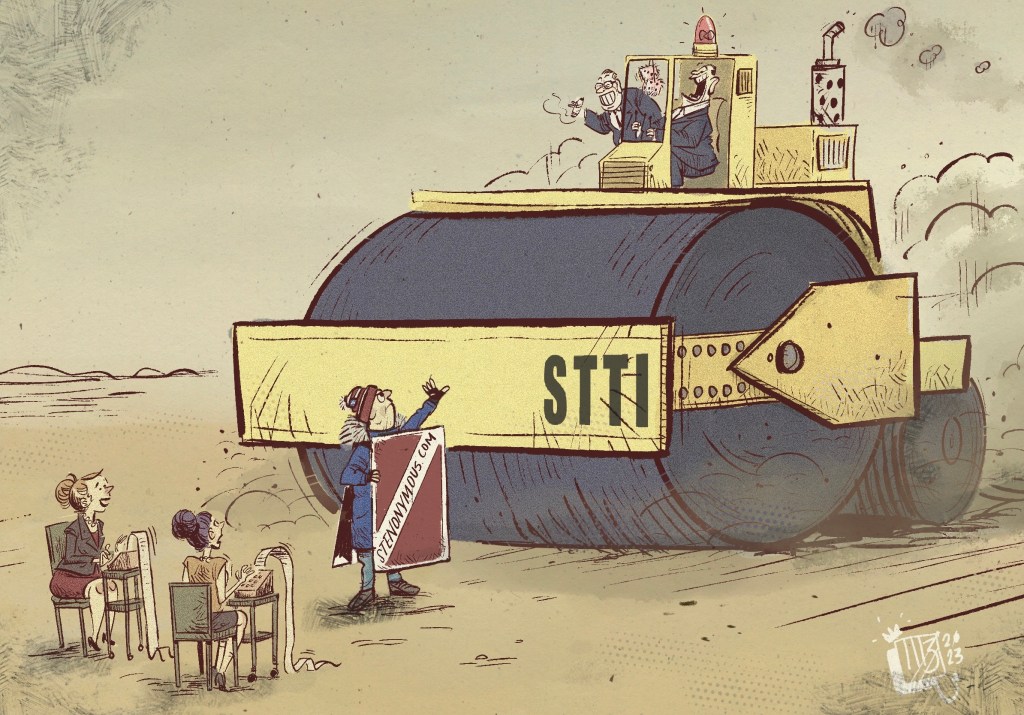
Stenonymous determined to stop the STTI Bloc’s misinformation steamroller or end up under it.
Stenonymous reveals ad spending for 30 days prior to February 4, 2023
Stenonymous reveals huge drop in CPM after switching to image content.

So what I’ve learned is if we tell our story in pictures and artwork, we will, in all likelihood, have a much easier time of reaching people. I have to face the music. My written content is GREAT for documenting the dishonest behavior of the larger corps. It was not great for REACHING people.

So if you’re someone like a PYRP or an association, and you’re going to do social media advertising for some kind of public outreach campaign, for the love of steno, USE IMAGES.

And now you know that if you give ME money, it’s going to high-impact ads and ideas. I’ve got a few things still cooking that I can’t wait to share with you all.

You also now get to see that your donations were not wasted. Impressions are how many times the ad is on the screen. Reach is the number of unique profiles that saw an ad. Stenonymous has put stenographic media in front of half a million people with your help.

Just to drive the point home, look how different these two ad campaigns turned out. I understand how to reach the highest number of people at the lowest cost now.

Stenonymous compares the cost of image versus written advertising.

There’s an added benefit to supporting Stenonymous. I freely release data and information that makes us all stronger. This goes back to my beliefs about the world. I believe that we are all within the same realm of intelligence (some disabilities excepted) and that distributing information puts us on equal footing to make good choices. I am not like other players on the field that want to trick you for the sake of my wallet. If anything, I trick the people that make their money tricking working reporters.

As for the STTI Bloc, this is basically a war of attrition, their money versus our bodies. If you follow me on social media, you’ll know I was tracking Veritext’s digital ads versus steno ads in my feed for the holiday break. These notes confirmed my suspicion, that they were running digital ads much more often.

Stenonymous tracks digital v steno ads by Veritext December 2022

Veritext alone controls millions of dollars, at least from what we can scrape off Google.

A Google search for Veritext Revenue done by Stenonymous

My math has always been pretty simple. Look at what I’ve done with $10,000 and no previous media experience. We shifted the narrative of the field from “the shortage is impossible to solve” to “okay, that was a lie that none of the multimillion dollar corporations have defended in over a year.” There are about 20,000 – 30,000 stenographers. At a median pay of $60,000, stenographers control at least $1.2 billion annually. If they tossed me 0.2% of their income for one year, it’d be like a million dollars. Some of you have given way more than that 0.2%, so I don’t condone you shelling out of your pocket.

But this goes back to my point. We could pound on these idiots every single day for ages with that kind of money. NCRA asks you for about $300 a year. I’m asking for, more or less, $100 for one year, depending on how many people we could get behind a fundraising campaign. Granted, NCRA has expenses and programs I will never have, but I can do things that NCRA can never do. NCRA can never use its considerable market power to hound the fraudsters. There are honest antitrust concerns. Meanwhile, any attempt to bring me to court for the same reason would be laughed out of court because I’m a guy with a blog. I figured all this out in my spare time. I don’t have a Jesus complex, I just realize that we’re up against dirty players, and I’m willing to hit back way harder than they ever thought possible. Good luck hiring digital reporters while someone’s running 24/7 ads about digital being a scam.

That said, if I can’t get the money raised, maybe we could get a letter writing campaign going and flood a few media outlets with a few thousand letters about the shortage fraud. Force them to acknowledge us. Start making noise. I could see many people being hesitant to “go fund me,” but would those same people take the time to copy and paste a letter, press print, and mail it out? I think so.

Stenonymous visitors up for the first time since the massive funding campaign of 2021.

I’ve literally turned screwing with fraudsters into a business. Back me and you’ll see a return. Might come off like a grift, but money is just a means to an end, and that end being us all getting back to work and not worrying about being replaced by inferior technology. But whether or not you do support me, I hope the advertising tip helped.

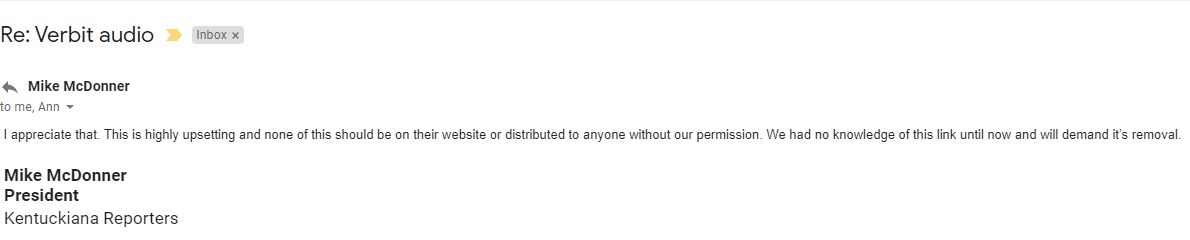
And just in case you don’t think I’m under the skin of these fools, check out an excerpt from an email exchange I had with Mike McDonner of Kentuckiana. He was able to recount word for word every single thing that happened during my medical episode about a year ago after I got that post about me from India taken down.

Mike McDonner from Kentuckiana feigns concern for Christopher Day in 2022, tipping us all off that the STTI Bloc reads the blog and monitors my YouTube.
Christopher Day (Stenonymous) replies to Mike McDonner (Kentuckiana)

Let me ask you this: What kind of monsters run a hit piece on someone who just had a major health crisis?

The kind that are terrified of Stenonymous.

Verbit Published Kentuckiana Proceeding Audio Online Without Anyone’s Permission

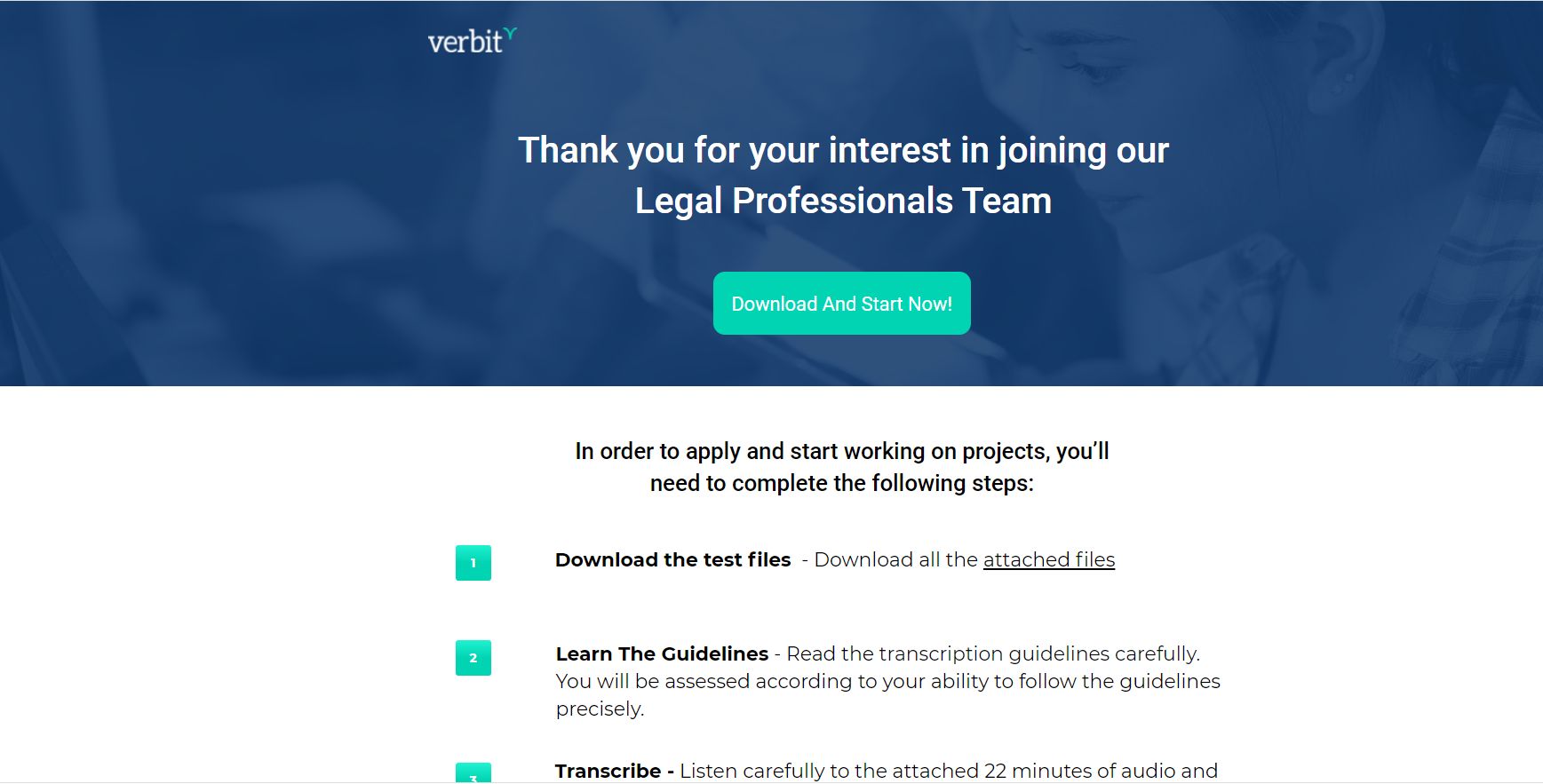
It came to my attention some time ago that Verbit was using a real proceeding’s audio to test its potential transcribers. After entering one’s information, one will get to a screen that encourages him or her to download all the files and put together a transcript from the information and audio given.

Legal professionals = transcribers.

I’ve already made it pretty clear I don’t like digital reporting as a modality. It can threaten access to justice and is the corner-cutting modality of my industry. I don’t like Verbit either. As I see it, consumers and investors are being misled constantly by the company. I do love digital reporters, but mostly because I see them as being taken advantage of. As I see it, we can bring them into the mainstream stenographic court reporting industry and train them to stenotype just like us. I’m very pro-people, and that’s why one of my biggest criticisms of US Legal Support was that it was using all of its power to mislead people into believing the stenographer shortage was impossible to solve while doing nothing to recruit stenographers.

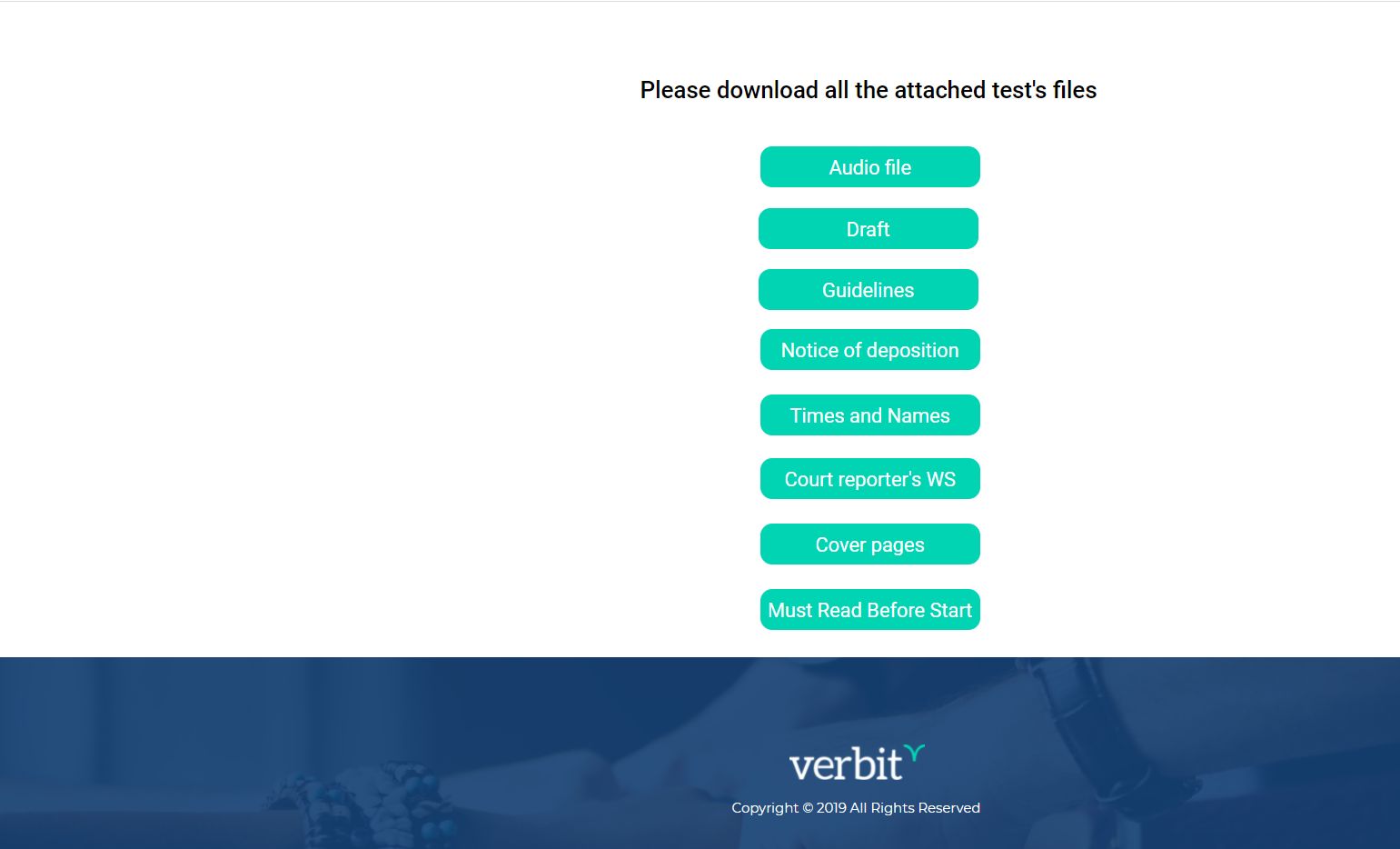
But this just takes my criticism of digital reporting and Verbit to a whole new level. Anyone with access to the link from anywhere in the world can just pop on and download a bunch of files from somebody’s case. These files have been accessible since July 2021 that I personally know of, and these files were still accessible as of September 15, 2021.

Each of the green buttons is a file that you can click and download.

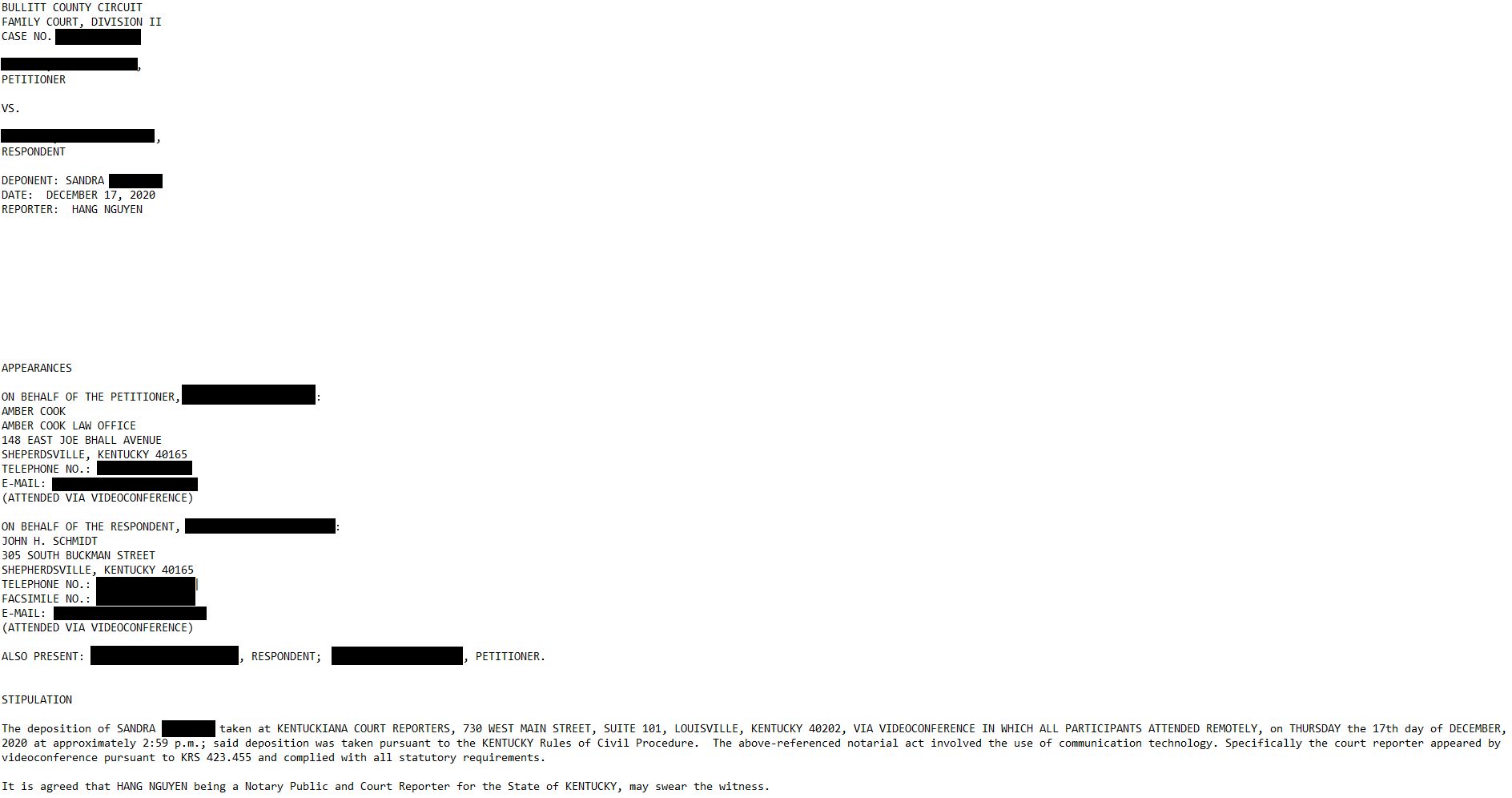
The whole thing leaves me in a pretty tough position. I want to prove this is happening so that court reporters can warn the legal community. But just dumping the evidence onto the internet a second time will violate the parties’ privacy more than it has already been violated. With heavy redaction, though, we can go through the various files and get a good idea of it. Let’s start with the cover page. Just remember, the redactions were put there by me. In the actual files there are no redactions.

This was surprising to me, because usually family court stuff is usually private in my jurisdiction of New York. It’s not something the entire world is able to get its hands on.

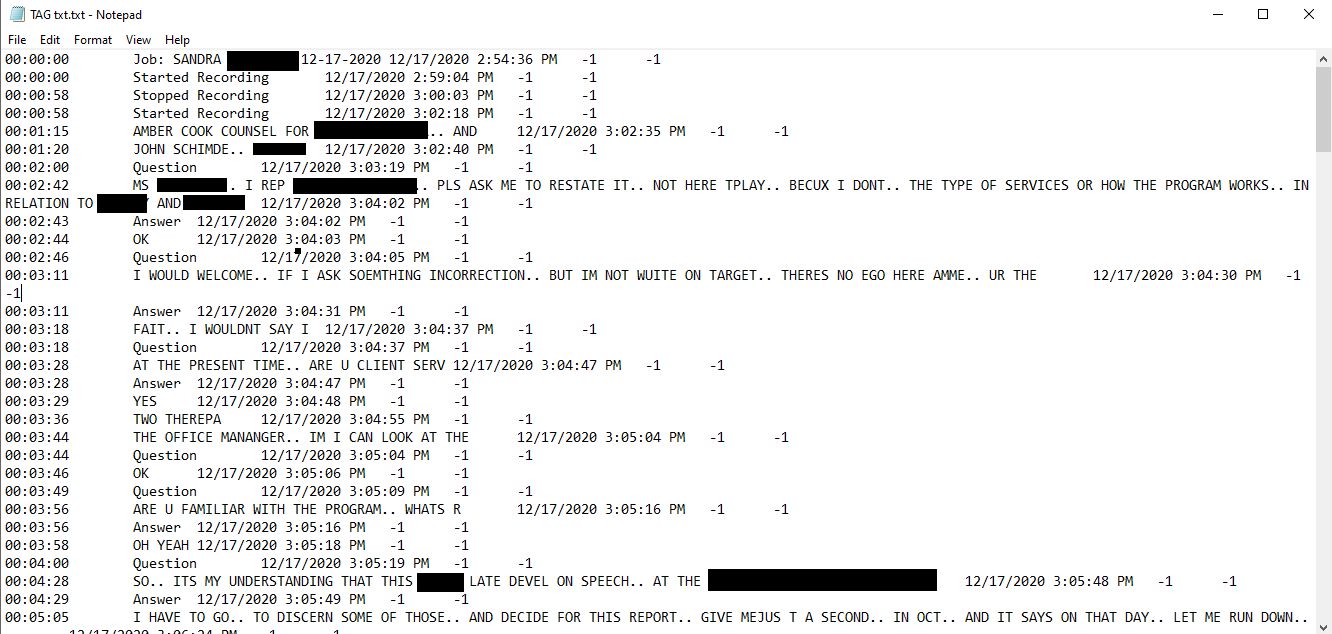
There’s a file labeled TAG, which appears to be the digital reporter or video operator’s annotations. If I am correct about that, this is a window into just how useless the annotations are for a transcriber.

Redactions are mine. The full file has names and information I just don’t think should be published on this blog.

There’s a file containing a notice of deposition. To limit the time spent redacting, I’ll offer up the first page only.

Remember, I was only able to get my hands on this because of Verbit’s recklessness with it.

The “must read” file comes next. Since that’s created entirely by Verbit, it’s downloadable here.

Then there’s a Verbit guidelines page, which seems harmless enough. But it hilariously refers to a “USLS” manual. The file is literally named “redone for USLS,” which to me seems to be fairly good circumstantial evidence that Verbit has a connection to US Legal Support. Not only is US Legal potentially defrauding consumers by making bad claims about the stenographer shortage, they might be working with a company so ignorant of good court reporting practice that it posted a proceeding online.

For the sake of completeness, I went looking for a USLS Manual and I found a 2017 version. Interestingly enough, it reads very much like an employee manual and has very specific formats for jobs. Remember, common law employees are all about who has direction and control of the work. I would say that if US Legal is or was using a 150-something page manual to “train” its “freelancers,” those people are actually common law employees and US Legal probably should have been paying employment taxes for them. What a shame it would be if I uploaded that manual and someone let the IRS know there was potentially a failure to withhold those taxes.

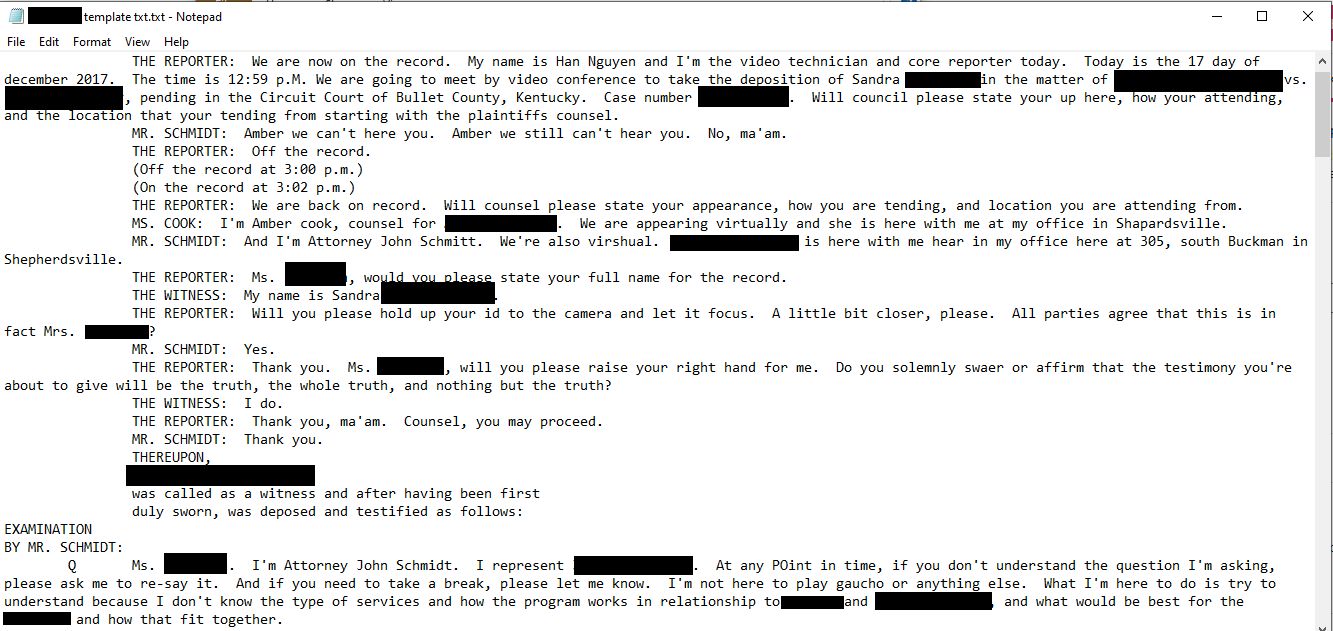
Back to Verbit’s files, they offer a template, which is more or less a transcription of the audio file they’re asking transcribers to transcribe. It is the single greatest indictment against digital reporting I have ever seen. The reporter’s name, Hang Nguyen, is misspelled as Han. The term “court reporter” is spelled “core reporter.” There’s a missing apostrophe. There’s a zero in the word “point.” She asks them to state their appearance and how they’re attending, but somehow it’s transcribed as “state your up here.” There are so many errors that quite frankly I hope my reporting colleagues do not let this go and that they take the time to send this to their bar associations. I am quite sure there are stenographic reporters that make mistakes. I personally make mistakes. But this falls well within the territory of “way too many mistakes to be normalized and accepted by our justice system.”

I bet you Hang Nguyen could be trained to be a damn good stenographer and would do far better than whoever transcribed this.
Remember, companies don’t typically tell their digital reporters we’re an option, let alone that we are the market preference.

There’s a Kentuckiana reporter worksheet that’s published by Verbit. It’s a pretty standard worksheet, so I will not bother to publish it here.

We get to the audio file, and it’s a 22-minute file. Given that this proceeding is a family court matter between two individuals, it’s not appropriate for me to republish, but again, it was available on the internet for months and being used to screen or train Verbit transcribers. It’s real testimony about a family court matter.

This image shows the file time on the right.

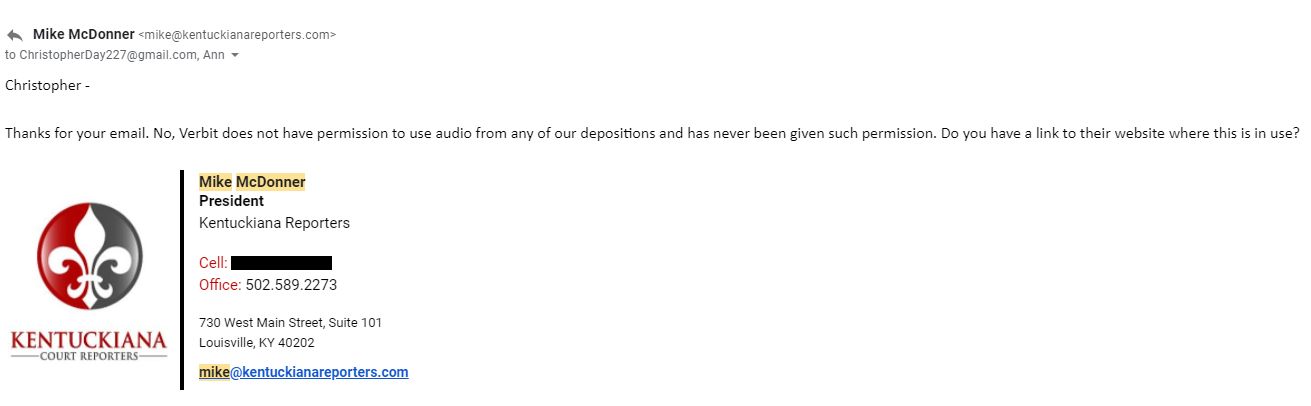
I set out to investigate whether permission had been granted to Verbit to publish these proceedings on the internet. In full disclosure, court reporters have shared audio in our field, but it’s usually a snippet of a word or sentence for clarification purposes and not large chunks of testimony with information that can identify parties. Now, I don’t really like Kentuckiana because of their pro-digital stance, but when I reached out, Michael McDonner seemed very reasonable and made it very clear, permission was not given to distribute this audio.

I had the link and I gave it to him in the hopes he could do something about this.

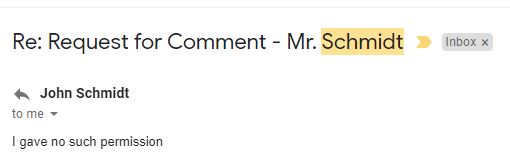
But what about the attorneys? Maybe John Schmidt said it was okay.

John Schmidt did not say it was okay. And I gave him the files and link from my investigation.

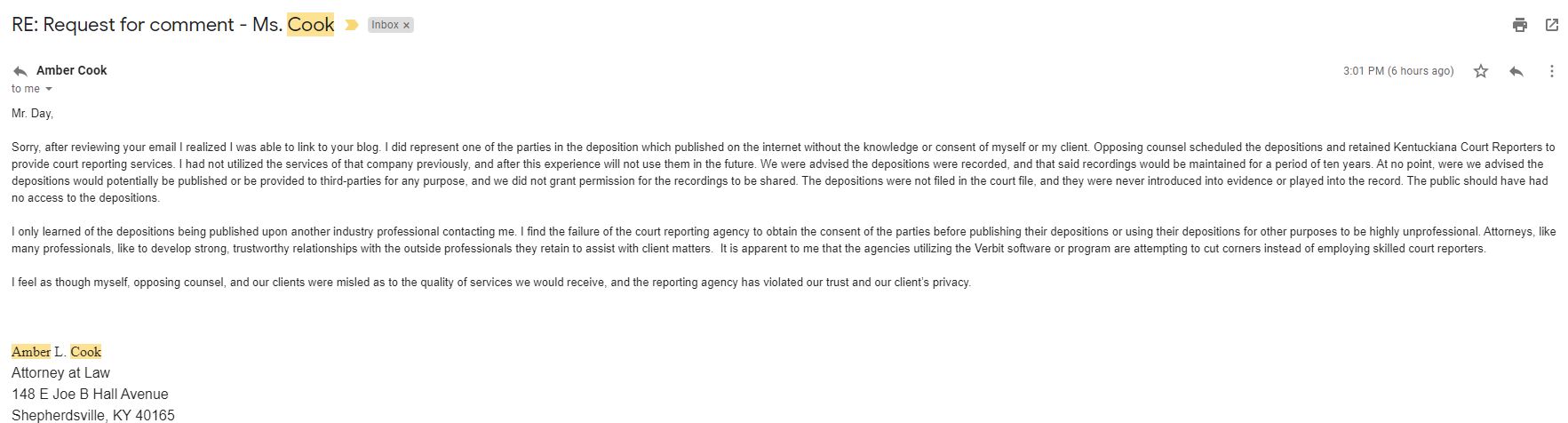
But perhaps Amber Cook had given permission?

“the public should have had no access to the depositions.”

I reached out to Hang Nguyen on LinkedIn but I got no response as of writing. I also reached out to Leor Eliashiv from Verbit. Predictably, there was no response. But at the very least, Kentuckiana made a commitment to demand the audio be taken off the internet after I told them where to find it.

I asked Kentuckiana to consider using stenographic transcribers. I pointed out that we spend a lot of time training our newbies not to make the kinds of mistakes that have been made here.

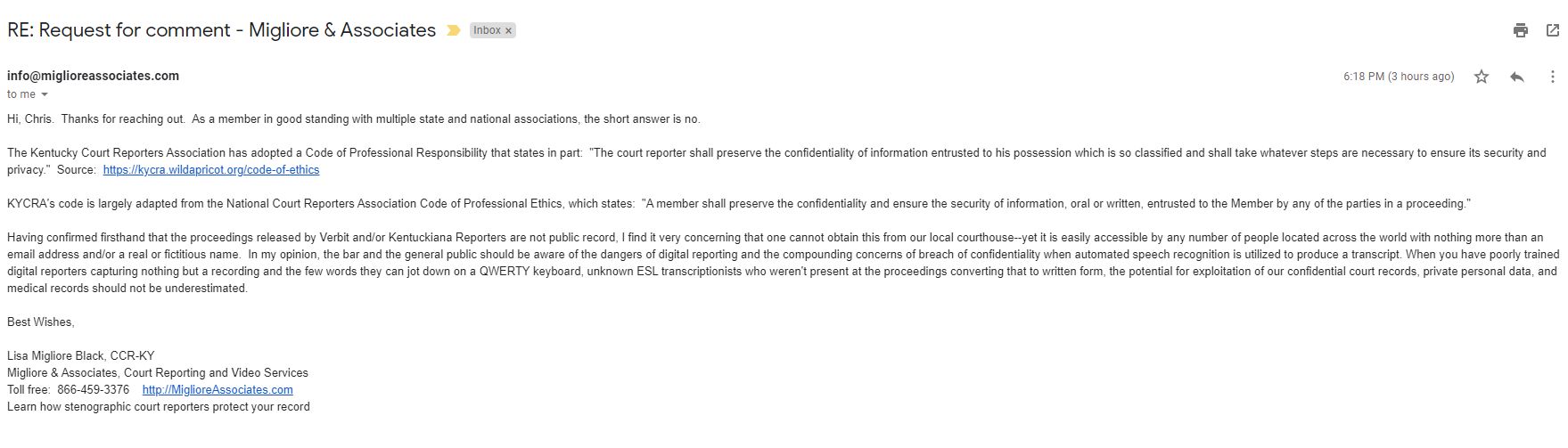
Unfortunately, when it comes to Kentucky, I’m clueless. I have a pretty good relationship with Lisa Migliore from Migliore & Associates. Just to be sure, I asked whether what Verbit was doing was good court reporting practice in that state, and she answered that it was not, citing the Kentucky Court Reporters Association Code of Professional Responsibility.

“…I find it very concerning that one cannot obtain this from our local courthouse–yet it is easily accessible by any number of people located across the world with nothing more than an email address and/or a real or fictitious name.”

For so long our institutions and businesses have been trying to find a way to say we are the superior product. Maybe the answer is to just show consumers what they’re really signing up for if they entrust the future of the legal record to companies like Verbit, tons of errors and potential breaches of privacy. We have to direct people to the many resources to learn stenographic court reporting, such as NCRA A to Z, Project Steno, and Open Steno. We have to get serious about educating consumers. Please consider a donation to Protect Your Record Project today. They have been pioneers and powerhouses in consumer awareness, and it is largely thanks to them that this article will reach thousands.

Addendum:

Within 24 hours after the posting of this blog the files were taken off of the internet.

This is where it used to be.