How Big Business Wielded Antitrust Against Working People & How To Fight Back

Private equity’s incursion into medicine, court reporting, and beyond is about siphoning more of the ecosystem to its control because control makes more money, regardless of the societal consequences. If it truly had a better product, there would be no need for subterfuge. The future belongs to reporters. Together we can give a voice to the principles of accuracy and integrity we hold dear.

Veritext and Esquire brought antitrust suits that seemingly were consolidated against the Louisiana Board of Examiners of Certified Court Reporters. The complaint and settlement agreement can be found on the board’s website. The rules of this game should now be pretty clear. Where court reporters get laws enacted and there are attempts to enforce those laws, lawsuits will follow to wear down the will to enforce the law. Where court reporters fight to enact laws, the multimillion dollar corporations will have more money to lobby government and probably buy our lobbyists too. Where court reporters have laws that go unenforced, the multimillion dollar corporations get to corner and control the market oligopoly style while the government keeps the court reporters in check. Meanwhile, associations are hamstrung by the legal liability of being “competitor collectives.” I’ve only ever said what we’re all thinking: This game is rigged. That is not to say the lawsuit wasn’t meritorious, but then the law isn’t always just.

This situation is not without hope. Over the years I’ve read and written about employee misclassification. Things vary a little bit from place to place, but my understanding of the law is it doesn’t matter what the “employer” and worker call the relationship, a worker can still be found to be a common law employee for purposes of unemployment, workers compensation, Title VII, taxes, or other American rights, like the right to unionize. There’s a form SS-8 from the IRS for determining worker status. There are also DOL complaints. Of course, any one reporter could be singled out and retaliated against, so the key would be for a group of reporters from a similar geographic area / regional office to file, make the case that they are common law employees, and then get a petition going to start a union, preferably with the help of a lawyer.

This kind of organization isn’t easy, but it seems necessary. We face a de facto silencing as the multimillion dollar corporations continue broadcasting digital court reporter jobs and minimizing our online presence with articles about our “impossible” shortage.

Digital court reporting proponents mislead jobseekers by not educating them on the actual state of the industry. From Reddit r/courtreporting.

Just some of the things reporters could collectively bargain for are the right to refuse jobs, the right to work from home, equipment reimbursement, support contract reimbursement, higher pay or page rates, stenography training funds for digitals, staffing ratios of stenographers to digitals, paid association dues for court reporters, severance pay, paid leave, or even some retraining money in the event there is a major technological breakthrough that makes us redundant, which is unlikely. If the big box claims it can’t pay, it may have to open its books to the union.

There are good arguments for court reporters being misclassified under the law. Top of the list is that these businesses couldn’t exist without their independent contractors. Our businesses are not independent of theirs, our business is their business. Where there are ABC laws in place, the independent contractor is (A), free from direction and control in performing the work. A lot of us really aren’t. We’re forced to use a certain layout. Many of us aren’t allowed to subcontract jobs. The agency picks what they want to offer us. We don’t meet their terms, we don’t get the work. (B), the work takes place outside the usual business of the company and off the site of the business. I would love for these companies to defend themselves by saying court reporting businesses are not in the business of court reporting. (C), the worker customarily is engaged in an independent trade, occupation, profession, or business. This is where a lot of us are true independent contractors who have business with multiple firms or even lawyer clients. But for those that are working with the same company for years, as I did with Magna, there’s a real argument that they’re not engaged in independent anything.

Myths of misclassification by the Department of Labor.

In New York this is even muddier. The Court of Appeals, New York’s highest court, looked at who controlled the customer and assignments in the Postmates decision. Some of the things looked at there? Postmates (1), determined which couriers had access to which assignment. Sound familiar? (2), set the delivery fee charged to customers. In New York, at least, the agencies definitely decide the fees. (3), paid couriers a non-negotiable percentage of the delivery fee. Some agencies allow negotiation and some set rates. Some do both. (4), took on the risk of loss by paying couriers for deliveries regardless of whether the customer paid. Again, something that happens routinely in our business. (5), paid a portion of the couriers’ business expenses through prepaid debit cards. (6), did not permit customers to select specific couriers for deliveries on its platform. Lawyers can request us, but only if they know about us. We are effectively “hidden.” Even then, the agency decides whether or not to send us. (7), tracked the courier’s location and provided customers with estimated delivery times on its platform. Agencies occasionally attempt to put out rules like arriving 30 minutes early and so on. (8), assumed responsibility for replacing couriers who became unavailable after accepting a delivery. Agencies do this. (9), handled customer complaints and in some cases retained liability to customers for incorrect or damaged deliveries. One agency in New York has actually had reporters handle customer complaints after the Postmates decision according to a freelancer source, so there may be a shift here, but prior to the Postmates decision agencies generally handled customer complaints. As you can see, those of us with independent business or work from multiple sources may not qualify, but there’s ground to argue.

As individuals, we hold an advantage over organizations. We can make decisions and enact change much faster. Other court reporters have prodded at the issue, and it was enough to prompt talk of settlement.

Halbert et al v Atkinson-Baker Inc class action settlement notice raising a misclassification issue. Docket Alarm link to case.

We have a fairly predictable ethos in court reporting of clinging to our freelance title. That title actively robs us of our right to speak to each other on the issues that matter. It steals away the rights that most court reporters would have if properly classified under law that you just read with your own eyes and/or screen readers. Agencies understand court reporter culture and our lean towards tradition. They not only know the game, but how we react to the game. Who would continue to play a game knowing that it is rigged? If your opponent had a copy of all the moves you were going to make in a chess game, would you keep following the script? Stenographers should lead the movement and we have the best shot at altering the script. If digitals beat us to it, it’ll probably be the other way with contracts favorable to expanding digital.

It’s a question of whether we fight back in the name of ethics, accuracy, and the future careers of the students we’re training today, or whether we lay down and let private equity eat the industry ecosystem for the benefit of its bank account. The heart of what I’m doing is educating working people that things aren’t always as they’re said to be.

DOL Communication to Christopher Day

I find it funny that digital court reporting proponents like Veritext have antitrust concerns while they work together to lead the organization that was publishing fraudulent / misleading statistics apparently meant to manipulate a market.

Speech-to-Text Institute leadership primarily consists of digital court reporting proponent organizations. STTI is the organization that pushed misleading statistics to consumers and jobseekers.

A few thousand dollars and we shifted the narrative from impossible shortage to scumbag corporations tricking honest people. If you think I’m wrong on this, just look at my long history of running the corporations ragged with a minuscule fraction of the resources they have. They understand us? I understand them. And reporters talking about this post is their worst nightmare.

How To Stop Corporate Fraud in Court Reporting by Joe Gratton

The following was written by Joe Gratton for the Stenonymous blog, mostly unedited:

There’s currently ongoing and blatant corporate fraud in the court reporting industry. Yet many industry professionals remain unaware and unconcerned about the danger posed by companies deliberately exaggerating the court reporter shortage to espouse the benefits of digital court reporting as if the two services are somehow equivalent.

The companies that have tacitly colluded under the umbrella of the non-profit Speech-to-Text Institute (STTI) are engaging in deceptive practices by spreading misinformation about the cost, quality, and validity of digital court reporting services.

With little to no oversight by courts or government agencies, these companies are getting away with it. However, there are steps stenographers, lawyers, and other affected parties can undertake to ensure justice is served and the court reporting profession is protected from further subversion.  

Background to the Corporate Fraud Currently Occurring in the Court Reporting Profession

It’s worthwhile spending a few moments elucidating the circumstances that have allowed corporate fraud to occur unchecked thus far. 

It’s essential to start by explaining that, yes, there are court reporter shortages within the United States – primarily due to retirement. However, these shortages are minimal and localized. Moreover, these minor shortages are increasingly offset by excellent recruitment initiatives led by National Court Reporters A to Z, Project Steno, Open Steno, and other worthy organizations. 

The companies launching spurious claims that the shortage can’t possibly be filled with more stenographers (and, therefore, should be replaced with the vastly inferior practice of digital court reporting) base their assumptions on the deeply-flawed Ducker Report of 2013-14, which stated that 70% of court reporters would retire over the next 20 years (2013-2033). 

Not only is the report now rapidly approaching ten years since publication (significantly undermining its relevance), but those predictions were based on, wait for it, interviews with 120 industry professionals from in and around the industry. Even with some “proprietary data analysis” thrown in from Ducker, how anyone can profess that there’s currently a potentially industry-ending court reporter shortage based on such flimsy evidence is anyone’s guess.

Worse, when reviewing objective industry data, there are around 27,000 court reporters still active within the profession. How many were there in 2013, the year of the Ducker Report? 21,000. The predicted retirement cliff must be getting taller every day since stenographer numbers are still trending upward ten years later. 

And yet, companies such as Veritext, US Legal, and others have happily used these terribly inaccurate extrapolations to make even worse predictions about stenography’s future. 

For instance, they have gone on the record to claim the industry requires 82,000 stenography training program enrollments annually (based on a 10% graduation rate) to plug the self-proclaimed shortfall. Yet this figure would quadruple the size of the entire court reporter industry today and increase the pool of available court reporters to six times that of 2014, the year the so-called “shortfall crisis” started. 

With wildly incorrect and baseless predictions like these, it’s easy to see why those with only the most tenuous of links to the legal profession are raising eyebrows at how some of these court reporting companies are getting away with blatantly misleading the public for so long. 

Why Corporate Fraud in Court Reporting Continues Today

There’s a pretty obvious reason these companies keep promoting and disseminating their misleading and inaccurate claims: there’s a lot of money to be made.

Stenography is skilled labor and is remunerated as such (some might say underpaid). For someone to type at a rate of 225+ words per minute with an accuracy rate of 99.8% takes years of training and dedication. Stenographic writing is closer to playing the piano than typing on a keyboard. It takes at least two years in a stenography training program, state licensure, and professional certification. 

Digital court reporter training lasts six months, with most of that time spent learning how to take accurate notes and operate sound and video equipment. That’s it. 

In short, these companies want to replace those hard-earned skills with technology so they can charge less for their services and make huge profit margins while doing so. With audio and video equipment in place, digital court reporters merely make sure the equipment is working and note key pieces of testimony.

The companies in question want to mislead the world into thinking that digital court reporting does the same work as traditional court reporting. But once again, the objective facts of the profession paint a different picture.

Automated Speech Recognition (ASR) software delivers a dreadful 25%-80% accuracy rate, and non-stenographers transcribe English dialects such as African American Vernacular English (AAVE) at a rate half as accurate as court reporters. These are merely two of dozens of damning examples showing that digital court reporting cannot replace standard court reporting. 

And yet the two are conflated as one and the same on a daily basis by those that stand to profit most from doing so.  

How they have been allowed to for so long somewhat beggars belief. 

It seems that, thus far, the courts and government agencies tasked with protecting the public from fraudsters and con artists seem unwilling or unable to act.

So can change be instigated? How can those being hurt by these misleading and fraudulent claims take action?

How to Fight Corporate Fraud in Court Reporting 

The simple answer is to fight back. The very tactics companies use to mislead the public can be used against them. They are so brazen and demonstrably false that they are easy to report to the appropriate authorities. 

Report Antitrust, False Advertising, or Deceptive Business Practices to the State Attorney General

Where applicable, it makes sense to refer complaints about deceptive practices and patently false advertising to the relevant state attorney general. Not only will they have a more precise understanding of the misrepresentation at hand (being lawyers themselves) than government agencies such as the Federal Trade Commission (FTC), but state attorney generals have the legal power to act against such companies.

Their purview, among other responsibilities, includes enforcing their given state’s consumer protection laws. Given the flagrant breaches occurring, including false advertising, tacit collusion, and deceptive marketing practices, it would be entirely reasonable to expect that they can take action against these corporate fraudsters if made aware. 

Report Antitrust Violations and False Advertising to Federal Trade Commission

Given the attempts by the STTI to falsely create a market problem and sell the solution (digital court reporting), it’s worth reporting any antitrust or false advertising violations to the FTC.

Not only have they already pledged to protect gig workers from unfair, deceptive, and anticompetitive practices, but they have specifically stated they will also investigate exclusionary or predatory conduct that could cause harm to customers or reduced compensation, or poorer working conditions for gig workers.

Given the practices of these companies harms both customers (by giving the false illusion of equivalency between standard and digital court reporting and deceptively exaggerating the court report shortage) and the 70% of court reporters that work as independent contractors, the FTC should at the very least investigate these practices.  

Sending Information to Local and Corporate News Outlets

Sometimes the only way to draw attention to a problem is to throw a spotlight on it. By writing emails to editors of local newspapers or contacting local TV stations and radio stations, it’s possible to make clients aware of the deceptive practices and have them contact the relevant authorities and regulators to demand action. 

At the very least, it may be that these fraudulent operators have to answer very direct questions regarding their business practices. With the glare of a significant readership or viewership, they may squirm under the pressure and be forced into providing evidence and documentation that doesn’t actually support their statements. 

Contact Local Elected Officials

Another option for stopping corporate fraud on this scale is contacting elected local officials at either state legislature or county levels. 

Not only do they have the power to pass laws that protect consumers from unfair or deceptive trade practices, but they also have a direct line to the government agencies tasked with enforcing those laws, such as the FTC and state attorney general. 

Once again, those with the power to act can’t do so if they are ignorant of the problem in the first place. Only by publicizing these fraudulent practices can lawmakers and regulators be forced to act. 

Court Reporting is Under Attack from Those Standing to Benefit from Its Demise: It’s Time to Act

There’s no question that the court reporter shortage has been leapt upon by companies such as Veritext, US Legal, Planet Depos, and other members of the STTI as an opportunity to cash in on the digital court reporting market.

By replacing incredibly skilled labor with unskilled and automated digital transcription, they persist in attempting to convince law firms, courts, and even government agencies that digital court reporting is a viable replacement. 

The statistics speak for themselves on that front.

However, it’s the hyperbolic claims being made and the outright lies being spread about the court reporting industry in the name of corporate greed that are truly egregious. It’s naked corporate fraud that is only being further enabled by the willful ignorance of many lawmakers and regulators tasked with protecting consumers from unfair and deceptive trade practices.  

Thus, the onus is now on those willing to stand up for justice to take action using some, if not all, of the avenues mentioned above.

Hopefully, with coordinated and concerted action, there can be an end to the rampant corporate fraud taking place within the court reporting and stenography profession.   

Author: Joe Gratton
Bio: Joe Gratton is a professional writer who has worked with a number of legal firms in the United States, covering topics including court reporting, legal videography, electronic discovery (e-Discovery), and trial presentation services. 

Veritext Seeking Videos to Promote Steno

Veritext announced that it is accepting videos promoting steno. Film a video of yourself with your machine and say “I am a court reporter.” Sample ideas are available.

Veritext calls for videos to promote steno

The “get started” button leads here.

I don’t want to be too disparaging. One of my primary gripes has been the very lopsided promotion of digital, and if they’re doing something positive for us, it should go forward. No doubt, good job, Veritext. Thanks for spending the time and money to do this. I mean that.

I must remind reporters, though, that this is a clear indication that the Speech-to-Text Institute, associated with Veritext’s Adam Friend, lied when it said the stenographer shortage was impossible to solve. If our shortage was impossible to solve, Veritext would have zero incentive to continue to attract anyone to the field. It would, in fact, be heartless to lure people into a dying field. This supports my claim that our field is not dying, and that any decline is reversible. The numbers support this to the extent they exist.

I am ecstatic that Veritext is doing something positive. It doesn’t really negate the fact that they have been advertising for digital reporters on LinkedIn for over a year that I’ve been monitoring it. That means every day spamming jobseekers with digital, digital, digital. So to make a video and release that and share it is nice, but it’s not quite the same impact on the market in my estimation. Maybe I will be wrong. Hopefully I will be wrong. Advertising stenography now gives us the people we’ll need later. Timing and enthusiasm matters. And the timing of this is a little odd. We’re being deleted in Indiana. Has Veritext made a comment to the court about that like many of us have?

If I were Veritext, I’d claim that this video initiative helped solve the shortage and throw Cudahy’s math under the bus. It’d be a smart move for them. They get to be the heroes and cast doubt on Stenonymous in one swift move.

I’ll be submitting a video. I encourage others to if they have the time. While I am suspicious of Veritext’s motives at the top of their corporate structure, most of the people that work below them are going to be decent people. When I submitted something to their reporter corner years ago, it got featured. This is to say I don’t believe videos will be misused in any way. I really believe they’ll do exactly what they’re proposing to do here, and I think it’ll be great.

I just hope there’s more, and that this is not a one-off before they return to burying us.

Videos: Corporate Fraudsters, Stenographers say “We’re Coming for Ya!”

“Anything more to say about this fraud and stuff that you’re trying to fight?” “We’re coming for ya!” Corporate fraud in the court reporter shortage continues… (Stenonymous)

On Sunday my best friend Joshua Edwards and I headed out to Washington Square Park to talk to the public a little bit about court reporting generally and the court reporting shortage fraud that is ongoing in our field. With help from several locals, we managed to secure footage of our time out and it’s my pleasure to share it now with court reporters across the country.

As I see it, there are two ways to combat shortage issues today. Either help bring attention to the blatant fraud ongoing or try to raise awareness about the profession at schools and other events. This was something of a hybrid where we made some noise about our issues and spent time educating the public on court reporting. I also used the event to solicit some donations.

Christopher Day (Stenonymous) talking to the public about court reporting and court reporter shortage fraud.
Christopher Day at Washington Square Park to discuss court reporting and court reporter shortage fraud.

Just to prove that I’m really serious about supporting the stenographic legion, I may or may not have stood inside the fountain.

Christopher Day at Washington Square Park to talk to a bunch of chalk smiley faces about court reporting.

I mean, I even talked to the Garibaldi statue about court reporting.

Christopher Day (Stenonymous) talks to the Garibaldi statue at Washington Square Park about court reporting.

I got to talk about the Racial Disparities in Automatic Speech Recognition study.

Christopher Day (Stenonymous) discussing the Racial Disparities in Automatic Speech Recognition study.

I got to discuss digital recording and the two-month backlog that I published about on Saturday.

Christopher Day discusses a 2-month delay to digitally recorded transcripts.

Joshua Edwards, RDR, CRR, CRC, also got in on the action, letting members of the public know about Stenonymous and court reporting.

Joshua Edwards discusses court reporting and stenography with members of the public.

I made sure to let the public know that jobseekers are being misled into digital court reporting too.

Christopher Day (Stenonymous) speaks about jobseekers being misled into digital court reporting.

“Certain forces are trying to get rid of the stenographer…” That’s what we got to tell people. And we made sure to get it on camera so that all of you can easily share it. We all see what’s happening in Indiana right now.

Christopher Day (Stenonymous) and Joshua Edwards reveal there are forces trying to get rid of stenographers. We met a man who had a deposition because he was hit by a bulldozer. Medical transcription is also discussed.

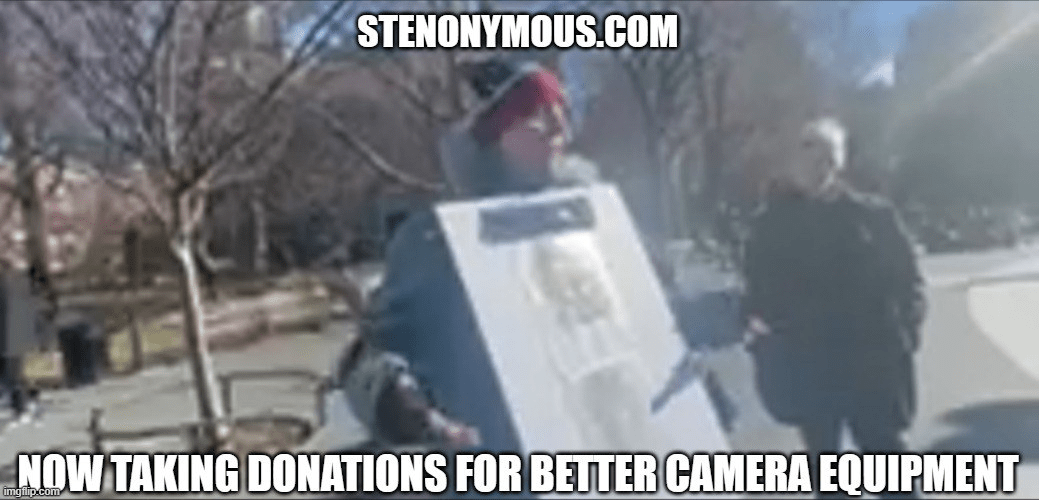
I’d like to ask individuals and institutions to consider sending some funding to Stenonymous. I know many of you are busy people that cannot afford to take the time to dive into every last bit of my writing, research, and documentation over the last half decade. But clearly something is very wrong. The largest companies in our industry do not care enough about their brand to (a) attempt to convince me I’m wrong or (b) slap me with some kind of legal notice. Multimillion dollar corporations. Does it really seem off base to suggest that there might be antitrust issues here when some of the largest competitors in the field have syndicated behind a shell nonprofit to pump the market with misinformation?

If I’m right, then we should all be pretty concerned about having a marketplace where the government is inert while the largest players illegally bully the smaller court reporting providers into digital, which they’ve conveniently set up to have stakes in/relationships with, in terms of training and equipment vending.

If I’m wrong, then this is a very cruel field, because not one of you has tried to tell me I am wrong or pointed me to research that beats mine.

And if I’m right, then your money is pretty well spent on me. With the support of court reporters like you, we blew through the false media narrative of an “impossible” shortage. With more support we could afford to hire more writers, investigators, content creators, or even legal advocates. Who would like a filmed protest outside Veritext? Who’d like to have a media footprint that rivals other industries? Who’d like to push this issue until it can no longer be ignored? I’m the guy for the job. Help me out and I’ll bring allies to this field one by one.

A member of the public poses with Christopher Day (Stenonymous) in solidarity against corporate fraud.

Even if you choose not to throw any support my way, let this stand as a reminder that where there is injustice people can resist in small ways that lead to something greater. The name of the game is connecting with people, because if my time in Washington Square Park told me anything, it’s that they’re on our side.

The Voiceless Victims of StoryCloud

Jamie S. Blair’s Monday post, “Cloud”-Based Malfeasance in the Digital Court Reporting Industry explored some of the human cost of digital reporting. When StoryCloud decided to wrap up its business earlier this year, there was no warning and no severance for its workers.

Ken Kalb from StoryCloud allegedly stated that investors had grown weary of yearly losses from StoryCloud, raising the possibility that it was a zombie corporation. Even if it was not a zombie corporation, Jamie Blair notes that he later got information from Stenonymous (and his friend Christopher Day!) about the writ in Texas that was filed and truth behind the StoryCloud debacle.

This all illustrates what I have been saying on social media for a while. Digital court reporters across the country are being misled to believe this is the future. Worse, when things collapsed, no attorney would help, and as Blair writes, “we were victims without bellwether trial voices.” And what happened after the collapse and digital reporters came on the market? Lowball offers.

Hopefully by sharing with and educating each other we can continue to reach more people before they face the kind of situation the employees of StoryCloud faced. For now, I’d like to thank Jamie for coming forward with the truth and give us some perspective of what it looked like on “the other side.”

TransAtlantic & Stenograph Partner

Had the pleasure of viewing this interview between Stenograph and TransAtlantic about their new partnership. TransAtlantic’s David Ross, Secretary/Treasurer of the Speech-to-Text Institute, mentions during the interview that a machine will “never, ever, ever” replace the reporter. I found the interview to be seeded with more generalities about the shortage. It came across to me as trying to sell the idea of shortage.

Mr. Ross did have a lot of positives to say about stenographers, “And we’re very proud of them and honored to have them and I just wish there were more.” But the direction of the company seems clear, it’s going to be about digital court reporter integration. He even mentions the possibility of stenographers switching over to “try something new.” Towards the close of the interview he notes we should never be threatened by technology and keep an open mind. But those of us that dispute the severity of shortage are open minded. Most of us had to be convinced by math and science that there was a problem with the numbers and narrative being distributed to the public. Why has there been a push to get stenographers to go digital if digital is so easy to recruit and train for?

It’s tough for me. I personally see many companies coming and saying they have a shortage, but I see little in the way of communication. They’re largely not on our Facebook groups, not using PRO Link, not using recruiters on LinkedIn, and not asking our associations for help. This is why I am generally suspicious of the narrative being sold at every turn: “The shortage is insurmountable, you must change, or else.” It’s fear appeal propaganda. I do it too, but for truth.

This comes after US Legal Support’s partnership with Stenograph in October.

Addendum:

Stenograph and Project Steno partnered soon after.

The Hilarity of Veritext’s Silence

2019: A VP of Veritext makes some post or writing explaining that digital court reporting would change the landscape of our field. Veritext allegedly fires her and states stenography is the lifeblood of our industry.

Clipped from Stenonymous links found here.

2020: Veritext issues a letter trying to emphasize the dire shortage stats, stats that I later poked holes in. Even in 2020, I knew. Real change from lifeblood, huh?

2021: A public awareness campaign is launched over the bad stats and dishonest behavior in our field. Thousands of people see it.

2022: I’m openly calling them fraudsters. If you Google Veritext fraud I come up. No more open letters for stenographers?

Christopher Day posting about Veritext on Facebook, forgets to mention Cover Crow.
Veritext not looking for stenographers on LinkedIn.

Veritext shares an interesting quirk with U.S. Legal’s Peter Giammanco. Both seem just fine bullying or gaslighting women and seem to shrivel up when challenged. The pro-steno things both companies do are appreciated, but it’s pretty clear that they’re hedging their bets in the steno v digital debate, and I’m done giving them the benefit of the doubt.

The question remains, what to do about all this? The government’s inert. A lot of the reporters working with big box can’t be seen opposing big box. I’ve simply run out of money for the social media advertising — thank you to those that continue to help. I do have plans to further the public awareness campaign and I look forward to sharing them soon.

What do you all think?

Are Transcription Companies Using Influencers to Build Workforce?

Migliore & Associates posted this influencer video. You could tell it would be good by what the firm had to say about the video.

Migliore & Associates: Your case shouldn’t be somebody’s side hustle. Hire a professional stenographic court reporter.

I’ve personally seen a couple of videos like it. The presenter starts “ready for another side hustle? This one’s for you if you are broke and lazy.” She proceeds to mention that you can transcribe audio and video into text with these websites.

Likely transcription influencer describes sites where people can find transcription work.

The video continues to make transcription seem simple by stating that you’re not actually doing any work. She mentions how you can go to an automatic speech recognition (ASR) site called SpeechNotes, speak the words, and have them transcribed. But the science we have so far points to ASR being better for whites than black speakers as well as the AAVE dialect. That’s a lot of unserved jobseekers. What she’s describing is essentially voice writing, but without a “stenomask” or Nuance’s software trained to your voice. She closes by saying, in part, that there’s “no reason” a person can’t make $2,000 to $3,000 a month.

There’s a lot to be said about this. First, it embodies and emboldens our argument about quality. Do lawyers want the accuracy of the record to become a side hustle? It also points to what a scam digital court reporting / recording really is, because even if companies are able to successfully train enough digital reporters / recorders to take the work, it’s clear that there’s a transcriber shortage.

Digital court reporting proponents want to move to a system of digital reporters and transcribers despite a transcriber shortage.

Probably from the terrible pay! $0.30 to $1.10 per audio minute according to the video. That’s $18 to $66 per hour. That doesn’t account for any time it takes to submit a job or edit voice transcription mistakes, which could be 20% or more of a transcription. That doesn’t include any proofreading time. With average transcription times ranging anywhere between an hour and six hours, depending on the methodology of transcription, we could be talking about $9 to $33 an hour. Less if we actually divide by six, $3 to $11 an hour. That $2,000 a month could require between 666 hours and 60 hours. At that kind of pay, transcribers would probably be better off trying to argue that they are misclassified employees — at least it would guarantee the ones in America minimum wage, which the independent contractor title does not. At that kind of pay, it means digital court reporting / recording won’t have enough transcribers to cover all the work it wants to take from stenography.

Likely transcription influencer points to the pay one can expect as a transcriber, omits the extra time it takes to transcribe certain matters.
Image of a transcriber reporting that a 1-hour deposition can take 6 hours to transcribe.

Transcription companies utilize influencers to bring in business. It’s not hard to imagine transcribers also being lured in under this model. Transcription fixture Rev is open about their influencer program to bring in business, which I respect.

Could Rev’s influencer program create content misleading to jobseekers?

This is an easy peek at how companies manipulate folks. Throw up an attractive model, make something seem great, get people to buy into the idea. Once they’re bought in, post-purchase rationalization and confirmation bias keep them bought in unless they have a horrifying epiphany or really bad experience.

There are people in the field speaking out against mistreatment, but progress is slow. Stenographers can take note that the cracks are forming in the narrative of the larger corporate players though. Is this the future? Yes? Then why are we paying people like it’s 1990? Is this equal to stenography? Yes? Why don’t you pay them like stenographers? No? Why are you selling it? What’s the turnover like with these people we pay peanuts to? High? Why are you wasting all that time and energy retraining people? Do you profit from it? Low turnover? Then where are all these people? We have to deal with a crushing reality: Most of the data that people would need to make good decisions is in private hands that profit from the data being unavailable.

Luckily we have our own influencers and their numbers are likely to grow once stenographic organizations and collectives start getting serious about reaching audiences. Can’t wait to see what the creative minds out there think up next.

Addendum:

TikTok user workathomewoman mentions in her video a 3 to 1 ratio being possible for an experienced transcriber.

NCRA Net Assets Dwarf Competitors, Digital Court Reporting Bad for Business

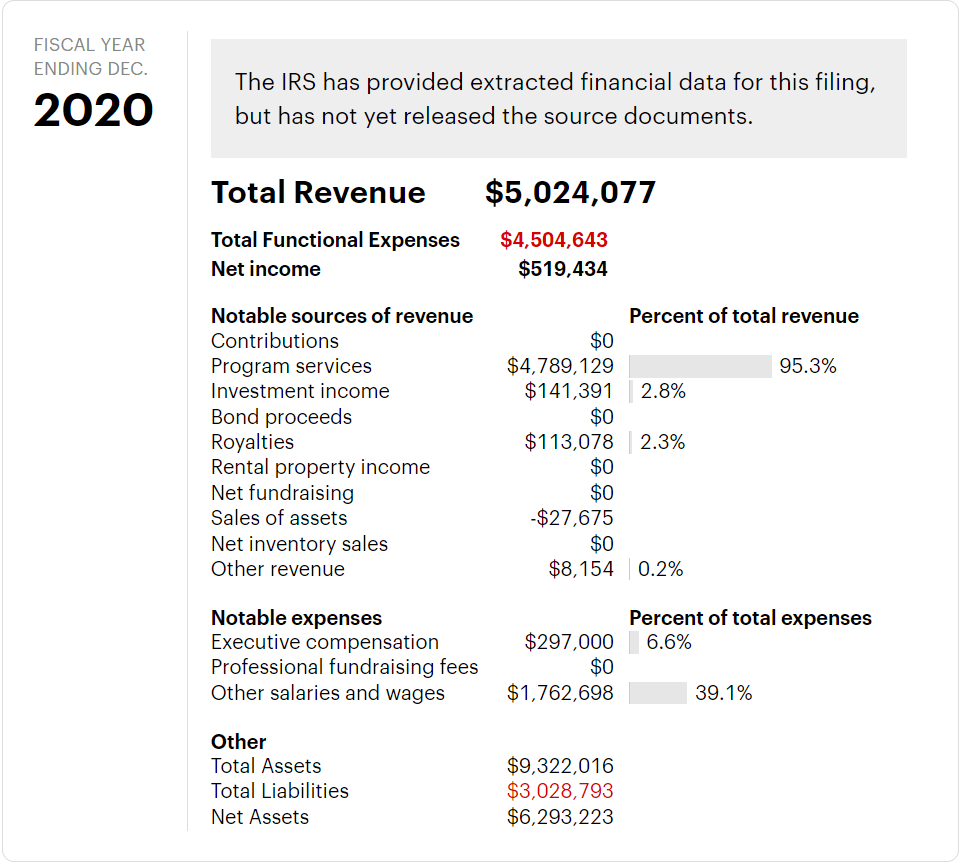
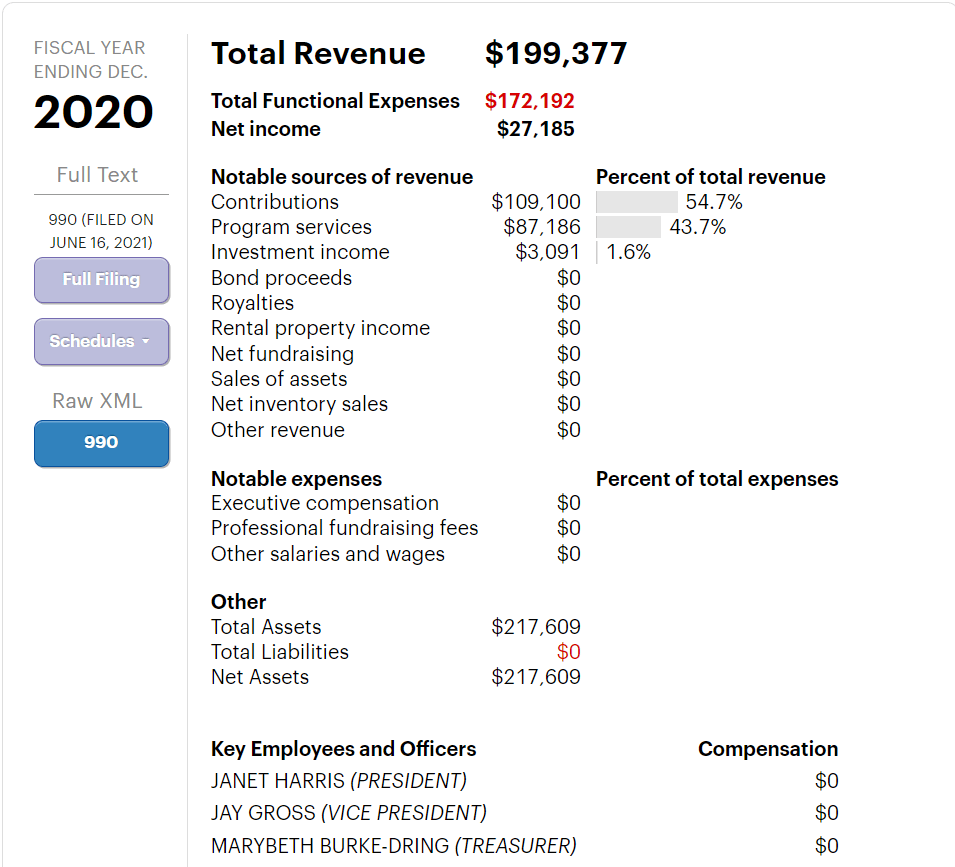
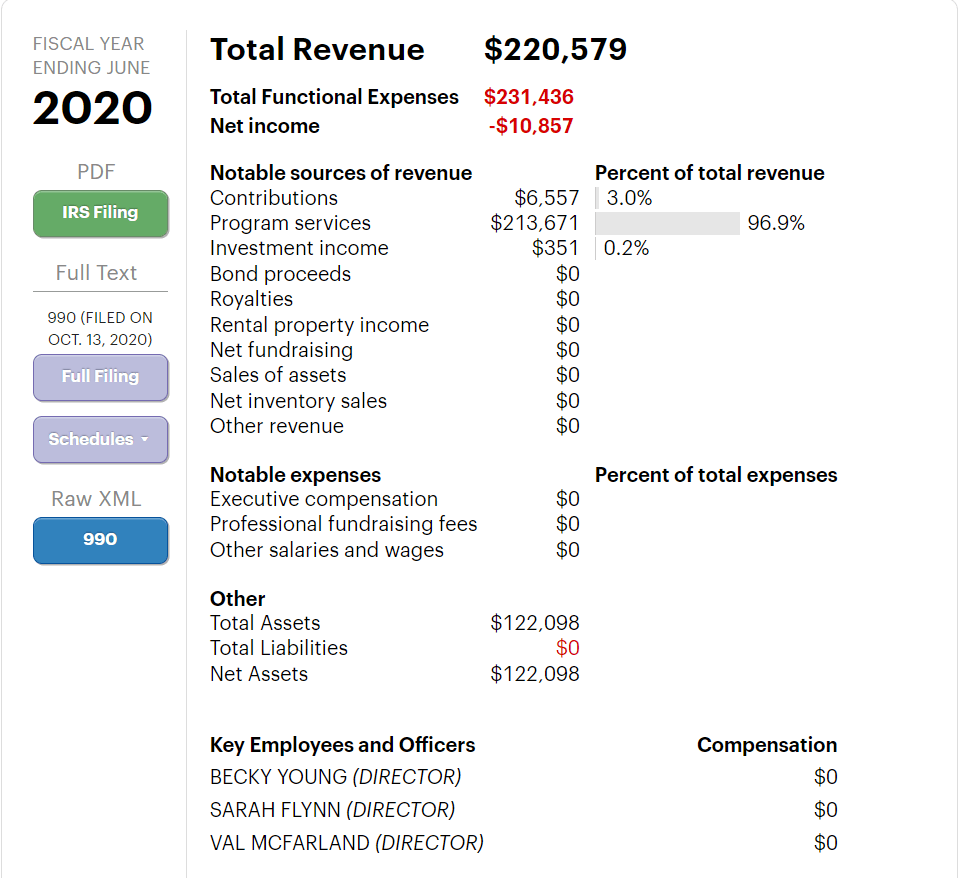
I’ve raised questions about the Speech-to-Text Institute’s data and some companies’ blind reliance on that data. Today I’ve got to raise the fact that, if we compare net assets on 2020 tax returns and information found on ProPublica for NCRA, STTI, AAERT, and NVRA, it seems like NCRA is the clear leader at over $6 million, and its nearest “competitor,” AAERT, had about $217k. STTI came in dead last, more than $100,000 in the red. This doesn’t even account for the myriad court reporting associations and nonprofits across the country and the money that goes into them.

It still remains a serious question why the public and court administrators would rely on the word of an organization that doesn’t seem to have the monetary support needed to address the court reporter shortage in California, let alone America. Think about it. If you want to raise a workforce of possibly 20,000 professionals, who do you turn to, the organization with $6 million or the organization that’s in the red and being kept afloat by some undiscovered means?

There also remains a question about the severity of the shortage. As told by the document linked above, it states that over 50% of California courts have reported they are unable to routinely cover non-mandated case types. California’s shortage was forecasted to be the worst in the country, about 20x worse than many other states. If around 50% of California courts are having trouble, it would follow that somewhere around 2.5% would be the average across the country. Devising relocation incentives could pull more people to California and solve the problem.

This has implications for the big business bosses and the small businesses they bully. They’re going to have to spend a whole lot of money to match stenographic initiatives. Eventually shareholders are going to ask why these businesses are swimming against the direction of the market. Why would you spend time and attention trying to cultivate a professional community in digital court reporting when one clearly exists in the stenographic community? Why would you aggravate the talent/labor until it starts discussing things like misclassification, pay, and working conditions?

Stenonymous reporting live from the dead internet.

NCRA 2020: $6,293,223 net assets.

AAERT 2020: $217,609 net assets.

NVRA 2020: $122,098 net assets.

STTI 2020: -$119,169 net assets.

Bulletin: Court Reporter Shortage or Fraud?

Law360: A Dire Court Reporter Shortage? Depends on Who You Ask.

Certain court reporting companies are exaggerating and exacerbating the stenographer shortage for the purpose of selling digital court reporting to lawyers/courts/consumers.

Veritext, US Legal Support, and Planet Depos have all publicly made statements about the unavailability or shortage of stenographers while putting most of their effort into expanding digital court reporting. Succinctly, utilizing their market share to obfuscate the availability of stenographers and artificially increase digital court reporter demand. It is unknown whether this is concerted or a form of tacit parallelism.

The resulting atmosphere is also misleading to those seeking a career in court reporting.

The nonprofit Protect Your Record Project was formed to educate consumers on the bait and switch tactics occurring in the court reporting industry.

In 2021, US Legal Rep Peter Giammanco wrote, “Does it really matter if done legally and ethically and both methods end with the same final transcript?” A consumer awareness campaign was subsequently launched. There are questions about whether digital recording is reliably the same as stenography. In one New York case, the court remarked that past holdings that recording was equivalent to stenography were belied by the record in that appeal.

Companies continue to profess shortage while placing the bulk of their effort into expanding the digital reporting market, effectively limiting consumer choice and ignoring consumer preference for stenography. The 2013-2014 Court Reporting Industry Outlook is used to add credibility to these claims, but that forecast is nearly a decade old and does not account for recruitment initiatives such as National Court Reporters A to Z, Project Steno, and Open Steno.

Attorneys, courts, and support staff can attempt to find stenographers or stenographer-run businesses through their state court reporting association or NCRA Pro Link.

The FTC has stated it will crack down on companies taking advantage of gig workers. It is unknown how this will affect court reporting, a field that is approximately 70% independent contractors according to available data. It is also unknown how rampant misclassification may be in the field.

Stenonymous (Christopher Day) is dedicated to informing the court reporting and legal community and has faced legal threat for accurate reporting in the past.

Does this look like they’re looking for stenographers?

Members of the community that wish to support advertising for this bulletin may send money through the donation box at Stenonymous.com.