Could ProctorU Be Bad News For You, Stenographers?

While scouring social media, I came across an interesting post by Nancy Silberger. It mentioned the Better Business Bureau reviews for ProctorU.

“Last night, something compelled me to Google ‘ProctorU Reviews,’ which brought me to the BBB website. OMG, I went back over 2 years of reviews (2021-May 2023) and there was not ONE SINGLE positive review. Every time someone made a complaint about their testing experience ProctorU responded with a curt ‘it’s your fault’ type of response. Positively sickening that RTC still uses this platform. There has to be a bazillion other proctoring services out there. NCRA, RTC, WAKE UP AND LOSE THIS PLATFORM!!!” – Nancy Silberger

This is not entirely surprising. I think most people only complain to BBB when they feel mistreated by business. But some of the complaints were striking. I know the only time I used the BBB was when Naegeli threatened me. It wasn’t helpful, but it does create a record.

Anyway, people came forward to discuss their feelings and ideas regarding testing and ProctorU.

“Every single thing about how NCRA certifies professionals needs to be revamped. From the test itself reflecting how we actually do our job to professional evaluation of feasible test content and procedure to RTC and ProctorU. We’re screaming that we need to get people out there. We recruit, they go all the way through school, and they can’t get over the finish line leading some to leave the field after that long journey. We’re sure loud and quick enough to pull them in with A to Z, but COMPLETELY dead on the testing disaster.” -Dineen Squillante

What Dineen had to say really resonated with me. I personally believe AudioSync has massively deteriorated the interrupting skills of court reporters. But at this point, we have to contend with the reality that it is widely used on the job and using it effectively is part of the job for most court reporters and scopists. Even limited use would probably upgrade our pass rate significantly.

Just for the sake of completeness, I glanced over the BBB reviews too. Better Business Bureau isn’t infallible, but It’s pretty horrifying stuff for tests far less technical than ours.

“This is a scam…” -ProctorU review on Better Business Bureau.

As I was preparing for this post, a reader sent me an old Speech-to-Text Institute article with Marybeth Everhart, Realtime Coach. With hindsight, I can say that this supports the assertion that we need change. The ProctorU problems aside for a moment, I’ve been looked down on at times because I won’t refer to digitals as button pushers or recorders. Well, someone from the platform we use for our testing was pretty openly digital friendly.

Excerpt from Speech-to-Text Institute materials.
Excerpt from Speech-to-Text Institute materials demonstrating the 11,000 shortage number again.
Excerpt from the Speech-to-Text Institute materials.

And, unfortunately, as we later learned, the Speech-to-Text Institute is a propaganda outfit and corporate construct meant to manipulate the court reporting & stenotype services market. So, not to say that RTC is guilty of the same fraud I’ve alleged against Veritext et al, but for a field that used to care very much about bias or the appearance of bias, it does feel like all the major players, including ones we rely on for passing our students, are pretty biased in favor of expanding digital reporting, a position that is kind of strange to have if stenography is the gold standard and we haven’t tried other methods of alleviating the shortage, like asking lawyers to schedule with us in advance instead of the day before.

Even worse, digital proponents attack our testing procedures from the other direction, with Stenograph President Anir Dutta having stated in a letter, “…the national and state recognized process to certify a machine shorthand professional is unnecessarily arduous and, in our informed assessment, is designed to keep the number of stenographers entering the market artificially low.” I missed that line when I first reported about it, but I do find it kind of funny that while I have basically accused the companies under the Speech-to-Text Institute umbrella of manipulating the market to increase the number of court reporters create a market glut, depressing reporter incomes, they turned around and alleged that someone designed the state and national testing process to artificially reduce the number of stenographers. Since the National Court Reporters Association is basically the national test process, I think it’s safe to assume what organization they’re throwing shade on here, and it makes me rethink Anir’s NCRA comments a little bit more than I was thinking about them after he apologized to me.

In the hopes of a better tomorrow, I’m amplifying this discussion. Perhaps our next step is to have a serious look into which online proctoring companies have the best reviews and consider asking NCRA to make the switch.

NCRA Admits Court Reporter Shortage Less Severe Than Forecasted?

In a May 5, 2023 article by Tracey Read, issues with recording were addressed. Interestingly to me, there was a blurb in there about our shortage.

In a 2023 article, it is stated that according to NCRA there is -currently- a shortage of 5,500 court reporters.

You might look at that and say, “so what?”

Remember those Speech-to-Text Institute folks that I call frauds? Well, let’s just take a look at this screenshot from what I just linked.

In a projection released by the Speech-to-Text Institute years before 2023, it was stated that there would be a
gap (shortage) of 11,345 court reporters in 2023. A number that is potentially double the actual shortage.

On May 6, 2023, I reached out to NCRA to find out if this article was accurate, and I will publish the response, if any, in an addendum at the bottom of this post. If there’s no addendum, assume no response yet. I’d say check back in a week. As of now, all I’ve been told is “let us check and see where this might have come from, if anywhere, Christopher. Thanks for bringing it to our attention.”

Hopefully this makes it pretty clear why I’ve been so stuck on this issue. A shortage of 11,345 is a lot different than a shortage of 5,500, and now we have in print two very different numbers for 2023.

It seems pretty clear to me that our shortage is less severe than was forecasted, which means that it is more manageable than we have been told for about 5 years, which means that the big boxes in the Speech-to-Text Institute Bloc, having as much market share and working with as many reporters as they do, knew for a fact that the shortage was not as bad as forecasted, and perpetuated the lie anyway.

It’s bittersweet for me. I have been writing about the possibility of false claims being used to demoralize stenographers for almost half a decade, maybe longer. Many who have examined my writing and documentation over the years agree that there is something suspicious going on in stenography land. But many don’t have the time to investigate years worth of chronological discoveries and analyses. And quite frankly, after my medical issues in late 2021, it was easier for some to dismiss me entirely than to believe that such misconduct was occurring in our field.

But this should give stenographers a lot of hope. The shortage is less severe than forecasted. The NCRA is indisputably the strongest court reporting association and in the best position to address the court reporter shortage to the extent that it does exist. And as word spreads that the situation is not hopeless, as so many shills would have had my colleagues believe, we have a chance at drawing in investors to create new and better schools, and expand and improve existing programs in the United States, Canada, and the United Kingdom.

Should it turn out that this is not NCRA’s position, my past analyses about the shortage being less severe than forecasted stand. But then this shifts to a really good point: News media can make game-changing statements and be completely wrong. If we’re not funding our own media arm, we may very well be drowned by lies and incompetence. That’s the state of modern journalism. As industries grow bigger, more complex, and require more coverage, journalism is seeing an economic contraction and nearly a 10% reduction in jobs between now and 2031. Fewer journalists covering more news means we’d better start hiring some journalists if we want a fair shake. Oh, and the other side has probably been doing that for years, let’s not forget that part.

I leave my core audience with a poem.

AUFT AEFD SAEUD WHA T- SAEUD FPLT

EU SEUPL PHREU SHAEURD T- W- -T WORLD FPLT

EU TPHAOU TPHOT W-R T- HRED RBGS

OEPBL THAT WHAOEUT TPHRAG SHUD TPHOT -B UPB TPURLD FPLT

SKP SHUD KWES A RAOEUZ RBGS

AZ THE OFPB TKO RBGS

HRAOBG TPOR TRAO*UT SKPUL TPAOEUPBD TK-RB

TAES HRAOBG -G TPOR U TAO FPLT

Addendum:

NCRA President Jason Meadors responded to my initial May 6 inquiry on May 12, 2023.

“Chris, mystery solved. That was lifted from the Ducker Report, which was before my time and has been pretty well debunked now.”

A big thanks to NCRA for the transparency and honesty.

Congressman George Santos Weighs in on Court Reporting*

George Santos, nobel-prize winning congressperson who surpassed Elon Musk as the richest person in the world last Tuesday, has teamed up with Veritext to promote digital reporting. “The cure for cancer will come from digital reporting. I bet all of Veritext’s money on it.” Mr. Santos also says that the inaudibles are a necessary part of any transcript because most people don’t know what anyone is saying half the time anyway.

The Veritext CEO spoke to the Congressman about the shortage in the industry. Representative Santos replied, “don’t worry, people won’t look into it. Look at my resume.” While he advocates for digital reporting, he says “I understand the importance of digital and I can speak to it because I’m also a stenographer who’s won the National Court Reporters Association award for Fastest Fingers seven times in a row.”

Santos was later declared the new NCRA Spokesperson, and attended a masonic order dinner, trying to build a bridge between NCRA and the Illuminati.

*None of this is true. It is a satire on the lies occurring in the court reporting industry, political lies, and poking a bit of fun at how people often use or misuse NCRA’s name and cred for their own agenda. It also satirizes modern journalism. It makes fun of me too, but that’s much more subtle.

In other news, Staten Island man dressed in a peanut butter-covered raincoat was arrested. Reportedly stated to arresting officers: “I was just celebrating court reporting and captioning week!”

ENJOY YOUR WEEKEND!

How To Stop Corporate Fraud in Court Reporting by Joe Gratton

The following was written by Joe Gratton for the Stenonymous blog, mostly unedited:

There’s currently ongoing and blatant corporate fraud in the court reporting industry. Yet many industry professionals remain unaware and unconcerned about the danger posed by companies deliberately exaggerating the court reporter shortage to espouse the benefits of digital court reporting as if the two services are somehow equivalent.

The companies that have tacitly colluded under the umbrella of the non-profit Speech-to-Text Institute (STTI) are engaging in deceptive practices by spreading misinformation about the cost, quality, and validity of digital court reporting services.

With little to no oversight by courts or government agencies, these companies are getting away with it. However, there are steps stenographers, lawyers, and other affected parties can undertake to ensure justice is served and the court reporting profession is protected from further subversion.  

Background to the Corporate Fraud Currently Occurring in the Court Reporting Profession

It’s worthwhile spending a few moments elucidating the circumstances that have allowed corporate fraud to occur unchecked thus far. 

It’s essential to start by explaining that, yes, there are court reporter shortages within the United States – primarily due to retirement. However, these shortages are minimal and localized. Moreover, these minor shortages are increasingly offset by excellent recruitment initiatives led by National Court Reporters A to Z, Project Steno, Open Steno, and other worthy organizations. 

The companies launching spurious claims that the shortage can’t possibly be filled with more stenographers (and, therefore, should be replaced with the vastly inferior practice of digital court reporting) base their assumptions on the deeply-flawed Ducker Report of 2013-14, which stated that 70% of court reporters would retire over the next 20 years (2013-2033). 

Not only is the report now rapidly approaching ten years since publication (significantly undermining its relevance), but those predictions were based on, wait for it, interviews with 120 industry professionals from in and around the industry. Even with some “proprietary data analysis” thrown in from Ducker, how anyone can profess that there’s currently a potentially industry-ending court reporter shortage based on such flimsy evidence is anyone’s guess.

Worse, when reviewing objective industry data, there are around 27,000 court reporters still active within the profession. How many were there in 2013, the year of the Ducker Report? 21,000. The predicted retirement cliff must be getting taller every day since stenographer numbers are still trending upward ten years later. 

And yet, companies such as Veritext, US Legal, and others have happily used these terribly inaccurate extrapolations to make even worse predictions about stenography’s future. 

For instance, they have gone on the record to claim the industry requires 82,000 stenography training program enrollments annually (based on a 10% graduation rate) to plug the self-proclaimed shortfall. Yet this figure would quadruple the size of the entire court reporter industry today and increase the pool of available court reporters to six times that of 2014, the year the so-called “shortfall crisis” started. 

With wildly incorrect and baseless predictions like these, it’s easy to see why those with only the most tenuous of links to the legal profession are raising eyebrows at how some of these court reporting companies are getting away with blatantly misleading the public for so long. 

Why Corporate Fraud in Court Reporting Continues Today

There’s a pretty obvious reason these companies keep promoting and disseminating their misleading and inaccurate claims: there’s a lot of money to be made.

Stenography is skilled labor and is remunerated as such (some might say underpaid). For someone to type at a rate of 225+ words per minute with an accuracy rate of 99.8% takes years of training and dedication. Stenographic writing is closer to playing the piano than typing on a keyboard. It takes at least two years in a stenography training program, state licensure, and professional certification. 

Digital court reporter training lasts six months, with most of that time spent learning how to take accurate notes and operate sound and video equipment. That’s it. 

In short, these companies want to replace those hard-earned skills with technology so they can charge less for their services and make huge profit margins while doing so. With audio and video equipment in place, digital court reporters merely make sure the equipment is working and note key pieces of testimony.

The companies in question want to mislead the world into thinking that digital court reporting does the same work as traditional court reporting. But once again, the objective facts of the profession paint a different picture.

Automated Speech Recognition (ASR) software delivers a dreadful 25%-80% accuracy rate, and non-stenographers transcribe English dialects such as African American Vernacular English (AAVE) at a rate half as accurate as court reporters. These are merely two of dozens of damning examples showing that digital court reporting cannot replace standard court reporting. 

And yet the two are conflated as one and the same on a daily basis by those that stand to profit most from doing so.  

How they have been allowed to for so long somewhat beggars belief. 

It seems that, thus far, the courts and government agencies tasked with protecting the public from fraudsters and con artists seem unwilling or unable to act.

So can change be instigated? How can those being hurt by these misleading and fraudulent claims take action?

How to Fight Corporate Fraud in Court Reporting 

The simple answer is to fight back. The very tactics companies use to mislead the public can be used against them. They are so brazen and demonstrably false that they are easy to report to the appropriate authorities. 

Report Antitrust, False Advertising, or Deceptive Business Practices to the State Attorney General

Where applicable, it makes sense to refer complaints about deceptive practices and patently false advertising to the relevant state attorney general. Not only will they have a more precise understanding of the misrepresentation at hand (being lawyers themselves) than government agencies such as the Federal Trade Commission (FTC), but state attorney generals have the legal power to act against such companies.

Their purview, among other responsibilities, includes enforcing their given state’s consumer protection laws. Given the flagrant breaches occurring, including false advertising, tacit collusion, and deceptive marketing practices, it would be entirely reasonable to expect that they can take action against these corporate fraudsters if made aware. 

Report Antitrust Violations and False Advertising to Federal Trade Commission

Given the attempts by the STTI to falsely create a market problem and sell the solution (digital court reporting), it’s worth reporting any antitrust or false advertising violations to the FTC.

Not only have they already pledged to protect gig workers from unfair, deceptive, and anticompetitive practices, but they have specifically stated they will also investigate exclusionary or predatory conduct that could cause harm to customers or reduced compensation, or poorer working conditions for gig workers.

Given the practices of these companies harms both customers (by giving the false illusion of equivalency between standard and digital court reporting and deceptively exaggerating the court report shortage) and the 70% of court reporters that work as independent contractors, the FTC should at the very least investigate these practices.  

Sending Information to Local and Corporate News Outlets

Sometimes the only way to draw attention to a problem is to throw a spotlight on it. By writing emails to editors of local newspapers or contacting local TV stations and radio stations, it’s possible to make clients aware of the deceptive practices and have them contact the relevant authorities and regulators to demand action. 

At the very least, it may be that these fraudulent operators have to answer very direct questions regarding their business practices. With the glare of a significant readership or viewership, they may squirm under the pressure and be forced into providing evidence and documentation that doesn’t actually support their statements. 

Contact Local Elected Officials

Another option for stopping corporate fraud on this scale is contacting elected local officials at either state legislature or county levels. 

Not only do they have the power to pass laws that protect consumers from unfair or deceptive trade practices, but they also have a direct line to the government agencies tasked with enforcing those laws, such as the FTC and state attorney general. 

Once again, those with the power to act can’t do so if they are ignorant of the problem in the first place. Only by publicizing these fraudulent practices can lawmakers and regulators be forced to act. 

Court Reporting is Under Attack from Those Standing to Benefit from Its Demise: It’s Time to Act

There’s no question that the court reporter shortage has been leapt upon by companies such as Veritext, US Legal, Planet Depos, and other members of the STTI as an opportunity to cash in on the digital court reporting market.

By replacing incredibly skilled labor with unskilled and automated digital transcription, they persist in attempting to convince law firms, courts, and even government agencies that digital court reporting is a viable replacement. 

The statistics speak for themselves on that front.

However, it’s the hyperbolic claims being made and the outright lies being spread about the court reporting industry in the name of corporate greed that are truly egregious. It’s naked corporate fraud that is only being further enabled by the willful ignorance of many lawmakers and regulators tasked with protecting consumers from unfair and deceptive trade practices.  

Thus, the onus is now on those willing to stand up for justice to take action using some, if not all, of the avenues mentioned above.

Hopefully, with coordinated and concerted action, there can be an end to the rampant corporate fraud taking place within the court reporting and stenography profession.   

Author: Joe Gratton
Bio: Joe Gratton is a professional writer who has worked with a number of legal firms in the United States, covering topics including court reporting, legal videography, electronic discovery (e-Discovery), and trial presentation services. 

NCRA Town Hall: A to Z, Public & Government Relations

I attended the National Court Reporters Association Town Hall today with President Jason Meadors, and boy, am I glad I did. It gave me confidence that the association and its leaders are pushing hard to represent the interests of members. The entire session was almost exactly an hour, so there’s a lot to unpack.

Present at the meeting were, as stated, NCRA President Jason Meadors, Executive Director Dave Wenhold, Max Curry, a Past President and Chair of the A to Z committee, Annemarie Roketenetz, Director of Communications & PR, and Jocelynn Moore, Director of Government Relations. The meeting started off with a lengthy discussion from Max Curry about the A to Z program, and he took the time to explain where the program started and how it was completely revamped. According to Mr. Curry, A to Z began with about 50 boots-on-the-ground programs in the states. That fell away when the pandemic happened, and most programs closed. Programs in Texas, Tennessee, Minnesota, and California all went remote, which showed that the program could be done remotely. A new vision has come into place where the program can be done remotely and all of the resources can be centralized behind the program, with fewer boots-on-the-ground programs. Eight programs will be done a year, four asynchronous and four live. This is to capture the different kinds of learners — ones that can learn on their own AND people that need interactivity to succeed.

One of the truly exciting plans was for a landing page that can be centralized that brings people back to A to Z. NCRA is planning to reach out to organizations and associations to have them host a button or link to the landing page, creating a spiderweb or net that helps catch all the people that might be interested in this wonderful career and bring them back to the NCRA’s A to Z to give steno a try. They may ask firms to donate $5 to $10 of their Search Engine Optimization budget to help bring people to the landing page. NCRA President-Elect Kristin Anderson’s Houston President’s Party will act as a fundraiser for SEO dollars to ramp up advertising about court reporting and captioning as careers.

Lisa Dennison also spoke and informed us that 15 A to Z scholarships were given out at $750 per award. NCRA interacted with ASCA, the American School Counselor Association, getting school counselors’ contact information, adding them to a contact list, and getting them information about court reporting. It was mentioned that the communications team has been working on Instagram, QR Codes, and other ways to spread the message. Reliance donated money for student memberships for previous A to Z graduates, which helped grow association membership as well.

It was mentioned that NCRA continues to work with vendors such as Advantage, ProCAT, and Stenograph. The StenoCAT iPad app, iStenoPad, was also described as a way to simplify the logistics of getting stenotypes to participants.

It was explained that last year 295 students were picked up by A to Z. Max Curry clarified that some local programs do not coordinate with headquarters, so numbers from those programs are unavailable. Ms. Dennison asked that participant lists be sent to the NCRA so that better data can be compiled.

A quote by Brianna Coppola was shared. “I have never seen or heard of another ‘career test drive’ course. It really spotlights the encouragement within the community of reporters and their love for their jobs and dedication to the field.”

Dineen Squillante asked about the possibility of reaching out to departments of labor in each state. Lisa Dennison responded that it was something that could be looked into.

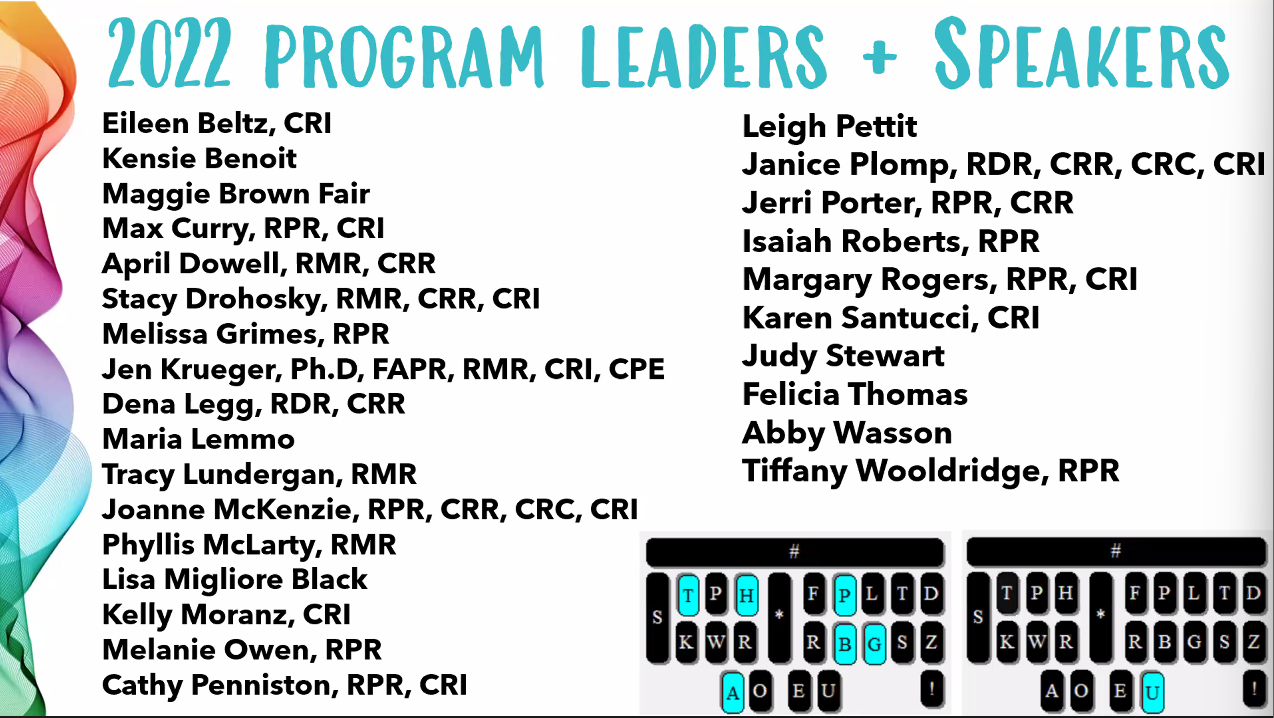
2022 Program Leaders and Speakers were thanked. It’s an extensive list, and I feel they deserve the recognition.

Ms. Dennison made it clear that the door was open to anyone that wanted to reach out on A to Z.

Annemarie Roketenetz talked a little bit about plants for Court Reporting & Captioning week, and a lot about the many endeavors of NCRA. She also mentioned that a number of press releases would be made, leading up to a larger press release that will link back to all the smaller ones. This is in line with dispatching our news and events regularly, and a very smart move on NCRA’s part. Several events were mentioned. Review the Town Hall recording at the Learning Center for more, I cannot do it justice in print. Our PR and communications are in good hands.

Mr. Meadors noted that Legislative Bootcamp has been called a “money grab.” He stated NCRA does not make money on bootcamp and reiterated what an important program it really is.

Jocelynn Moore expounded on bootcamp, explaining that it is extremely immersive training on how to be effective grassroots lobbyists. She stated that the training is “going to give you all of the tools necessary to go in front of a legislator, oppose legislation that doesn’t agree with the profession, or advocate for a bill coming through. Some of the topics covered will be “politics 101,” how associations work, and how you can mobilize with other members in your state to move forward on a particular issue.

The Training for Realtime Writers Act was mentioned. It was also mentioned that it will be difficult to reintroduce this under a Congress attempting to cut spending. More information will be provided on that at bootcamp, but also more on the situation from Indiana. Participants will learn how to advocate in front of different parties and teach members to speak to legislators, because legislators do not always have all of the information we have about our field.

Ms. Moore continued on to talk about the Indiana issue. The proposed prohibition of stenographers from Indiana courts was revealed. We learned that NCRA began a grassroots campaign to find out what happened and why the proposed change was introduced. The organization has found difficulty getting information about the change, but finds the language to be discriminatory and mandatory, robbing judges of their discretion and forcing them not to use a stenographer.

It was a packed hour. My only criticism of the event would be that they ran out of time for questions. But you know what? It happens. President Meadors directed that efforts should be made to record questions asked and that efforts would be made to have them answered. Everything wrapped up with Dave Wenhold thanking the participants for coming out on a Saturday. He said that if you get any information on Indiana, you can pass it to him or Ms. Moore. President Meadors noted that just showing up and asking questions meant participants were dedicated to the profession. The meeting subsequently came to a close.

Refinement of the programs we have is going to seize the day here. Leadership is doing something very impressive. My opinion may not count for much, but I’d thank each of them for the hard work that they do and continuing to fight for this profession. It’s inspiring, and I hope reading a little about it has inspired all of you.

The Learning Center can be used to locate and view past Town Halls.

NCRA STRONG: The Demise of the Ducker Report…

On Monday NCRA published “From NCRA Strong: The Demise of the Ducker Report: lessons learned and successes celebrated.” This was a personal favorite of mine because it skillfully and articulately takes many of the issues we have been discussing as professionals for the last few years, wraps them up, and puts them to rest. In summary, the article lines up that Ducker is outdated and that despite some organizations stating the shortage is impossible to solve, there have been a multitude of developments in the field that have helped us along, such as NCRA A to Z, Open Steno, and Allie Hall’s creation of court reporting programs around the country. It’s an excellent read, go check it out.

Special thanks to:

Elizabeth Harvey, FAPR, RPR

Sue Terry, FAPR, RPR, CRR, CRC

Lilian Freiler, FAPR, RMR, CMRS

Michelle Kirkpatrick, RDR, CRR, CRC

P.S. I had some inspiring words for NYSCRA group members that I’d like to share with everyone.

Christopher Day’s remarks on the Demise of Ducker post by NCRA Strong

NCRA Net Assets Dwarf Competitors, Digital Court Reporting Bad for Business

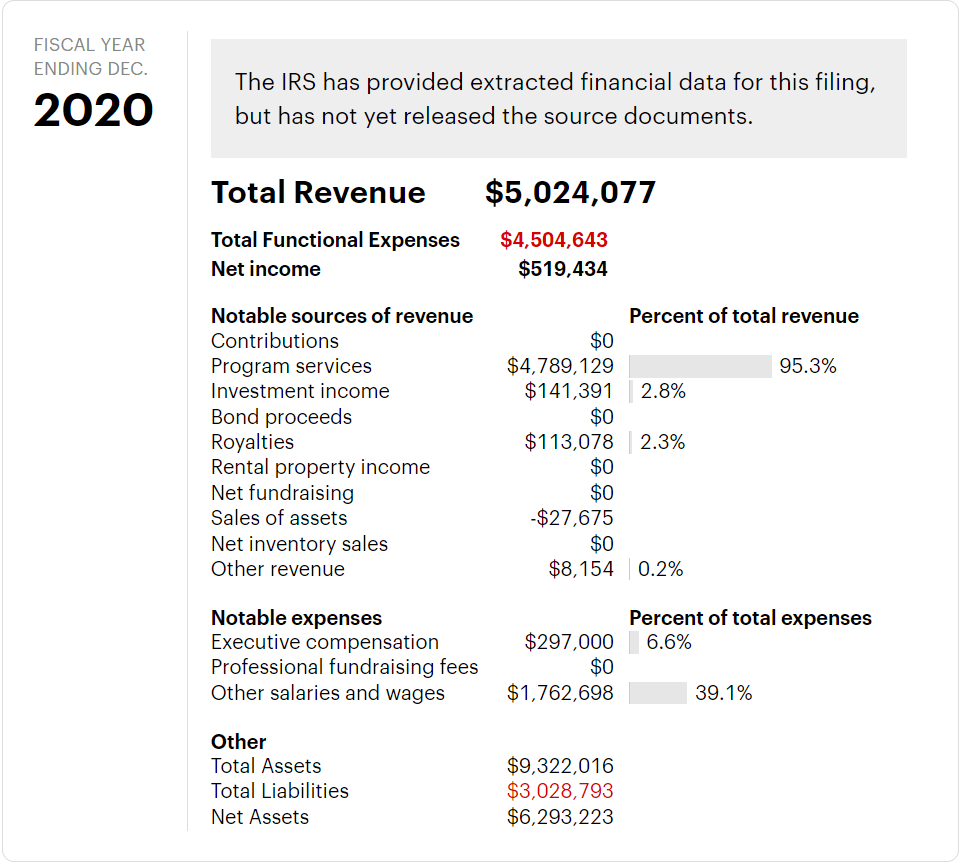
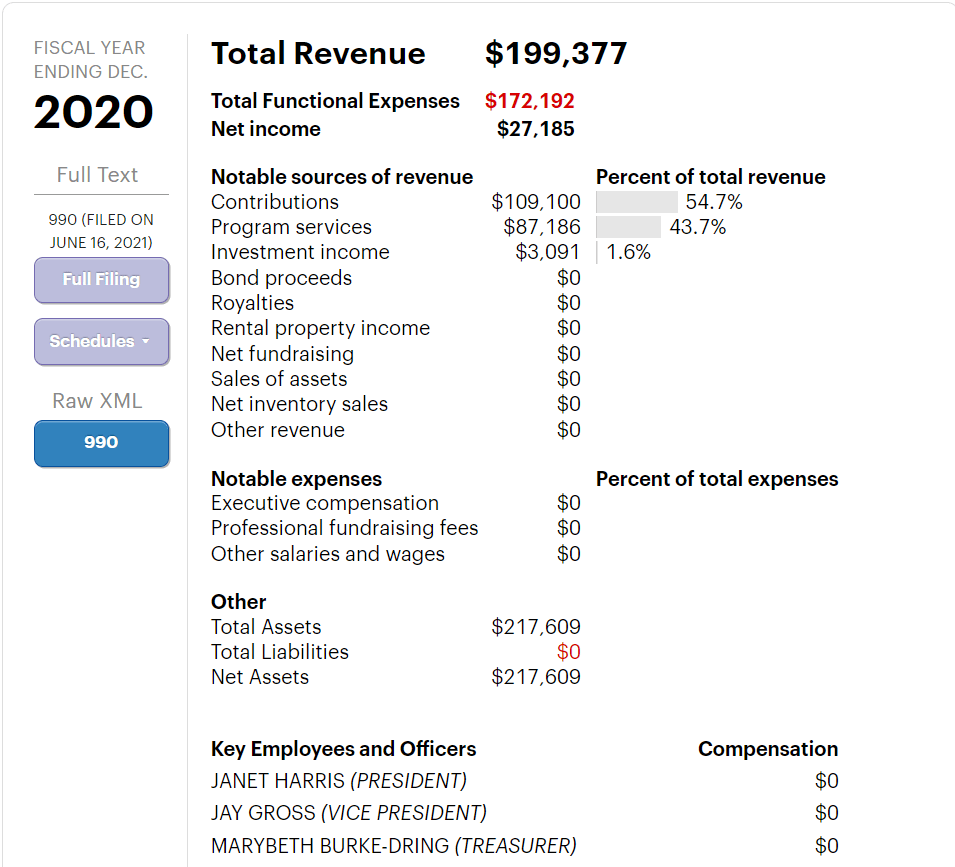
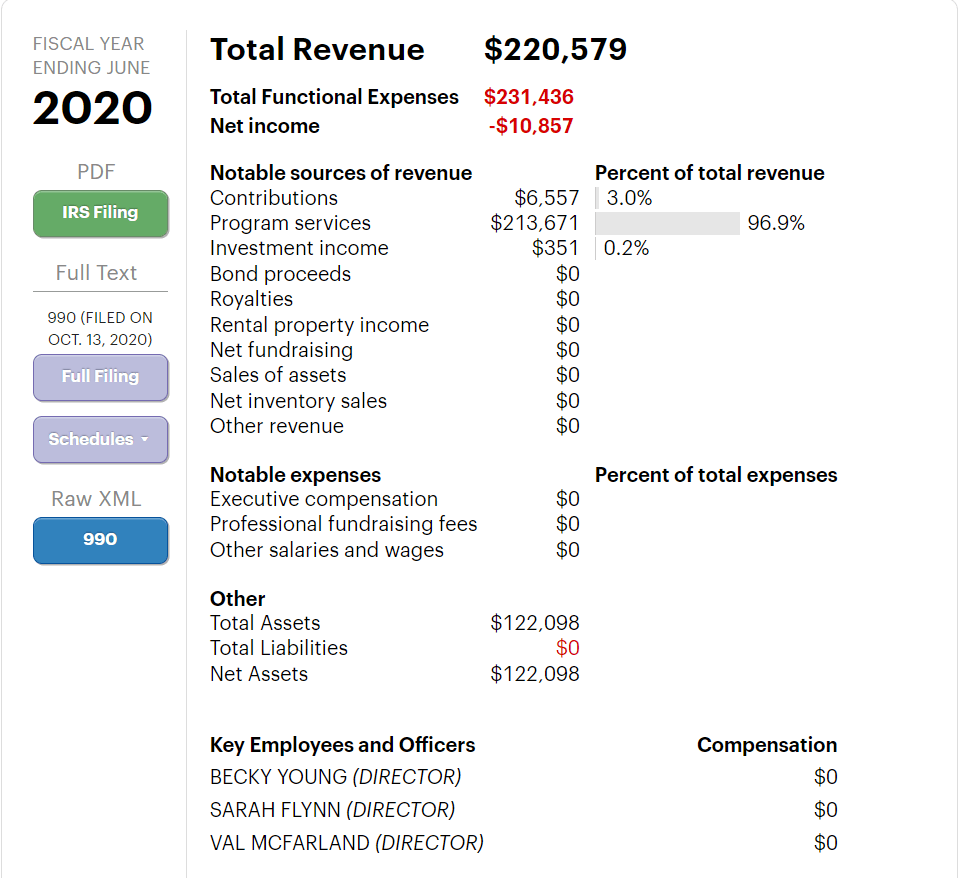
I’ve raised questions about the Speech-to-Text Institute’s data and some companies’ blind reliance on that data. Today I’ve got to raise the fact that, if we compare net assets on 2020 tax returns and information found on ProPublica for NCRA, STTI, AAERT, and NVRA, it seems like NCRA is the clear leader at over $6 million, and its nearest “competitor,” AAERT, had about $217k. STTI came in dead last, more than $100,000 in the red. This doesn’t even account for the myriad court reporting associations and nonprofits across the country and the money that goes into them.

It still remains a serious question why the public and court administrators would rely on the word of an organization that doesn’t seem to have the monetary support needed to address the court reporter shortage in California, let alone America. Think about it. If you want to raise a workforce of possibly 20,000 professionals, who do you turn to, the organization with $6 million or the organization that’s in the red and being kept afloat by some undiscovered means?

There also remains a question about the severity of the shortage. As told by the document linked above, it states that over 50% of California courts have reported they are unable to routinely cover non-mandated case types. California’s shortage was forecasted to be the worst in the country, about 20x worse than many other states. If around 50% of California courts are having trouble, it would follow that somewhere around 2.5% would be the average across the country. Devising relocation incentives could pull more people to California and solve the problem.

This has implications for the big business bosses and the small businesses they bully. They’re going to have to spend a whole lot of money to match stenographic initiatives. Eventually shareholders are going to ask why these businesses are swimming against the direction of the market. Why would you spend time and attention trying to cultivate a professional community in digital court reporting when one clearly exists in the stenographic community? Why would you aggravate the talent/labor until it starts discussing things like misclassification, pay, and working conditions?

Stenonymous reporting live from the dead internet.

NCRA 2020: $6,293,223 net assets.

AAERT 2020: $217,609 net assets.

NVRA 2020: $122,098 net assets.

STTI 2020: -$119,169 net assets.

NCRA: Pay Rates Often Lead to Replacing Stenographic Court Reporters with Digital Methods

In a press release yesterday, the National Court Reporters Association acknowledged that different markets are having different experiences when it comes to court reporter or stenographer shortage. NCRA President Jason Meadors is quoted as saying “Claims of a court reporter shortage are all too often a matter of geography and market. When courthouses pay and offer benefits competitively, they become fully staffed, and litigants are not faced with the choice of paying market rates to have the best system available or rely upon what the courthouse is willing to provide for keeping the record.”

The press release is concise and worth a read. It gets across some important ideas, such as stenography being modern, the gold standard, and acknowledges in its own way that economics plays a role in where court reporters are available. Very similar to the realizations I had when I saw that many reporters in New York City were working 30 years behind inflation while agencies were crying shortage.

This could not come at a better time. The courts in California just more or less declared that funding was not the issue, with some screenshots below. With our profession setting the stage to dispel the misinformation spread by the Speech-to-Text Institute, there’s a real chance at educating court administrators as to the controversy and issue (ultimately, if they want there to be court reporters, they have to stand behind us and help keep the demand steady. If they continue piecemeal replacement of us across the country, there will be fewer of us to hire. It’s an unfortunate elephant-in-the-room scenario. It’s a self-fulfilling prophesy.)

We’ve also passed a milestone here on Stenonymous. Many of the claims I’ve made and articles I’ve published are over a year old or rapidly approaching such, and the statute of limitations on defamation in my state is a year. The best defense of the corporate juggernauts against my claims of fraud was to ignore me. At the very least, I hope some of the things I did help many of you connect, educate, and advocate without fear. It really does appear to me that the corporate powers that be are milking the shortage for the purpose of selling digital reporting and the equipment associated. That’s not the easiest problem to deal with, but we are a strong profession, and we’re on the road to dealing with it.

I cannot claim to always agree with NCRA, but it remains a pillar of our profession and today I am very proud to be a member. Thank you to our president, Jason Meadors, for speaking up and speaking out.

I Diverge From NCRA on Independent Contractor Classification

NCRA has set up a campaign to oppose a rule change around independent contractors. We are all entitled to make public comments via the little comment bubble on this page.

Welcome to the little comment bubble.

Sadly, I have to take the complete opposite stance on this. I’ve written about misclassification in many articles. My public comment will reflect as much, and I’d like to share it here.

“The proposed rule change is exactly what my industry needs. I am in the court reporting industry, and though our national association, the National Court Reporters Association, stands against this change, I feel it is of paramount importance. Many stenographers today are treated as common law employees. The agencies/companies control the customer. They decide the prices. They have the advertising. We do the work, and despite being the mainstay of the business, many of us are labeled independent contractors. All of the ‘benefits’ of being labeled an independent contractor could be secured through unionization and adequate employment contracts.

I suspect there are many industries like mine where people will be rallied against change by the powers that be because the powers that be benefit the most from the status quo and the people cannot take the time to read through and understand your wall of text.

The true independent contractors of my field would be unaffected by this change whether or not they are willing to acknowledge it. Please go forward, do the right thing, and consider the economic dependence of workers when deciding whether they are independent contractors or employees. It will secure a lot more rights for a lot more people.”

Why? For better or worse, I have decided to be an advocate of the working reporter. We have been conditioned to think “independent contracting good.” It has been used to systematically rob us of rights we should have as working people. Rights against illegal discrimination, something that probably saved my career after my mental health episode. Rights to compensation when injured on the job. Rights to unionize. Even our most basic right of free speech is destroyed by the independent contractor label under the cloud of “we can’t discuss rates.” As an employee, the working reporter would have the absolute right to discuss pay and working conditions.

To the extent that trade associations are groups of independent contractors, this kind of thing probably seems threatening to NCRA. If there are fewer independent contractors, they may have fewer members, fewer dollars, and less power. But this is a shortsighted observation. My publications stating that the New York market is 30 years behind inflation have gone undisputed. Many of you in many markets across the country are feeling a pinch in the wallet thanks to stagnating pay and rising inflation. That’s while the agencies charge consumers sky-high prices and blame us for them. If associations want to survive, they need to understand that court reporters at the bottom end of the pay gap need to make more money. We can’t afford to rally against things that are good for the overall long-term health of our profession, and in my estimation, this is such a moment.

Note that the big box agencies will likely be really quiet about this and let the NCRA handle it. They wouldn’t be quiet if it wasn’t in their interest to be so. They benefit from the status quo more than NCRA or any other player on the field. If they come out in opposition to the rule change, it’s a dead giveaway that it’s bad news for the working reporter.

I understand these ideas may be unpopular, but I am a believer in the power of one. This is an issue that, from my research and experience, touches my soul so deeply I’m willing to speak out against an organization I’ve been a member of for over a decade. Ask yourself what you would do if you found yourself in such a position, and you’ll know exactly how I feel today.

Scam Email Targets NCRA Members – August 2022

A scam email was sent around to some National Court Reporters Association (NCRA) members claiming to be for fundraising for “treatment” for “Mindy” and “Kevin,” a fabricated one-year old. Many stenographers received their first alert of the scam from Margary Rogers, NCRA Membership Committee Chair, and the group NCRA Membership Matters.

Scam email targeting members of the National Court Reporters Association sent to Stenonymous.com

One of the main giveaways that this was a scam was the domain name, NCRA.org.us. The NCRA’s domain is NCRA.org.

This blog has a history of reporting scam activity in our industry and informing readers about scams. It seems natural to join the chorus of voices helping get the word out so that not one of us is fooled by would-be scammers.

The National Court Reporters Association released a statement immediately, and took measures to educate members on scams.

Response to the activity of scammers by the National Court Reporters Association

As a general rule, scammers play off human bits like fear and sympathy. Any time someone is trying to get you to act without thinking, you can be sure a scam or propaganda will follow. The name of the game is manipulation, and our alertness and critical thinking skills are how we win the game.

Our communities and associations are seeing increased scam activity in recent months. We mustn’t allow scammers to pull at our heartstrings and take our hard-earned money. A sincere thank you to those that fight to keep members informed. We need you now more than ever.