To preface this post, I do not suspect the previous owner of Orange Legal of anything untoward at this time. Some in our field disagree with selling small businesses out to large national firms, and I understand why, but I am personally ambivalent to the sole act of “selling out.” The only time that I grilled someone for “selling” was Rick Levy, and that was because he lied to me.
BlueLedge was voluntarily dissolved in 2019 even though it still appears to be in operation. Its address? 101 E Kennedy.
Orange Legal has the same address.
So this strengthens the evidence that Veritext and BlueLedge are close.
As previously posted, BlueLedge was voluntarily dissolved in 2019. Coincidentally, after over 30 years of keeping its regular filings, Orange Legal was administratively dissolved in 2020*. It apparently failed to file its annual report. Dissolution is not a permanent thing. Corporations can remedy that and become “active” again.
But the dissolution issue is not entirely without its problems. According to various sources online, contrary to my previous belief that inactive corporations should not be doing business in a state, it appears that dissolved or inactive corporations may generally continue to operate. It is notable that liability may spill over to corporate officers of inactive corporations and that corporations that are inactive may not be able to defend themselves in court.
In short, the dissolution angle does not appear to be the game changer I thought it was. It’s still pretty interesting and puts any dissolved company that’s breaking the law at a serious disadvantage. For example, in a state like mine, a consumer can bring a deceptive business practice claim. If a consumer were to do that against an inactive corporation, it is apparent the corporation would have to solve the dissolution before it could even begin to defend itself in court. And in New York, where lawyers can cost $400 an hour, that’s a lot of money.
Addendum:
Shortly after release of this post, a reader pointed out Benjamin Jaffe of BlueLedge worked for Orange Legal.
Addendum:
*On 11/28/21, well after publishing, I realized that the holding company for Orange Legal came up in place of Orange Legal and I have now added images for both entries. Note that my original line about when the dissolution took place may be off, but the images of the publicly-available info are exactly what I saw.
BlueLedge is the digital reporting training company that apparently dissolved two years ago in Florida that I suspect is behind CourtReporterEDU. BlueLedge, as far as I can tell, continued to operate after its voluntary dissolution in 2019, because in August 2020, it entered a strategic partnership with Ed 2 Go.
Many reporters reached out to let me know that Veritext used or uses BlueLedge, but I didn’t have time to look into it. Finally, someone sent me the Google search. Step A, if you want to complete Veritext’s digital court reporter partner program, is to register with and complete the BlueLedge program.
This, by itself, isn’t much of a problem. But it strengthens the argument that the court reporting shortage is being exaggerated and exacerbated by Veritext. If the company was genuinely interested in recruiting stenographers, it might have constructed such a detailed pipeline for the education of stenographers. Instead, the company routinely tells stenographers what they want to hear and pours its resources into expanding its digital business despite the potential harm to minority speakers. One reporter brought up to me that Veritext has some involvement with a school in Maryland. I have even reported on its scholarship activities. I’m happy about those pro-steno activities. But at a time when 50% of our field, according to Ducker, is in California, Texas, Illinois, and New York, and while Veritext is working with BlueLedge, a company that has hooked its claws into national recruitment using Ed 2 Go, it remains clear where Veritext’s priorities are — expanding digital recruitment not as a supplement to our shortage, but at the direct expense of stenographic court reporters.
Telling consumers/attorneys that no stenographer is available while taking steps to alienate practicing reporters and undermining our industry’s intense recruitment efforts is just wrong. It’s like Burger King lighting cattle fields on fire and yelling about a beef patty shortage. The only difference is we would all immediately identify the arson as criminal, whereas here, if you hide the dishonest, anticompetitive, and potentially criminal behavior behind layers of dissolved companies and corporate paperwork, you get people defending the bad behavior. What would we do without Veritext? Probably be a lot better off!
Less importantly, Stenograph was getting cozy with BlueLedge as early as August 2021.
So let me add that to Stenograph’s PR problem. We need to boycott the company until it sells for stenography and voice writing only. We want no more expansion of digital court reporting. Keep hard on that line and it will happen. Consider Stenograph an arms dealer. It thinks it will sit there and sell to both sides. Except, in this very particular case, our field of stenographers has far more customers and most of our money is earned as opposed to being “borrowed” from investors. We are in a much stronger position financially even if we believe digital reporting has more actual dollars down on it. A lot of people in our field became CaseCAT trainers. They’re killing your industry and income to build digital. I want to grow stenography so you have more business. So even the CaseCAT trainers have a reason to stand up in defiance here, let alone the rest of us.
Succinctly, the money being sunk into digital reporting is money that investors will be expecting back. When it does not make the returns promised, and we have good reason to suspect it won’t because of companies like VIQ Solutions giving us a window into digital reporting financials ($10 million in losses June 2021), the faucet will turn off. All the companies relying on investor cash flow instead of company profit will start to decline. It is in our best interest as a profession to take the power of our good money away from it. The digital money will dry up on its own. If Stenograph is smart, it will cave to our demands. If it is not smart, we can crowdfund, buy it when it goes bankrupt, and put its employees back to work for us like I’m sure many of them want to be. We can even divvy up what Dutta’s salary would’ve been and give them a raise.
Stenograph, at this point, is relying on our nostalgia of it being “our company” and assuming we will not turn our backs on it. I’ve got some nostalgia of my own. There’s a scene in the original StarCraft that sums up my feelings well. Acting predictably is our enemy. We predictably divide and conquer ourselves time and again. Stand together on this one and watch things roll our way. It’s really that simple.
“An illusion? Are you afraid to face me, Templar?”“So long as you continue to be so predictable, O Queen, I need not face you at all. You are your own worst enemy.”
This continues to be a profound moment in our field where we must choose between loyalty to each other and loyalty to companies whispering “trust us, trust us” while they systematically work to reduce our numbers and undermine our judicial system for profit. Not the hardest decision in history.
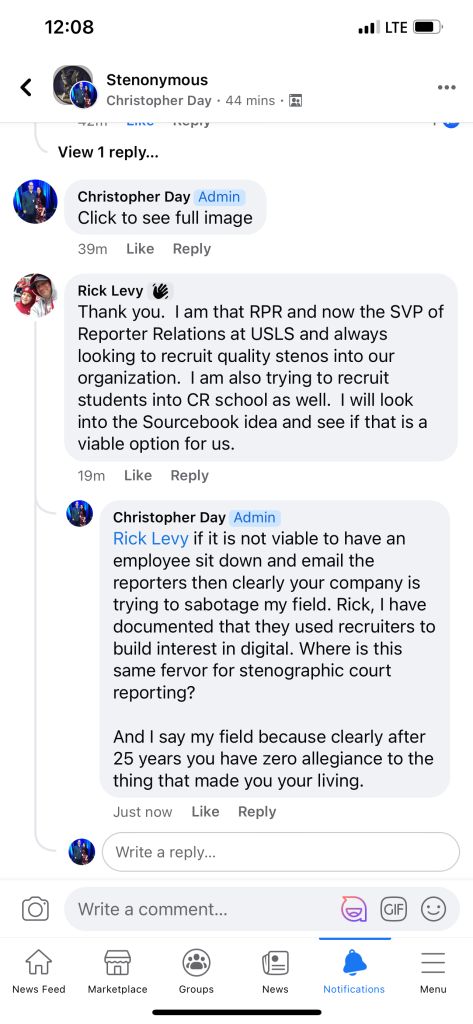
Stenographers across the country should be feeling confident. It’s time to ask for a raise. We were barraged by false claims that the shortage could not be solved. It has been about two months since I first pointed out there was an honesty problem with the company. The company’s response to the social pressure? Run, hide, and hope no law enforcement comes knocking. Prior to my allegations, Rick Levy from US Legal spent a good amount of time trying to convince reporters that the company was on our side.
Image originally posted 9/9/21, Stenonymous.com
What is he doing these days? Pretending that I don’t exist. That’s a perfectly normal thing to do when someone is accusing your outfit of fraud. Right?
It is not my actions alone that are making the difference, but the actions of court reporters across the country. It is all of you educating each other and sharing my posts. It is all of you continuing to supply me with information and monitoring questionable behavior in our industry. It is all of you sending donations so that we can spread word of what’s happening in our field. It is all of you that have filed complaints where appropriate. It is all of you that are bringing my research to attorneys. We are collectively making a difference just like I said we could.
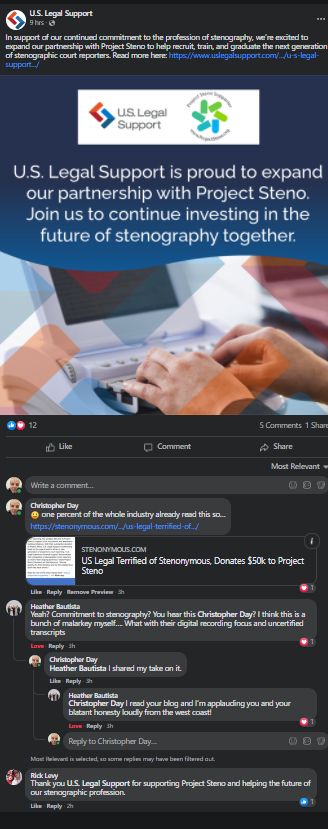
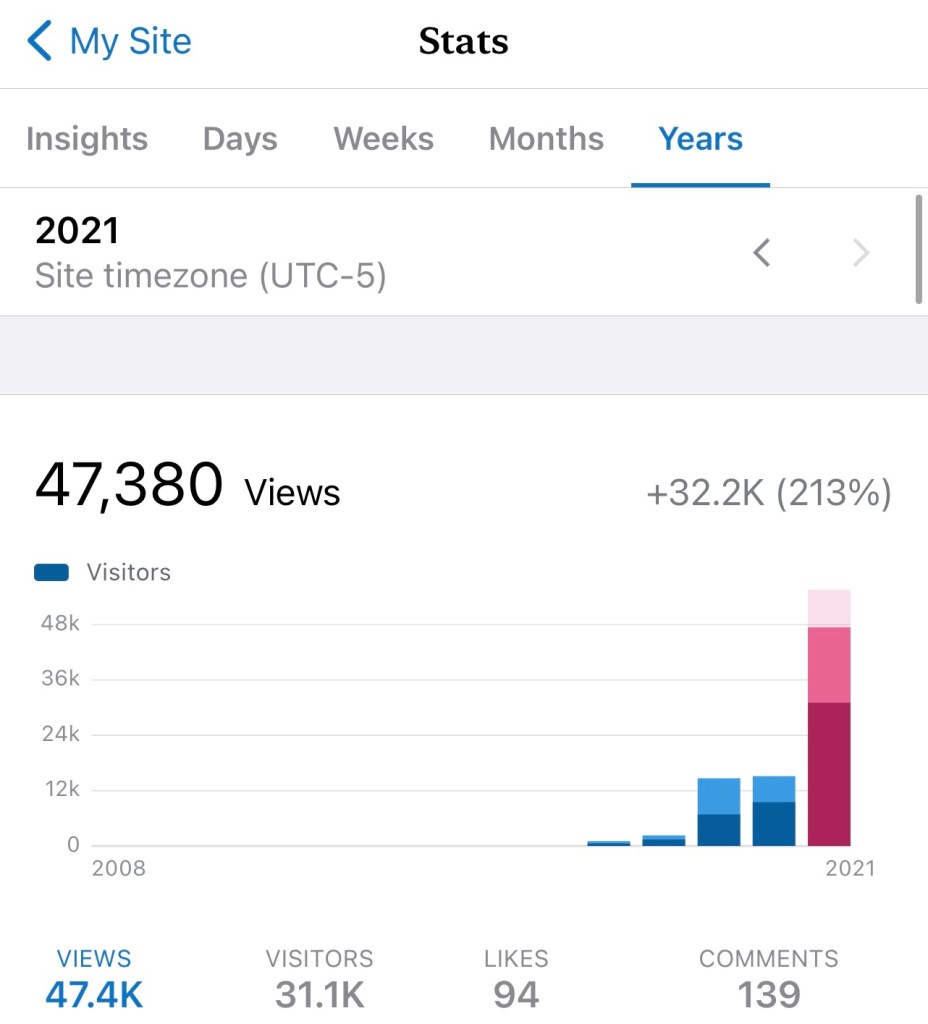
As of today about $6,751 has been spent. Over 260,000 impressions have been made. About $2,800 from donations must still be allocated. Seeing how we are changing the course of a $3 billion industry with less than $10,000, I must ask my colleagues that have not donated to consider doing so. Financial security for me would only free up my time to fight for your financial security and the future of working reporters across the country. In two months you have seen the shortage go from impossible to solve to an expansion of the USL partnership with Project Steno. Trust that every single dollar will make a tremendous impact and that I will not stop until every last one of you has the respect you were robbed of these last two decades.
To my friends in US Legal Supportleadership, you can still start recruiting stenographers and paying them fairly. If you do not, you risk 30,000 court reporters making me a millionaire and a full-time advocate. Abuse thrived in silence and now yours has told us all that we will ever need to know about you.
So I stumbled across the CourtReporterEdu.org website. A pleasant website that is facially neutral. You look at it, and it doesn’t seem to be anything “bad.” It talks about stenographers and shorthand. It has a picture of a stenotype. Looks like the kind of marketing stenographers should be doing.
Then you, reader, head on over to a magical place, court reporting info by state.
And when the reader goes to look at their state, they’ll infallibly get a long list of schools that have “court reporter programs.”
From my review of the New York schools listed, none have a digital court reporter degree. The few that mention digital court reporting sell the digital court reporting as a “continuing education” program. In short, they’re selling continuing education for a degree track that does not exist. Some of these schools have zero mention of digital court reporting on their website. Some schools, like BMCC, you reach out to admissions, and they know nothing about the program.
So, of course, I ask Ed 2 Go what the deal is, because Mark Pugal from Ed 2 Go has been trying to sell me on Digital Court Reporting for like a month now.
And of course, I trust, but verify.
BMCC asked for my concerns, so I put them out there.
Now, just to explain, in part, why I think CourtReporterEDU and possibly Ed 2 Go is being dishonest: (1) In many of the schools listed, when one goes to independently verify the existence of the program, it doesn’t seem to exist. Attempting to verify the program with the schools that actually do seem to offer it leads to this roundabout “we don’t have that program, but actually we do” response. Maybe at the point colleges are selling programs with no future and are so insignificant the admissions department doesn’t know they exist, or they don’t exist, we’ve gone too far. (2) Even where the program exists, it is selling students a course in something that is not the industry standard and does not have as many opportunities. (3) Putting a stenotype on your homepage and then diverting people to digital court reporting via esyoh.com and Ed 2 Go is just dishonest. Even if we forgive everything else, the way this page is set up is to confuse people and lend legitimacy to digital court reporting that it does not deserve.
At the bottom of this page is a video walking people through that part. Now for a bit of speculation. We know from the WHOIS lookup that the registrant’s address was in Florida. The server the site is hosted on appears to be in California, but that’s likely irrelevant.
Luckily, one of the schools actually advertising the program gives us a peek into who might be promoting it. Wagner College lists Merritt Gilbert and Natalie Hartsfield.
Merritt Gilbert is apparently in Florida and connected to BlueLedge. BlueLedge, as some may remember from a prior post, are aggressively marketing digital as the answer to the stenographer shortage exaggerated and exacerbated by STTI, Veritext, and US Legal. The author of that article stating digital reporting is the answer to shortage? Benjamin Jaffe. Who is Benjamin Jaffe? BlueLedge.
Who is Merritt Gilbert? BlueLedge.
Who is Natalie Hartsfield? Digital, BlueLedge, Florida.
Now here’s where it gets really interesting. Remember when I wrote yesterday that US Legal has been on inactive status in New York since 2001? BlueLedge, according to Florida Department of State, has been dissolved since 2019.
And just for anyone who thinks “maybe there are two BlueLedge companies in Florida,” take a look at that mailing address, 101 E Kennedy Blvd. Guess what the address for BlueLedge is.
If you guessed 101 E Kennedy Blvd, congratulations.
How is it legal for a dissolved company to misdirect the public, searching for stenographic reporter training, to Ed 2 Go and digital court reporting? It might not be, but it’s going to depend on us asking our various government agencies to look into this as a matter of false advertising and possibly operating illegally in the state. I reached out to my New York State Education Department as it pertained to this course being sold to New York consumers. Maybe this is something the members of each state association can tackle.
This situation blew my mind. We cannot stand for this. We have to fight and understand that we are playing against people that do not play by the rules or within the bounds of our self-imposed moral code. I have collected these images and ideas in a central place. Please use them to do good. I should note that at least one consumer was extremely confused and came onto our message boards asking about how to buy a stenotype for digital court reporting. We must act with compassion. Consumers are being lied to and we are the only people with the knowledge to explain it to them. They WILL stumble onto our message boards confused because they ARE being bombarded by lies.
Addendum:
After reaching out to ESYOH well after this article, they took action! The scheme is now less potent because of their valiant actions.
Where the schools used to lure students to a splash page, they now lead to box about degrees.
My world changed when I started to read a little bit about human psychology. We are very hardwired to form beliefs and defend those beliefs vigorously. Things like confirmation bias and cognitive dissonance inform my opinion there. We also work subconsciously towards our own expectations, as discovered by Robert Rosenthal in 1968. We also can draw profound power from hope, as told by Richter’s rats. Human psychology appears to be recursive and amplifying — we get better at what we do, form habits, and habits are hard to break.
Now here’s the hope: Your psychology is malleable. I know that because I am, more or less, an average human, and if I am able to do something, chances are good all of us can. I pulled off some major changes in my thinking. What are some bad habits I had?
Overeating. I was 290 pounds at one time, and it was physically painful for me if I did not engage in daily overeating. I forced myself to stop the behavior, and over time that physical pain went away. I’m now about 223 pounds and it’s physically painful when I overeat. The problem wasn’t me, it was the way I thought about eating. By analyzing my daily calorie intake and bringing it below what I needed to sustain my body weight, I was able to reduce my body weight by over 23%. But I had to do that against my brain throwing me headaches and temperature fluctuations to try to keep the high calorie count coming. The subconscious mind tries very hard to assert dominance over the conscious mind when a habit is being undone. Keep this in mind when you’re reading about habits of fear below.
Arachnophobia. I was terrified of spiders, even small ones. Now I capture them so I can use them in TikTok videos about court reporting. A fear I could barely live with has become a joke to me. How did I get there? I changed my thinking about spiders. I studied them. I learned that they do not perceive us in the way we perceive them. Once I understood that spiders could not “understand” me, it was easy to not be afraid anymore. They are comparably dumb and will skitter in whatever direction they think safety is in. Who could be afraid of that? They’re much more likely to feel vibrations from your movement or breath than ever realize you are a living being. For an arachnophobe, there’s no greater release than to realize that if you stay still and calm, the chances of a spider noticing you go down to basically zero. I had to change my thinking to improve my quality of life.
Alcoholism. I could function well enough, but I had trained my body to take on so much alcohol that it would kill Mr. Snuffleupagus. Alcohol was a habit I was able to break by thinking about all the things I would lose if I didn’t get it under control. Life, liberty, and happiness were all on the line, and slowly trading away alcohol so that I could keep those things was an almost spiritual experience for me. The consequences of not working on my habit were too great to ignore.
Anxiety and low self-confidence. Here’s where Robert Rosenthal’s work came in. In order to be a voice for people, I had to expect to be that voice. If we go back to 2020, I trembled at the idea of doing any kind of presentation, content, or public conclusion beyond my very comfortable habit of blogging on Stenonymous. Now I’m accusing corporations that make millions in revenue of fraud on every channel and medium I can. I had to tell myself I could do it before I did it. There were social barriers that made me very afraid to do it. Paralyzed by an endless stream of what ifs, I rarely considered the consequence of not doing what I knew was right.
Once I did what I knew was right, a large contingent of our field came out in support. It turned out that I was not the first one to have a bad experience in court reporting. It turned out I was not alone. So many have now written privately and publicly in support. I learned we had been conditioned for so many years to believe that nothing would ever change that we did not expect it to change, and so we did not fight for positive change. Abuse thrives on silence, and we were a field so resigned to silence that when the Chief Strategy Officer of US Legal, Peter Giammanco, wrote in an email, “does it really matter if it’s legal or ethical…” on NCRA’s listserv, even our own NCRA, this organization that we fund to the tune of millions of dollars a year, was silent. It felt powerless. It felt afraid. It did nothing. If our flagship was afraid to sail, what hope would there be for any one of us? If I had not published those listserv emails, we would still be in the same position, being silently abused and resigned to our fate, overblown shortage claims killing our student pipeline. The habit of doing nothing would kill an entire industry, and to the detriment of our replacements and society as a whole.
Like all my other habits, anxiety was broken by thought. I decided that if NCRA retaliated against me for releasing the emails, the organization would be effectively killing itself. Who is going to support a nonprofit that attacks its own member for exposing corporate misconduct? If US Legal or Giammanco did anything, they’d be calling infinitely more attention to my work. Sure, there are now some people in the field that don’t like me. But they do not like me because I am helping others or because they do not yet understand me. That is a flaw in their thinking, not mine. As I said in a related video, I see two futures. One where I am wholly correct in my assertion that the shortage has been exaggerated and exacerbated by these big companies or one where there really is nothing we can do and shortage will defeat us. All the available data points to the former, and the latter is basically a guarantee that our profession will not exist in ten years. The morons at the top of the USL totem pole made this an easy choice for me. Thanks, Rick.
So much of what we do and who we are is habit. Our minds will seek ways to justify our habits so that we do not suffer from an identity crisis. After all, if one embraces this idea of psychological malleability, does it not open the door to the idea that core beliefs, such as sexual preference or religion, may also be changed without consequence? I bypass this identity crisis by deciding to change what I need to change in order to accomplish my goals, learn more, be a better person, and nothing more. Again, look to Richter’s rats and the power of hope. If you use God to tap into hope, then God makes you powerful. In my case, there is a loyalty to altruism that survived my religious days. I was able to tap into that, see that I could not help anyone in my previous state of being, laden with fear and exhausted from my own bad habits, and began taking actions that would help the largest number of people possible. The idea that I can help people gives me hope. What does hope make me? Now I get to share: Anyone can do this. Anyone can be powerful.
There are still plenty of bad habits I will have to work through. But the main idea is that humans are problem-solving machines, so when we really sit and analyze the root of a problem, we find solutions. Look at me. Problems that I had for 10 or 15 years evaporated largely over the course of six months as if they had never existed because I willed it to be so. Now that I know that such a thing is possible, how could I not share it with the world? How could I leave my fellow court reporters in fear? I’m not the only one to come to such a realization. Steno Imperium just released an article about fear. Max Curry’s 2020 presentation at Stenopalooza was all about letting go of fear. We know we are afraid.
The message has not reached everyone in the industry yet. Love and support each other to the extent practicable to overcome this fear. Support systems generate hope, and hope is a huge booster to survival. For those who insist on living in fear or perpetuating it, such as Stenograph’s Anir Dutta, so convinced that we are his Kodak that he’d kill Stenograph to support his habit of fear, we have only one message: Step back, reassess, and see that what we are saying has a far stronger basis in reality than your fear. I promise to do the same always. Together, we will get the industry wherever it’s going.
Alternatively, proponents of fear can stand in my way. But just remember that there are enough court reporters in the business to give NCRA something like $3 million a year. Standing against them means running the risk they’ll start funding me and then I’ll have to kick ass all day every day instead of just doing so when my full-time job permits. I’ve already got a proven track record of defending them with the donations that have come through and my own cash. “Here’s a guy so committed he put a thousand dollars of his own money down just to help stenographers find their voice.” It’s going to be an easy choice for them. The only way to stop that kind of outcome is to accept that stenography is here to stay and get serious about funding it and recruiting for it instead of cuddling up with the disgraceful and opportunistic digital reporting propaganda outfit, STTI.
[sic]
We know that speech recognition is not as good as claimed. 25 to 80% accuracy depending on who’s speaking. We’ve also got information that says 40% of AI startups show no AI in their products and tech startups that say they are AI can expect 50% more funding. This isn’t the future, this is an ill-advised attempted to garner funding for something that has over an 80% chance of failure.
Stenograph is now trying to sell garbage to a customer base that is increasingly aware of that fact and there’s a guy on the playing field with a moral conviction to explain it to them in simple terms. Stenograph is relying on a retirement cliff that has been fraudulently exaggerated by STTI, US Legal, Veritext, and possibly others. The perpetrators of the fraud don’t actually care if Stenograph fails. They’d use it to bolster the fraud — “oh look, the leading manufacturer went under.” Not a desirable position for the company, but also not one that I put it in. So when the cards fall in exactly the way I am predicting, it’s not my problem. And if I’m wrong? Even better.
Think about it. Stenograph’s in the same boat I was. Lots of habits and a choice to make.
In brief, US Legal wanted $550 for a 112-page transcript copy. That boils down to the equivalent of $4.90 a page. The lawyer wanted to pay $0.25. The court more or less split the baby and said $2.50 was reasonable.
Three major highlights: Herein it talks about US Legal charging for things the attorney did not explicitly order. I cannot think of anything that would support my contention that the company has an honesty problem more. But since over a thousand people have liked my Tweet about Giammanco, I guess that’s old news.
But more than that, reporters making less than $2.50 on a copy should realize that a court just came to a conclusion that $2.50 is reasonable. Guess what New York companies have been paying reporters for the last decade? About 25 cents. Hey, New York, it’s time for a raise. Even our court copy rate of $1.00 falls well short of what California calls reasonable. This isn’t greed, it’s basic math and economics.
But more than that, we now have good evidence of the cost shifting I wrote about. By undercharging original clients and inflating copy costs, the larger companies in my field are overcomplicating the market. Add that to the despicable lies of Veritext and US Legal, and you have a pretty compelling reason to never do business with either.
And in its own defense, US Legal wanted to make the argument that all the court reporting companies charge inflated prices, an argument which was, thankfully, flatly rejected.
They’re not alone though. I’ve reviewed documents showing Naegeli attempted to charge about $11.50 a page on a copy sale in Washington State. But that story is for another day. In the meantime, court reporters, remember that your worth is what you are able to negotiate. It is not tied to what anyone dictates to you. Don’t believe me?There are plenty of other role models to look at.
Though not too many of them are fighting for you the way you could.
PS. For anyone feeling a little lost, court reporters tend to charge by the page. Original transcripts tend to be more than copies of that same original. Depending on the market, we are about 30 years behind inflation. So while systematically underpaying court reporters, companies like USL are actually charging ridiculous amounts to satisfy their bloated management overhead. Because we stenographers are a heavy ethics culture and fairly connected to each other, the companies have an interest in breaking us and replacing us with digital reporters despite evidence that utilization of digital reporting disproportionately impacts minority speakers.
But they’ve made it even easier to tell they are lying and committing a fraud against the legal profession. Let’s see what Cooper has to say.
As you can see, Cooper claims you would need 82,000 students to enroll in court reporting training programs nationwide in 2019 and each year following in order to overcome the deficit.
What does US Legal say?
Wow. 82,000 enrollments needed and only 2,500 enrollments occurred. Sounds like a death knell for stenography. Right?
Liars. How do we know? In 2014, BLS told us there were 21,000 court reporters. From my own independent analysis of the numbers and NCRA statistics, there are actually closer to 27,000 or 28,000 court reporters. It does not matter whose statistics you use, the conclusion they’re lying remains the same. There was no shortage crisis in 2014. We have roughly the same number of court reporters today as we did back then. The 2013 DuckerReport told us that 70% of court reporters would retire over the next 20 years (2013-2033). 70% of that 28,000 is about 20,000 reporters. Succinctly, the retirement cliff we are trying so hard to fight is about 20,000 people if you trust NCRA and about 15,000 people if you trust the Bureau of Labor Statistics.
About 10% of people that start steno graduate. So if we had 82,000 enrollments a year, that’s 8,200 new stenographers per year. But look at what US Legal wrote again. “We needed 82,000 new students to enroll in court reporting training programs nationwide each year to overcome the impact.” If we, in fact, have 82,000 new students each year from 2019 to 2033 (15 years), we would have 1.23 million enrollments or 123,000 graduates. Our field would be quadruple the size it is today, and if you go by the Bureau of Labor Statistics, nearly six times larger than it was in 2014.
To combat our retirement cliff of 20,000 people between 2019 and 2033, we need a total of 200,000 enrollments. That’s about 13,400 enrollments or 1,340 graduates a year, a number six times smaller than the one proffered by US Legal and Veritext/Cooper. If you’re six feet tall, that’s like me claiming you’re 36 feet tall. If we required 8,200 stenographers per year, about half of all depositions would be going uncovered right now (8,200 x 3 years 2019-2021, a gap and demand for 25,000 stenographers by 2021.)
If you accept Owler’s revenue numbers, Veritext controls about $490 million in revenue and US Legal controls about $100 million. That’s a combined total of $590 million. If you accept the Kentley Insights 2019 Stenotype Services market research report, that’s about 20% of our field, and they are using their power to destroy it.
590 million divided by 3 billion is almost 20%
Some have said: They’re lying. So what?
Well, the market preference is stenography.
Court Reporting Industry Outlook 2013-2014 Ducker Worldwide
We know from nonprofits like Protect Your Record Project that attorneys are being told they must accept digital because no stenographer is available even after attorneys order stenographers. So we know there’s some serious false advertising going on.
Previously, I was unsure if there was collusion between major players in the field. Considering that both are using similar language it seems unlikely that both have come independently to the same incorrect conclusion. It’s not like the two firms are enemies. They’ve lobbied together before.
It seems much more likely that following fraudster Jim Cudahy’s lead via the Speech-To-Text Institute, the two companies are involved in a plot to hurt the market and rob consumers of their choice. Quite frankly, Cudahy uses his ex-NCRA credentials to lend credibility to this fraud. After all, STTI has been instrumental in creating the propaganda ruining our field. STTI was, without a doubt, created for the sole purpose of promulgating propaganda and facilitating the ongoing fraud, against its stated mission of representing all modalities in speech-to-text transcription. STTI’s lies are also easy to see through.
Virginia Lawyers Weekly
A gap of 11,000 predicted by 2023 according to a recent study. What study was that? None. The year 2023 doesn’t appear in the Ducker Report. At best, these numbers are extrapolated from an outdated report that could not account for the positive recruitment impact of NCRA A to Z, Project Steno, and Open Steno — initiatives that Jim Cudahy should have known about in 2019.
Unless you believe 2 + 2 = 24, the stenographer shortage is being exaggerated and exacerbated by Veritext and US Legal Support. And now you have a brief video to help explain it directly to attorneys.
Much to the chagrin of the fluff brigade in our industry, I identified that a lot of our problems stem from marketing and publishing. We are trained to be quiet observers. Unfortunately, as a profession, we got too quiet. Some people don’t even think stenographers exist.
But unlike some companies that insist on publishing press releases with little substance, I see great potential in our field. Imagine if every association ran one press release a quarter or if every stenographic business ran a press release once a year. Our internet presence would skyrocket. Just to give an idea of the kind of numbers involved, I could quit my job, become an advocate full time, and donate a significant percentage of profits to steno nonprofits and initiatives. We’d be running something like 12 press releases a day. Our field could be 1% of the newswire’s daily traffic. I don’t expect that kind of success, but I’m putting it all out there because I’ve run the numbers. We are powerful. Shortage wouldn’t last long.
Unlike others that use flowery words to obfuscate the service you’re purchasing, I’ll come right out and tell you that a press release in this modern world is a relatively simple affair. You hire a Presswire-type service and that service reprints your article to its affiliated sites and blasts it to journalists in its reach. The service I use costs about $100 a release. By buying in bulk. I can bring what I pay down to about $33. This does not guarantee that people or journalists will read your release, but it does increase your internet footprint substantially. If you hire me, we can add up to three pictures and one video to any press release, as well as embed your website into the release itself.
As for pricing, if you already have what you’d like to publish together, I’d be happy to offer input, do some light editing, and help publish it at the $100 price. On the higher end of the scale, if you want me to help produce media related to the release, such as a video, we would have to discuss expectations and fit the service to your budget.
Even if you think my experience isn’t worth a dime, I’ve got honesty on my side. You know there will be zero nasty surprises. You will get a distribution report shortly after your press release showing you all the affiliate sites and channels targeted. You will get somebody who cares a whole lot about this field putting his all into the project. I cannot guarantee success, but I can guarantee that I will put all of the skills I have that have driven up the readership of this blog to work for you and our industry.
Addendum:
12/10/21. Future readers may be charged a higher price, especially for press releases with a video. After this post, I learned that these types of services can be more valuable.
During the course of the ad campaign about US Legal’s dishonesty, an astute commentator mentioned that they believed I was giving people bad life advice by advocating for them to get into court reporting. The reasoning was actually very sound. They said the field is growing much slower than average. In fact, if you look at the Bureau of Labor Statistics page for us, this is ostensibly true, the growth is a slow 3%
But this doesn’t tell us the whole story. What about if we use the WayBack machine to see what the page read in January 2014?
10% growth and an employment change of 2,000 expected by 2022! And when did that data get updated? As far as I can tell, sometime between 2014 and December 2016.
What changed between 2014 and 2016? We started recruiting more. So the idea that we went from a 10% growth to a 2% or 3% growth that then remained mostly stable until October 2021 and somehow that resulted in the addition of only 100 jobs is just ludicrous. Our big retirement shortage crisis was set to start in 2018 and continue through 2033. Ducker was a forecast made before NCRA A to Z, Project Steno, and the growth of Open Steno. The abysmal 3% growth rate is after Ducker. What’s missing? BLS has our numbers all wrong. They think about a third of the field is self-employed.
In actuality, at least according to Ducker’s 2013-2014 outlook, we’re about 70% freelance.
Some small sliver of the freelancers are employees or were in the past, but that’s the exception, not the norm.
So the BLS thinks we’re 34% self-employed. 34% of that 21,000 number is about 7,000, and we’re about 70% self-employed, which is roughly double their estimate. Based on that, I conclude they’re probably not counting about 7,000 freelancers, which puts us just ahead of NCRA’s estimate of 27,000 and gives us about 28,000 court reporters.
In brief, the health of our field may be far better than presently-available BLS statistics show. I would love to get the straight number of graduates between 2013 and 2021 and compare that to the 2018 opportunity forecasted by Ducker, which was about 5,690. The 2018 forecasted supply of stenographers was 27,610, very close to that 27,000 estimate by NCRA or my 28,000 estimate that assumes the BLS is wrong. I do not presently have access to graduate numbers, but if the graduate pool was much higher or much lower than 6,000, it would give us a more accurate picture of where we are, with a higher amount of graduates being very good and a lower amount of graduates being very bad. California would be in the most dire position. Their shortage was forecasted to be 5x to 20x worse than any other state. If California can survive and thrive over the next decade, the rest of us can too.
If we believe the NCRA’s numbers, we have likely recruited just under what we needed to by 2018. If my assessment of the BLS and Ducker data is correct, we recruited just above what we needed in 2018. Either way, it seems we will need to continue this period of heavy recruitment to keep pace with the retirements that are going to happen over the next ten years. Failing to do so would be catastrophic for our field. While I still think it’s very clear that the shortage has been exacerbated by companies like US Legal, Veritext, and Planet Depos, and am horrified by their collective, seemingly intentional, failure to attempt to recruit stenographers, at the end of the day, it’s up to us to make up for their bad behavior and end this shortage the same way we ended the last one. We have to keep building interest in this field, whether that’s through media, press releases, word of mouth, or smoke signal.
Anyone demoralized by the 3% growth number should take comfort in seeing just how fast those stats can change. Our actions greatly impact those numbers. Consider that the 10% estimate came just after a wave of recruitment by schools, the same wave that I was recruited during, and that the 3% estimate came in the middle of a depressed market where court reporters were not recommending this job to anyone because they were working very hard to maintain the quality of life of past reporters. Perhaps if investors were plopping down $200 million on stenographic companies with no future, we’d be growing at 22% too.
That’s not even a joke. Let me lose $10 million in a quarter and I’ll double everyone’s page rates. This field would be about triple its size. The money being dumped on digital reporting is literally the only thing that keeps it competitive with stenography.
If you lost $10 million between March and June, raise your hand.
The only way to get people interested in our field is to broadcast ourselves. To that end, if you or your organization would like help writing and releasing a paid press release, please reach out to me. I can’t do it for free but I’m very serious about boosting the amount of content out there on us. The numbers show that with the slightest effort we will produce more content than digital reporting companies, recruit enough people to take back the rest of the industry, and enjoy much more of our $3 billion field. Sound good? ChristopherDay227@gmail.com.
After unprecedented articles exposing the bad behavior of corporations in our field like US Legal and Verbit, with help from Protect Your Record Project, We were able to secure nearly $4,000 in donations from about 60 stenographic court reporters and stenographic reporting firms across the country. That’s an average of about $67 a reporter. All donations, big and small, have contributed to this moment. Advertising campaigns have been launched to facilitate consumer and public awareness via Facebook and Twitter. Many court reporters have shared the posts and/or tagged local state and women’s bar associations. If this is something you want to become a part of, it’s a great time to jump in and like or share the posts on the Stenonymous Facebook page or my Twitter. This publicity is getting people asking the important questions.
I must have been excited. I couldn’t even spell low cost.Me? Ideas? Never.
Just for a recap, we got US Legal to admit to not using Sourcebook / PRO Link to recruit despite its contention that the stenographer shortage is impossible to solve. How can one make the claim something is impossible to solve in good faith when one has not tried to solve it? It’s consumer fraud at its finest and it’ll grow increasingly harder for them to dance their way out of it as more people know it’s happening.
We also exposed that Verbit, a company that misrepresents itself as being New York based and had posted family court deposition audio to the internet. I have a source that states the audio issue was known about prior to my investigation into it, but it didn’t get taken down until after the publication of my blog post. Stenographers, you did that!
When we speak up, people are forced to react.
It’s also notable that for all their money and “power,” the corporations have given us more valuable information. They are guarding an empty fort. I’m probably one of the easiest people on the internet to find and email, and they haven’t bothered to threaten me with a cease and desist letter. They have not bothered to do much of anything at all. Their strategy is seemingly to ignore the situation and hope that we cannot articulate these issues to the media, the public, and associations of lawyers. Their strategy is seemingly to hope that we are summarily dismissed without thought or question. Their strategy is to hope we declare mission accomplished and stop kicking down the gates of that empty fort.
Well, we have seen firsthand how that will work out for them. How well were things going for us when we sat idle hoping things would be okay? Compare that to what happened when 0.2% of this field stood up and said “no!” No, you cannot take our jobs with your inferior product. No, you cannot scapegoat digital reporters. No, you cannot lie about our shortage. No, you cannot post people’s proceedings on the internet to train your offshore transcribers and get away with it! If 60 of us can do that, what are 27,000 of us capable of? This field could afford to pay an advocate like me for nearly two decades with a one-time payment of $67. Heaven help whoever’s talking impossible shortage if we ever secure that much money.
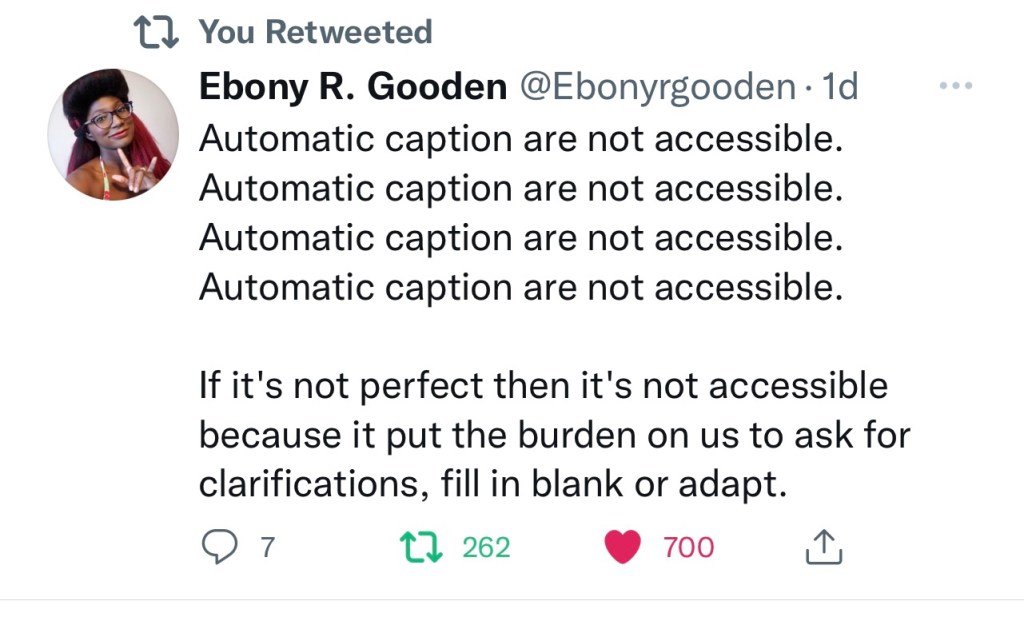
Our strategy? Part one was to show all of you your own power. Part two has two prongs. One, we must continue to apply this social pressure so that the companies stop behaving badly or fold under the incredible weight of their own incompetence. It’s clear they know nothing about the field they insinuate having expertise in. Two, this pressure and publicity will bring people to stenographic court reporting. Young men feel lost? Here’s a direction. Caption advocates don’t like autocraptions? Time to make friends.
Stenographers aren’t perfect either, but ASR has such wacky ranges of accuracy that we outmatch it every time. We can help these people and we need not be shy about letting them know!
The publicity is a big thing. In the next ten years we could easily double or triple the size of this field and start expanding into new markets. Why not? Humans like being listened to. There’s an obvious human need to be heard. Computers can’t do what we do. What is business but profiting off of human need? What is court reporting but our quest to memorialize what others have to say? Even the grimmest view of our field, that only maybe 10% of the population can do what we do, means that there are over 30 million people in the United States that can learn this skill. Look how many thousands of people stenographic reporting has gone in front of already. And this movement has only just started.
Four days did that. People haven’t even had the weekend to see our stuff yet.Four days of ads done. Now we’ve booked 50 more.
Try to remember prior to this week what our reality was. “Nothing we can do.” “Impossible.” “A dying profession.” “An industry ripe for disruption.” That changed because we willed it to change. If you have ever doubted your own power, I urge you to stop, reassess what’s not working, and push for the things that matter to you. Push to change the things people claim cannot be changed; 60 brave reporters have just shown you they are wrong. History is filled with all sorts of winners and losers, including winners that beat overwhelming odds. If you, reader, allow others to dictate to you what your chances of victory are, you are already halfway to losing, and you have a choice to win.
If you would like to support the campaigns going now, take to Twitter and Facebook and start directing news people, legal professionals, and bar associations to my articles. If you would like to contribute financially to the advertisement campaigns running, please feel free to donate to my PayPal at ChristopherDay227@gmail.com, Venmo at Christopher-Day-141, and Zelle at my email or 917 685 3010. As this continues to grow, I will look into advertising in other media so that our message makes the largest impact possible.
Of course, to our beloved corporations, you too have a choice. You can get in line with the industry standards or cease to exist. You can help recruit stenographers or lose all of your investors and customers to them. Trying to outsmart all of the people all of the time didn’t work out. Do the right thing, suck up your pride, and move forward with us. Let your digital reporters know that stenography is worth looking into. As we have just shown you, we will accept no less. I personally will accept no less because as I admitted to everyone, I am a product of the sad side of the industry that took from me and my colleagues until we had no more to give. I now have no compunction against taking it all back, giving it to our next generation of reporters, teaching them the tricks of the trade, and exposing to them the silence that allowed the abuse of mine. It was a simple calculation for me. I knew we had more people and better funding. I knew we had the more advanced technology. I knew that if the narrative remained “nothing we can do” my job would probably be at risk sometime in the next ten years. All I had to do was let go of the embarrassment and shame associated with saying “my industry has problems and I’m willing to be a part of the solution.”
My early career was defined by people telling me there was something wrong with me because I was not as successful as them. Now that I have success, I move into the rest of my career with a message for every entity in a position of power that thinks it’s going to use it against our young people and our newbies: We are coming for you.
Steno was the best decision I ever made. Now I give back in the hopes that one day nobody will have to suffer the way I did.